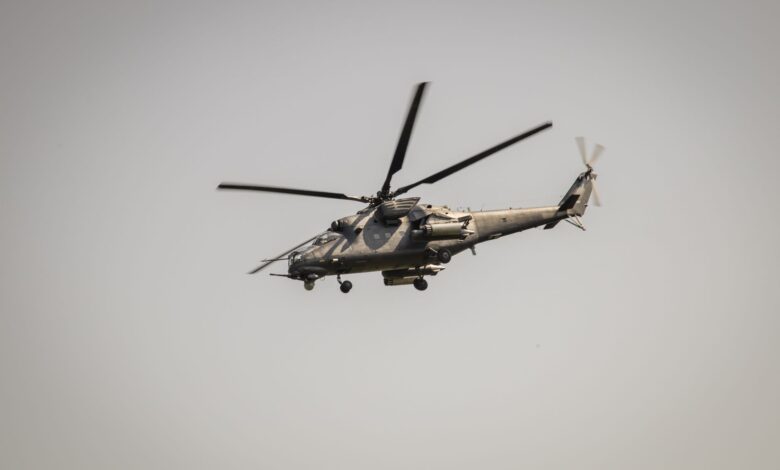
According to the Inter-Services Public Relations (ISPR), the military’s media affairs wing, the helicopter went down “during take-off due to a technical fault.” The ISPR stated unequivocally that “All personnel on board embraced martyrdom. There were no survivors.” While the military did not initially confirm the specific headcount, security sources told Reuters, Anadolu, and Associated Press that the death toll stood at 22. These sources further specified the composition of the crew and passengers: one colonel, two other major-rank officers, and 19 soldiers. The distinction between official military statements and intelligence from security sources highlights the initial opacity surrounding the precise roster of the deceased, a common characteristic in the immediate aftermath of such incidents.
The Mi-17, a variant of the Soviet-designed Mi-8, has long served as the workhorse of the Pakistan Army Aviation wing. Its primary utility lies in high-altitude deployments, a necessity given the rugged northern terrain of Kashmir where the unit operates. However, this reliance on older Soviet-era technology presents inherent logistical and maintenance challenges. Over the past decade, the fleet has suffered occasional fatal accidents in these demanding environments. To mitigate these risks, Pakistan has undertaken significant refurbishment efforts; notably, the country has overhauled 22 of its Mi-17 helicopters with assistance from the United States. Despite these upgrades, the recurring nature of accidents in this specific theater underscores the persistent tension between the aging airframe’s capabilities and the severe operational constraints of high-altitude flying.
The crash occurred against the backdrop of heightened security in a highly sensitive border region. Local authorities had recently imposed strict movement restrictions following violent clashes between security forces and a newly banned alliance of civil society groups. Those confrontations left at least 11 people dead over the preceding weekend. Officials firmly rejected any connection between the local civil unrest and the aviation disaster, a crucial distinction in a region where political instability and military operations often intersect. The separation of these two events is vital for understanding the operational context: the helicopter was engaged in standard military logistics or deployment, not a direct response to the recent civil clashes, though the overall security posture of the region remains elevated.
In response to the tragedy, the Pakistan Army ordered a board of inquiry to ascertain the exact technical cause of the accident. The precise nature of the “technical fault” remains unknown, and no information has been released regarding potential mechanical failures, pilot error, or environmental factors. This investigation is critical not only for accountability but also for assessing the safety protocols governing the Mi-17 fleet in high-altitude conditions. The ambiguity of the cause leaves open questions about the long-term reliability of the refurbished fleet and the adequacy of current maintenance standards in remote theaters.
The human cost of the disaster was immediately addressed through formal military rituals. On Thursday, the 22 victims received a formal military burial. Flag-draped coffins were carried by an artillery unit stationed in Kashmir, a display of institutional solidarity and respect for the fallen. The reaction from the highest levels of the Pakistani establishment was swift and unifying. Chief of the Army Staff, Field Marshal Asim Munir, along with all ranks of the armed forces, expressed profound sorrow and conveyed condolences to the families of the deceased. State media reported that President Asif Ali Zardari and Prime Minister Shehbaz Sharif also expressed deep grief and sorrow, reinforcing the national significance of the loss.
For the Pakistan Army, this incident serves as a stark reminder of the operational risks inherent in maintaining a logistical footprint in one of the world’s most difficult geographical environments. The Mi-17’s role is indispensable for projecting force and supporting troops in areas where fixed-wing aircraft cannot operate effectively. Yet, the loss of such a significant number of personnel, including senior officers, raises questions about force readiness and the pace of modernization. The introduction of US-assisted overhauls suggests a strategic effort to extend the life of these platforms, but the crash underscores that technological upgrades alone may not fully offset the challenges of operating in extreme conditions.
As the board of inquiry proceeds, the focus of the defense establishment will likely shift toward reviewing safety protocols and maintenance logs for the Mi-17 fleet. The incident has not been linked to any hostile action or external threat, but it has exposed vulnerabilities in the operational chain. For the families of the 22 dead and the wider military community, the event is a profound loss that reshapes internal dynamics and highlights the ever-present danger faced by those serving in the rugged highlands of Kashmir. The next confirmed development will be the findings of the technical inquiry, which may influence future procurement decisions and operational safety standards for the region’s aviation assets.