
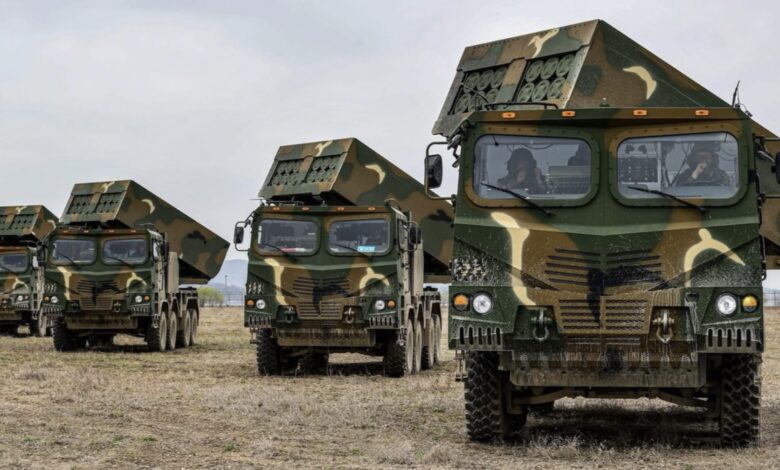
The Chunmoo vs. HIMARS: Speed and Logistics
The selection of the K239 Chunmoo reflects a broader shift in European procurement strategies, where delivery timelines and production capacity have become as critical as technical specifications. While the U.S. M142 High Mobility Artillery Rocket System (HIMARS) remains combat-proven and widely deployed, demand surges following Russia’s full-scale invasion of Ukraine have pushed HIMARS delivery times to five years in some cases. In contrast, South Korean systems have demonstrated a capacity for faster integration and delivery, a factor that has influenced recent decisions by Poland, Estonia, and Norway.
Technically, the K239 and HIMARS share similar attributes: both are truck-mounted systems capable of firing rockets with ranges up to 500 kilometers and can be transported by aircraft as small as a C-130. However, the K239, mounted on an 8×8 tactical vehicle, carries double the rocket capacity of the 6-wheel HIMARS. Its modular architecture allows for interchangeable launch modules, enabling the system to fire different types of guided and unguided rockets as well as ballistic missiles. This flexibility allows the Chunmoo to fulfill both conventional multiple-launch rocket artillery roles and longer-range precision-strike missions, a dual capability that European armies have identified as essential for operations in high-intensity environments.

A Pattern of Rapid Procurement
Croatia’s order follows a clear trend of NATO nations turning to Hanwha Aerospace to replenish artillery stocks depleted by donations to Ukraine. Poland, the largest customer to date, signed an initial deal for 218 Chunmoo launchers in October 2022 after concerns arose that it would not receive all 500 requested HIMARS launchers within a satisfactory timeline. Polish Deputy Prime Minister and Defence Minister Mariusz Błaszczak stated at the time that the delivery schedule for the U.S. systems was unsatisfactory. Since receiving the first batch of Chunmoo launchers in August 2023, Poland has deepened its engagement, ordering an additional 72 launchers in 2024 and agreeing in December 2025 to manufacture the system’s CGR-080 precision-guided rockets domestically starting in 2030.
Smaller NATO states have followed a similar path. Estonia ordered six K239 systems in October 2025, followed by three more in May 2026, after its initial six HIMARS took three years to arrive. Norway, which selected the Chunmoo over the HIMARS in a major agreement valued at approximately $2 billion, has not yet disclosed the exact number of units but expects launch units and training equipment between 2028 and 2029, with rockets and missiles to follow between 2030 and 2031. Norwegian officials emphasized that the decision was driven by technical criteria, delivery timelines, and industrial reliability, viewing the Chunmoo as a mature solution with rapid integration capabilities compatible with NATO standards.
Strategic Implications for European Defense
The rise of the Chunmoo is part of a wider South Korean breakthrough in European markets, complementing the success of Hanwha’s K9 Thunder 155mm self-propelled howitzer. The K9 has already been adopted by Poland, Finland, Norway, Estonia, Romania, Spain, and Turkey. Finland’s latest procurement of 112 additional K9s will bring its total inventory to over 200 systems, making it the second-largest European operator after Poland.
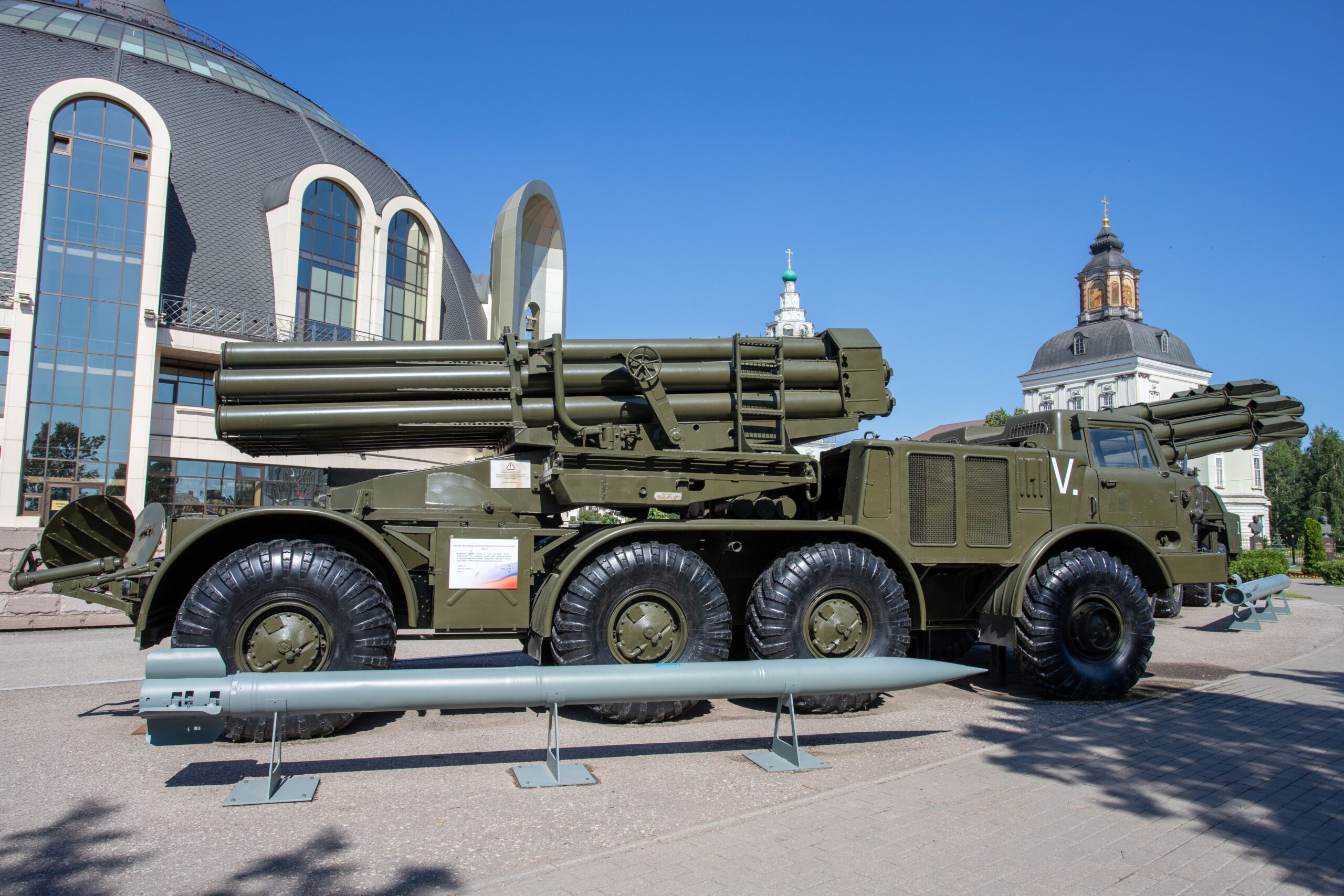
For European nations, the appeal of South Korean systems lies not only in their performance but also in their ability to mitigate supply chain risks. The enormous consumption of artillery ammunition in Ukraine exposed the limited production capacities of Western defense industries. Korean suppliers have been able to provide systems faster and, in some respects, with greater capability than their Western counterparts, reflecting a robust industrial base and a strategic prioritization of artillery. By localizing production—such as Poland’s plan to build rockets domestically—buyer nations aim to reduce dependency on foreign supply lines while generating domestic industrial benefits.
From a strategic perspective, these acquisitions fit into broader efforts to strengthen deterrence and rapid response capabilities, particularly on Europe’s northern and eastern flanks. The combination of mobility, range, and precision offered by the K239 allows national armies to enhance their ability to support allied forces in high-intensity scenarios. As Croatia integrates the new systems, the broader trend suggests a durable shift in the global artillery market, where South Korea is increasingly positioned as a primary partner for European defense modernization.





One Comment