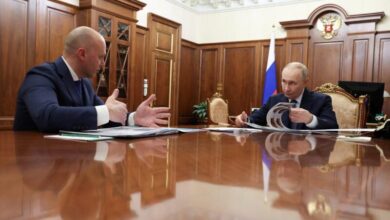
“I still see something rather absurd in the situation where Europeans declare that they won’t talk to the war criminal Putin, yet Trump talks to him and then we go and listen to find out what they discussed,” Niinistö stated. He expressed concern that such discussions might proceed “over Europe’s head,” suggesting it would be wise for Europe to hold similar discussions independently. Niinistö, who oversaw Finland’s entry into NATO following Russia’s full-scale invasion of Ukraine, framed this call not as a concession to Moscow, but as a strategic necessity to ensure European interests are represented in any potential end to the war in Ukraine.
The former president’s remarks land at a pivotal moment for Finnish foreign policy, specifically regarding the finalization of the country’s NATO membership. While NATO’s 30 member countries formally invited both Finland and Sweden to join the alliance last summer, the ratification process has been complicated by objections from Turkey and Hungary. However, the two Nordic neighbors are now on diverging paths. President Niinistö announced Wednesday that he will meet Turkish President Recep Tayyip Erdoğan in Istanbul on Friday, a meeting that signals Ankara is edging closer to signing off on Helsinki’s NATO aspirations.
“It was known that once President Erdoğan has for his part made the decision concerning the ratification of Finland’s NATO membership, he would wish to meet and fulfill his promise directly from President to President,” Niinistö said in a statement. He added, “The Turks have hoped that I be present when they announce this decision. Of course, I accepted the invitation and I will be there to receive his expression of will.” This development highlights a significant shift in the security landscape of Northern Europe, where Finland is preparing to become a full NATO member while Sweden remains in limbo.
Sweden’s path to membership has been hampered by continued Turkish discontent. Ankara has raised concerns regarding arms exports and support for Kurdish groups, leading to months of negotiations. Specifically, Turkish officials have noted dissatisfaction with Stockholm’s refusal to extradite dozens of Turkey’s Kurdish political opponents, a tension further escalated by a Quran-burning incident in Stockholm. While talks among the three countries at NATO headquarters last week ended without a breakthrough, Western officials maintain hope that Turkey’s parliament will eventually ratify Sweden’s membership, possibly after the country’s May elections and ahead of the NATO summit in Lithuania in July.
NATO Secretary-General Jens Stoltenberg stated earlier this month that his goal is for both Sweden and Finland to become full members “as soon as possible, at least by the Vilnius Summit.” However, the reality on the ground suggests that Finland’s integration will proceed without Sweden, marking a departure from the original plan for the two countries to join the alliance together.
Domestically, the Finnish government has pushed back against Niinistö’s call for direct EU-Russia talks. Finnish Foreign Minister Elina Valtonen stated that it is “not yet time” for such dialogue due to the ongoing war and the Kremlin’s apparent lack of interest in genuine peace negotiations. “Dialogue for its own sake is not the goal,” she told reporters. Prime Minister Petteri Orpo and Defense Minister Antti Häkkänen echoed this sentiment, emphasizing that any future contacts with Russia must be coordinated across the EU. “We’re stronger when we speak with one voice,” Orpo said. Finnish President Alexander Stubb, Niinistö’s successor, had earlier this year suggested that Helsinki should “mentally prepare” to restore relations with Russia after the war ends, but the current official stance remains one of wait-and-see rather than proactive engagement.
The debate over diplomatic channels with Moscow is underscored by Finland’s own strategic shift. A top Finnish diplomat recently noted that the country could fend off Russian aggression with or without NATO, underscoring the depth of the security transformation that has occurred since 2022. This transformation was personally overseen by Niinistö, who guided the country into the alliance just a year after Russia’s invasion. His current advocacy for direct talks reflects a pragmatic view that diplomatic isolation has not ended the conflict, and that Europe must assert its own voice in any future negotiations.
Niinistö’s perspective is informed by a diplomatic lineage that values direct engagement. He paid tribute to former President Martti Ahtisaari, a Nobel Peace Prize laureate who served as Finland’s tenth president. In a commemorative speech at Ahtisaari’s funeral in November 2023, Niinistö highlighted Ahtisaari’s approach to diplomacy, describing him as a “man of low hierarchies” who placed people at the heart of everything. “He saw everyone as a fellow human being,” Niinistö said, noting that even in hardened individuals, Ahtisaari saw something good worth reaching out to. This philosophy of seeking connection over protocol appears to influence Niinistö’s current stance, even as the geopolitical climate has grown more hostile.
As Niinistö prepares for his meeting with Erdoğan, the focus in Helsinki is on securing the final signatures for NATO membership. The outcome of this meeting will determine whether Finland achieves full membership ahead of the Vilnius Summit or if delays persist. Meanwhile, the debate over whether Europe should engage Putin directly remains a source of tension within the EU, with officials divided between the desire for strategic autonomy in diplomacy and the need for a unified front against Russian aggression. The next few weeks will be critical, as both the military integration of Finland and the diplomatic posture of Europe toward Moscow are set to be defined by decisions made in Istanbul and Brussels.