
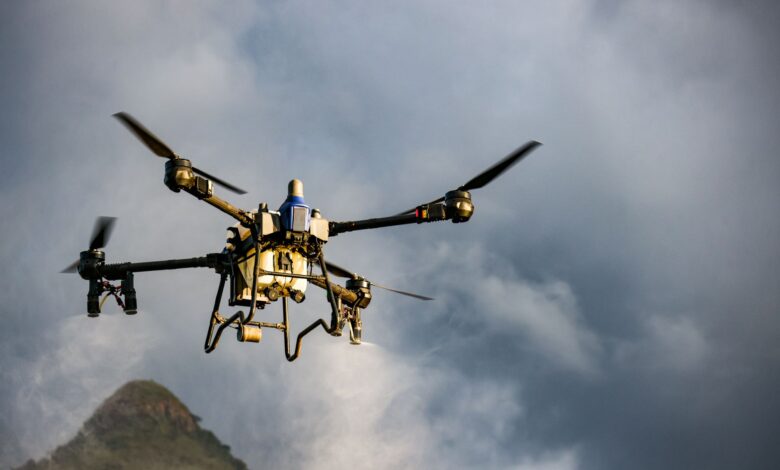
“When meetings take place at the level of negotiation groups — trilateral, bilateral, it doesn’t matter — different parties state that time is needed to prepare for a ceasefire,” Zelensky said. He noted that customary arguments cited by negotiators include the complexity of monitoring compliance, the necessity of withdrawing arms, and the requirement for Ukraine to establish a buffer zone. Zelensky dismissed these logistical hurdles, asserting that the Oleshky experience proved them unnecessary. “The ceasefire in Oleshky showed: no. It is not mandatory. Now the war is technologically different. Monitoring can be conducted using drones. You will have evidence of violations — real video recordings,” he stated.
The Oleshky ceasefire, a localized cessation of hostilities in the southern Kherson region, has served as a test case for humanitarian operations under reduced fire intensity. According to U.S. First Lady Melania Trump, the humanitarian mission conducted during this truce resulted in the evacuation of nearly 800 people. This figure highlights the operational utility of even temporary, local truces in facilitating civilian movement in areas with complex security situations.
However, the transition from local truces to a comprehensive peace agreement remains contingent on political factors rather than technical ones. Zelensky emphasized that the decision to implement the Oleshky ceasefire was made rapidly and functioned effectively, but he identified the primary barrier to a wider conflict resolution as the absence of political will from Russian President Vladimir Putin. “I have always said that it all comes down to Putin’s political will. As we saw, the decision on the Oleshky ceasefire was made very quickly. And it worked,” Zelensky said. He expressed hope that a mechanism could be found to encourage Putin toward peace, noting that this could be achieved with U.S. mediation.

The distinction between tactical feasibility and strategic intent is central to the current diplomatic landscape. While the technical capacity for monitoring a ceasefire via drone video evidence exists, the strategic decision to halt broader military operations rests with the belligerents. The Oleshky incident demonstrates that the operational constraint of “monitoring” has been mitigated by technology, shifting the burden of proof for delays in negotiation from logistical complexity to political commitment.
Ukrainian Human Rights Ombudsman Dmytro Lubinets provided further context on the humanitarian aspects of the Oleshky agreement. Speaking at a press conference, Lubinets stated that, by agreement with the Russian side, the Ukrainian government would not publicly disclose the specific numbers of residents who chose to return to Ukrainian-controlled territory versus those who moved to Russian-controlled areas. This decision reflects a diplomatic sensitivity to the data generated by the ceasefire, which could potentially be used for political narrative rather than humanitarian assessment.
Lubinets also indicated that he and his Russian counterpart, Yana Lantratova, agreed to request the U.S. First Lady to expand the practice of humanitarian missions, similar to those in Oleshky, to other populated areas with complex security situations. This proposal suggests a potential pathway for scaling up the humanitarian benefits of local ceasefires, leveraging the established framework of the Oleshky operation as a precedent for broader engagement.
The emphasis on drone monitoring represents a significant shift in military-diplomatic discourse. Traditionally, ceasefires required physical verification or the removal of offensive capabilities to ensure compliance. The assertion that real-time video evidence from drones is sufficient for monitoring compliance lowers the barrier to entry for truces. However, this technical solution does not address the underlying strategic objectives of either side. Zelensky’s argument is that if the technical hurdle is removed, the only remaining variable is the political decision by Moscow to stop fighting.
The role of the United States in this dynamic is framed by Zelensky as a potential catalyst. By offering mediation, Washington could provide the diplomatic cover or pressure necessary to translate the technical feasibility of the Oleshky model into a broader strategic outcome. The success of the Oleshky ceasefire, measured by the evacuation of approximately 800 civilians, serves as a tangible proof of concept, illustrating that rapid, technology-enabled truces are operationally viable even in active conflict zones.
As negotiations continue, the focus is likely to remain on whether the technical solutions demonstrated in Oleshky can be scaled up. The upcoming expansion of humanitarian missions to other areas, as proposed by the Ombudsmen, will be a critical test of this scalability. Meanwhile, the strategic impasse persists, hinging on whether Moscow is willing to accept the same technological monitoring and rapid execution framework that Kyiv has validated in the south. The divergence between the ease of technical implementation and the difficulty of political consensus remains the defining feature of the current diplomatic efforts.





One Comment