
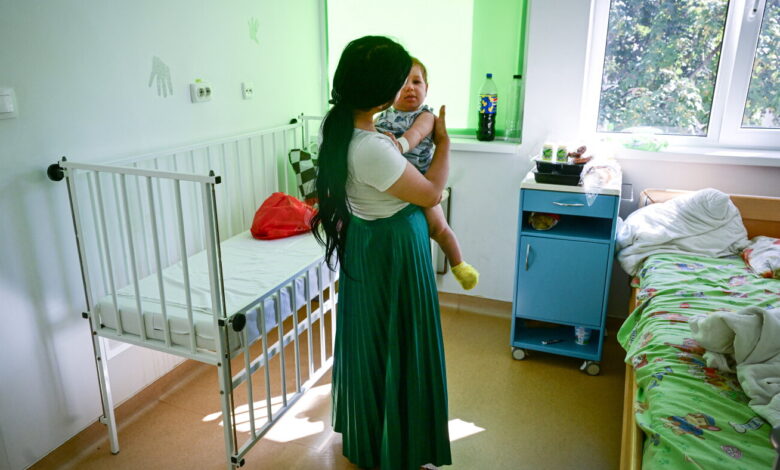
The medical significance of these cases extends well beyond the acute phase of infection. As expert Schwalbe notes, “Just because you’re OK from that infection at the time doesn’t mean that that infection doesn’t have very serious consequences for you later in life.” Measles is not merely an inconvenience of childhood; it is a disease with long-term physiological impacts. The resurgence in Romania highlights that the burden of the disease is shifting from a historical concern to a present-day crisis for populations that have allowed their protective barriers to erode.
Combating this resurgence requires more than simply distributing vaccines; it requires navigating the complex landscape of public trust and misinformation. In Romania, clinicians such as Craiu and Dumitra admit that this is “an uphill battle.” However, they have adopted an evidence-based approach to address the roots of vaccine hesitancy. Craiu observes that their current practice differs significantly from their medical school training, reflecting a necessary evolution in how physicians communicate with patients in an era of widespread misinformation.
Central to this approach is the use of motivational interviewing, a technique praised by the American Academy of Pediatrics as an effective method for improving communication about vaccines. This method helps patients adopt changes when they decide the change matters to them, rather than feeling coerced by a doctor’s authority. It encourages physicians to listen without judgment, exploring a patient’s ambivalence rather than dismissing it. This shift in clinical communication is critical because, as the data from Romania and other nations shows, logistical access to vaccines is rarely the sole barrier; psychological and informational barriers often play a more significant role in determining vaccination rates.
Dumitra illustrates this technique in action through a recent interaction with a patient. When recommending a flu vaccine to a woman, the patient expressed fear, stating, “I’m scared of the vaccine.” Rather than reacting with frustration or dismissing the fear, Dumitra asked, “Why?” The woman explained she was worried the vaccine would worsen a chronic illness. By acknowledging her concerns first, Dumitra was able to offer relevant information and verify her understanding. The patient eventually agreed to be vaccinated. While this specific example involves the flu, the technique is being applied broadly to combat mistrust surrounding all vaccines, including those for measles. This individual interaction illuminates a broader documented pattern: that non-judgmental, patient-centered communication can help bridge the gap between medical evidence and patient behavior.
Despite these localized successes in communication strategies, the global data suggests that other relatively well-off countries are not yet drawing clear lessons from Romania’s experience. The global measles count indicates a troubling trend across high-income nations. This month, Canada lost its measles elimination status due to sustained transmission, reporting 5,000 cases so far this year. Similarly, the United States has confirmed 1,723 cases in 2025, according to the CDC, marking the highest annual number in more than three decades.
The parallel between the Romanian crisis and the recent surges in North America underscores a universal biological principle: measles is highly contagious, and its elimination is fragile. It requires sustained, high levels of population immunity. When those levels drop below the threshold required for herd immunity, the virus finds new hosts. The evidence from Romania, Canada, and the U.S. collectively demonstrates that measles elimination is not a permanent state but a continuous public health achievement that must be actively maintained.
Experts remain cautious about the pace of change. Gatscher expresses optimism that evidence-based approaches to vaccine hesitancy will gradually chip away at the mistrust and misinformation surrounding vaccines in her country. However, the global trajectory suggests that this process is slow and uneven. The challenge is not just scientific but sociological and political, requiring health systems to adapt their communication strategies to match the changing information environment.
Ultimately, the lesson from Romania is clear and applicable to all countries, regardless of their economic status. Schwalbe notes that America exists in its “own bubble” and often looks away from examples like Romania, with the prevailing attitude being, “That’s what’s happening over there, and it has nothing to do with us.” He argues that this isolationism is dangerous, stating, “I don’t think that Romania will teach us any lessons, unfortunately, even though it’s such a clear lesson.” The next verified development for health authorities worldwide is to recognize that the resurgence in Romania is a preview of what can happen anywhere high vaccination coverage is compromised. The disease does not respect borders; it only respects immunity.



One Comment