
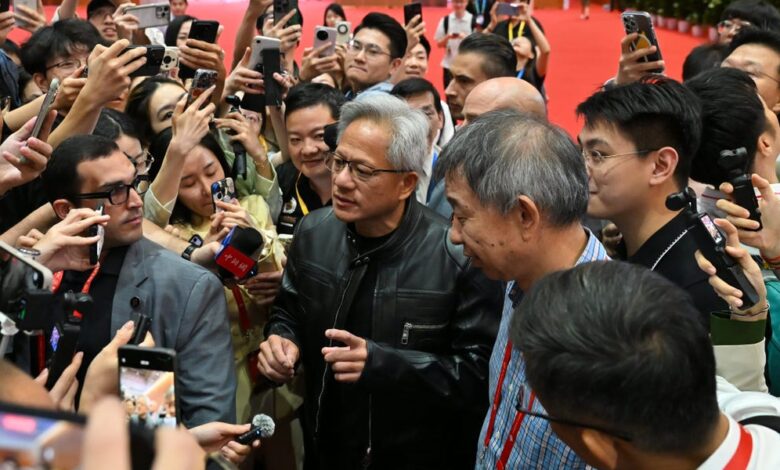
In a statement to staff, Jensen Huang admitted to having an affair with Alice Huang but clarified that she is not related to him by blood or marriage. The company’s board of directors has expressed confidence in its CEO, stating there is no reason to believe that Nvidia’s company secrets or US national security were compromised. However, the board has established an independent committee to examine all available information regarding the incident. The timeline of the relationship and the specific nature of the intelligence sought remain unclear.
Chinese authorities have firmly denied the allegations, describing them as “entirely groundless, speculative and intended to smear and malign China.” Meanwhile, Nvidia emphasizes that it has no evidence of a security breach. The situation has drawn attention to the intense scrutiny faced by top executives in the semiconductor industry, where access to cutting-edge AI hardware places individuals at the center of US-China technological rivalry.

The investigation occurs against a backdrop of significant tension between US export controls and Nvidia’s commercial interests in China. Jensen Huang has spent years advocating for engagement with the Chinese market, arguing that complete decoupling would benefit Beijing rather than Washington. In October 2026, during an interview with Bloomberg, Huang stated that the US had “made a mistake” by restricting Nvidia’s ability to sell its most advanced AI chips in China, a policy he described as “hard to unwind.” He maintained that while China is a serious competitor, the two nations are “not our enemies” and that dialogue on AI safety remains essential.
Huang’s stance has evolved in response to shifting market realities. In April 2026, he acknowledged that Nvidia’s market share in China had fallen to zero due to US export restrictions. This foreclosure, he noted, has allowed competitors to develop independent ecosystems that could challenge Nvidia internationally. Previously, in May 2025, he labeled the export controls a “failure,” arguing they cost US companies billions and pushed Chinese customers toward local alternatives such as Huawei. Despite these limitations, Huang has repeatedly urged policymakers to consider the economic implications of restricting American technology, asserting that the world is built on American standards and that Nvidia’s global success is beneficial to the United States.

The company’s board has emphasized that the investigation is procedural and that operations continue as normal. There is no indication that Huang’s strategic decisions or the company’s security protocols were influenced by the alleged intelligence effort. The matter remains under review, with the independent committee tasked with determining the extent of the contact and any potential security implications. As the AI race intensifies, the incident underscores the complex personal and professional risks faced by leaders in the tech sector, where business relationships intersect with national security concerns. The outcome of the internal probe is expected to inform future security measures for high-profile executives in the industry.


2 Comments