
The catalyst for the week’s sharp sell-off was a sudden and severe drop in Nvidia shares, triggered by reports that the company had launched an internal investigation after CEO Jensen Huang admitted to an affair with an alleged Chinese spy. This development introduced a layer of corporate and national security anxiety into an already sensitive trading environment. The allegation struck at the heart of US-China technological tensions, raising immediate questions about data integrity and executive oversight within one of the world’s most valuable companies. Although the specific financial impact of the investigation on Nvidia’s long-term valuation remains to be fully assessed, the immediate market reaction was pronounced, dragging down the broader technology sector and, by extension, the S&P 500.
Political responses to the scandal further complicated the market’s narrative. President Trump characterized the allegations as “highly unlikely,” attempting to mitigate the perceived risk. However, this diplomatic attempt to downplay the incident ran parallel to broader geopolitical statements that offered little comfort to traders seeking clarity. Secretary of State Marco Rubio played down any progress in peace negotiations, signaling that the structural tensions between the US and China were not abating. For investors, this dichotomy created a confusing landscape: while the executive branch sought to normalize the corporate scandal, the foreign policy establishment confirmed that the underlying geopolitical risks remained active and unresolved.
Amid this backdrop, the “AI rout” that characterized recent trading sessions continued to shape investor behavior. Ella Gude of BNY, speaking on “Bloomberg Brief,” highlighted a prevailing sentiment of caution among institutional investors. The discussion centered on how the latest shocks had tempered enthusiasm for artificial intelligence stocks, which had previously been a primary engine of market gains. The caution was not merely speculative but rooted in the rapid speed at which news regarding Nvidia and broader geopolitical risks had moved through the market. The week’s performance marked a distinct break from the previous trend, forcing portfolio managers to reassess risk allocations in the tech sector.
The significance of the S&P 500’s worst week since April 2025 lies in its timing and composition. The index’s vulnerability to shocks in major AI stocks underscores the concentration risk that has emerged in the US equity market. When a single company like Nvidia experiences a sharp decline due to non-financial, governance-related news, the ripple effects are significant. This event demonstrated that the market’s reliance on a narrow set of high-growth tech firms makes it susceptible to idiosyncratic risks that can quickly become systemic concerns. The rebound in futures, while positive, was viewed by market watchers as a partial correction rather than a definitive shift in trend, given the ongoing uncertainties.
Investors are now navigating a period where corporate governance risks intersect with geopolitical strategy. The Nvidia investigation represents a new category of risk for tech giants, one that extends beyond product cycles or competitive dynamics to include personal conduct and national security implications. Meanwhile, the lack of progress in peace negotiations means that trade and tariff risks remain a constant backdrop. Businesses and consumers alike are watching how these factors translate into broader economic conditions, though the immediate impact has been most acutely felt in the equity markets.
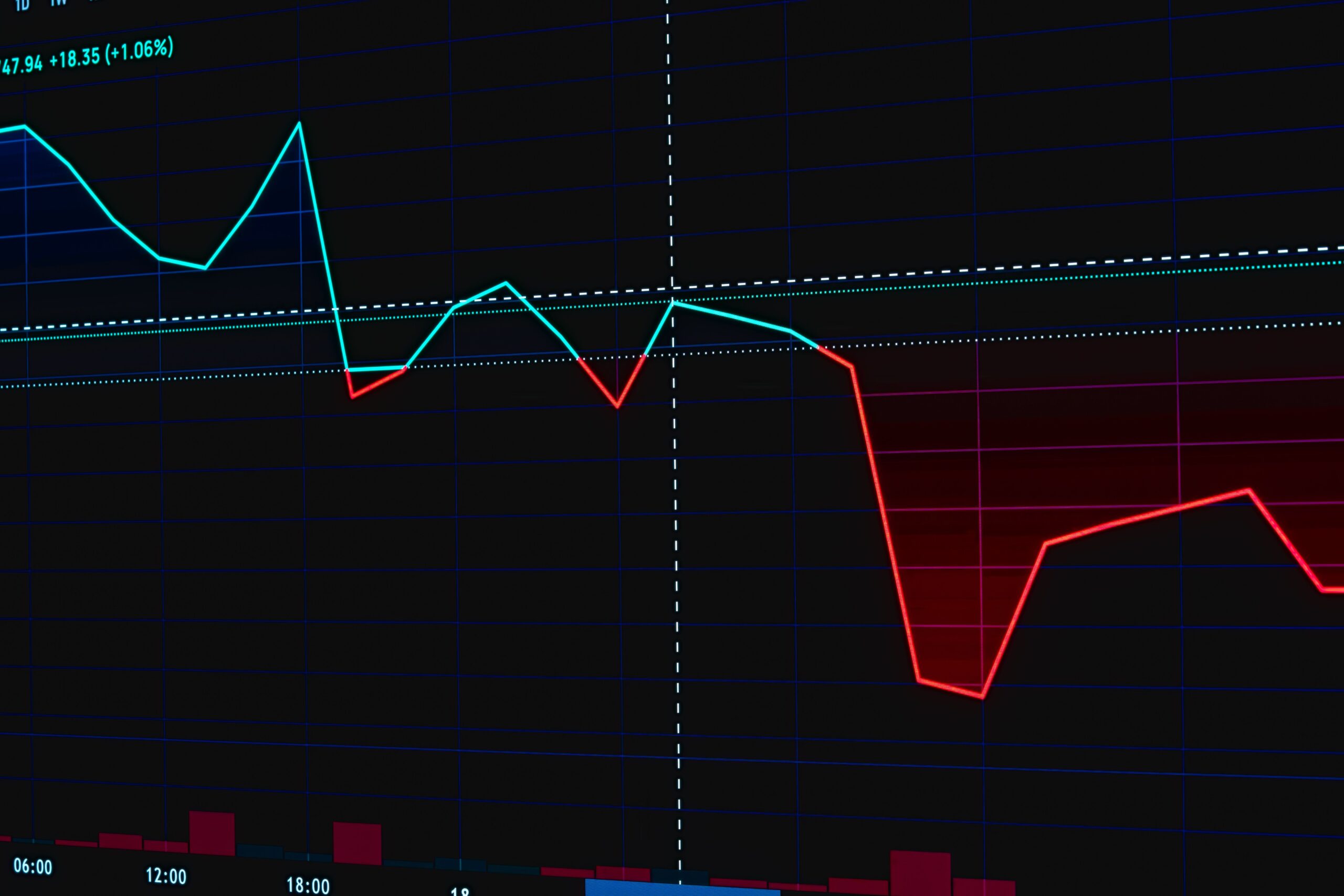
As the market moves forward, the focus will shift to whether the initial panic over Nvidia’s leadership issues results in sustained selling or if the stock can recover its footing. More broadly, traders will be monitoring any further signals from Washington regarding US-China relations. The interplay between corporate news and state-level diplomacy has become a defining feature of the current economic landscape. Until clarity emerges on both fronts, the equity market is likely to remain volatile, with futures prices reflecting a cautious optimism that is easily undone by new headlines.
The narrative for the coming sessions will be defined by the resolution—or lack thereof—of the Nvidia investigation and any updates on diplomatic frontlines. For now, the market has taken a step back from the brink of its worst weekly loss in nearly a year, but the underlying pressures that drove the sell-off remain firmly in place. The next few days will test whether investor confidence can withstand the dual pressures of corporate scandal and geopolitical stagnation, or if the recent volatility marks the start of a more prolonged period of uncertainty for US equities.