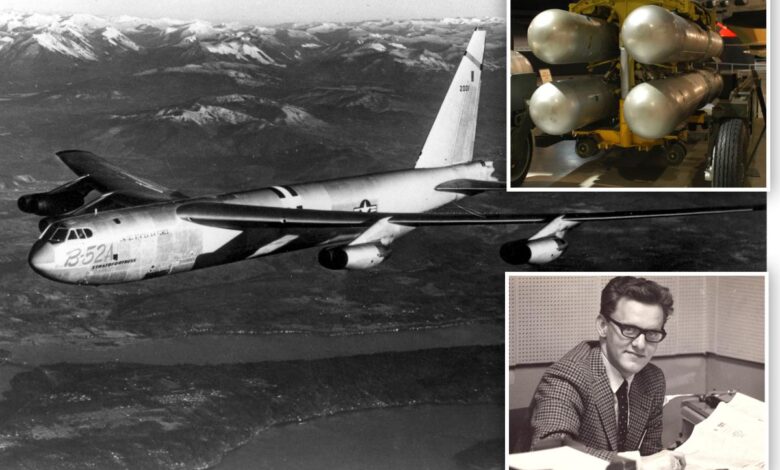
More than half a century later, two of those civilians, Jeffrey Carswell and Heinz Eriksen, are engaged in a legal battle against the United States government. Now in their 80s, the men are seeking recognition and compensation for cancers they allege were caused by their involvement in “Operation Crested Ice,” the massive cleanup effort that followed the crash. In court papers filed in the U.S. District Court for the Southern District of New York, the pair accuse federal officials of deliberately delaying and obstructing their inclusion in the Energy Employees Occupational Illness Compensation Program Act (EEOICPA), a federal program that provides benefits to employees who developed certain illnesses from occupational exposure to hazardous substances.
The legal dispute centers on a procedural failure to grant the Danish volunteers the same status as their American counterparts. According to the plaintiffs, approximately 1,000 civilians, including Danes and Greenlanders, were mobilized to clean the site. Carswell, a shipping clerk, and Eriksen, a fireman at the base, transported contaminated snow and ice to a sheltered structure where the toxic material was poured into 217 tanks, each holding about 25,000 gallons. These tanks were then welded shut and sent to the United States for remediation. Eriksen’s duties included working in hangars with floors covered in water from melted, contaminated snow and extinguishing fires from the welding process that sealed the plutonium-infused snow. Carswell frequently visited the tank farm and traveled near the crash site. Despite these documented exposures, the men argue they have been excluded from the compensation framework that has benefited U.S. workers involved in the same cleanup.
The plaintiffs’ recent filing in Manhattan Federal Court is an action to enforce Freedom of Information Act (FOIA) requests. They are suing Kevin Dressman, the former director of health and safety at the Department of Energy, and Grady Calhoun, the director of the National Institute for Occupational Safety and Health. The lawsuit alleges that Dressman and Calhoun secretly conferred regarding the men’s failed bid for inclusion in EEOICPA in June 2023. The men contend that the federal response has been characterized by “corruption, lies and deliberate, very slow treatment,” a strategy they believe is designed to exhaust the claimants until they are no longer alive to pursue the matter. “We are fighting against… the ‘problem’ going away because we are no longer around,” Carswell stated in court documents. “But they should know by now that we will not go away.”
The significance of this case extends beyond the individual health claims of Carswell and Eriksen. It highlights a disparity in how the U.S. government has handled liability for nuclear accidents involving foreign nationals. While Americans who fell ill after handling the plutonium-riddled material were later compensated under various federal actions, Danish civilians have been left without similar recourse. This exclusion is particularly notable given that Greenland is a territory of Denmark, a close ally of the United States, and that the crash occurred on Danish soil. The 1968 incident had already strained U.S.-Danish relations, as it revealed that the U.S. was routinely flying nuclear-armed aircraft over Greenland, violating Denmark’s 1957 nuclear-free zone policy. The cleanup operation was a joint effort, yet the legal and financial consequences have fallen disproportionately on the local population.
Medical records cited in the legal proceedings indicate that Carswell was diagnosed in the 1980s with stomach and esophageal cancer, requiring several surgeries. Eriksen had his left kidney removed in 2005 due to a cancerous tumor. The men argue that their illnesses are directly linked to their exposure to plutonium during the 1968 cleanup. The U.S. government’s position, as implied by the FOIA dispute, appears to rest on the distinction between federal employees and foreign civilians, a distinction that the plaintiffs challenge given the nature of their work and the shared hazard they faced.
The broader context of the Thule incident remains a subject of ongoing debate and environmental concern. A 2011 Danish health report found that radiation doses were below recommended levels even under extreme conditions, but this finding has not satisfied the affected workers. Furthermore, indigenous Greenlanders, who played a role in finding missing airmen and helping with the cleanup, have not received systematic health monitoring. Environmental monitoring continues to detect trace contamination in the area more than five decades after the crash. The debate over whether a weapon component remains on the seafloor also persists, adding to the uncertainty surrounding the long-term environmental impact.
As the legal proceedings unfold in the Manhattan Federal Court, the case serves as a test of the U.S. government’s accountability for nuclear accidents that occur on allied soil. The outcome will determine whether foreign civilians who contributed to the cleanup of a U.S. strategic asset can access the same compensation mechanisms as domestic workers. For Carswell and Eriksen, the fight is not just about money, but about recognition of their sacrifice and the health consequences they have borne for decades. The next confirmed legal step will be the court’s ruling on the FOIA requests, which may reveal internal communications that could clarify the basis for the exclusion of Danish workers from the compensation program.