
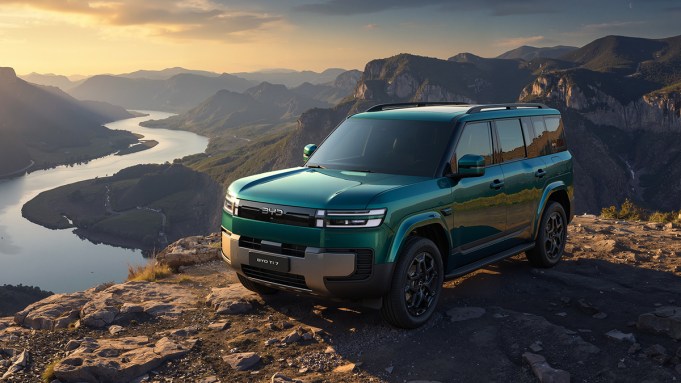
The legal action centers on allegations that the BYD Ti7, which has been on sale in China since September 2025 under the Fangchengbao name, is not merely a stylistic competitor but a product of unauthorized technical appropriation. JLR alleges that BYD dismantled a Defender to extract proprietary engineering solutions. To support this claim, JLR sought the preservation of evidence, leading to a court-ordered intervention in August. Court-appointed bailiffs executed raids on BYD’s offices in Schiedam and Hoofddorp, Netherlands, seizing digital records. JLR’s legal team stated the action was necessary to secure potential corroborating evidence before it could be destroyed.
The choice of jurisdiction is strategic. Reports from The Times suggest JLR brought the case in the Netherlands because the country is viewed as more favorable for claims of intellectual copyright theft than other potential venues. The principal legal question before the court is whether BYD’s actions constitute infringement of JLR’s intellectual property rights. JLR argues that the similarities between the Ti7 and the Defender extend beyond exterior design to underlying technology, specifically alleging reverse-engineering of the Defender’s systems. If successful, a preliminary ruling in JLR’s favor would allow the case to proceed to a full trial on the merits of the infringement claim.
BYD has contested the characterization of the legal process. The company’s legal team described the seizure of documents as a “fishing expedition,” arguing that the scope of the data taken was excessive. BYD stated that it had done everything in its power to cooperate with JLR’s requests but accused JLR’s advisers of obstructing the process. In response to inquiries regarding the ongoing proceedings, a BYD spokesperson stated, “We have no comment to make at this time.” JLR adopted a similar stance, with a spokesperson telling Robb Report, “JLR does not comment on ongoing legal proceedings.” Both parties have declined to elaborate on the specific technical details alleged to have been copied or the exact nature of the seized digital files.
The Ti7 presents a significant commercial threat to JLR’s Defender, one of the company’s most important models. When the Ti7 launches in the UK in January, it is scheduled to start at £47,995. This is approximately £20,000 less than the seven-seat Defender 110, which starts at £68,465. While the two vehicles have different powertrains and underlying engineering, their boxy, chunky styling has drawn widespread comparison. The BBC’s Top Gear website referred to the Ti7 as a “Chinese Defender clone” following BYD’s announcement of its UK release plans in the spring. Automotive observers have noted such similarities since the vehicle’s debut in China, but the legal dispute shifts the focus from aesthetic resemblance to alleged technical appropriation.
This is not the first time JLR has litigated against a Chinese automaker over perceived copycat vehicles. In 2019, the British company won a legal battle against Jiangling Motor Corporation after a three-year dispute over a vehicle alleged to have copied the Range Rover Evoque. However, JLR’s relationship with China’s automotive industry is complex. The company has maintained a long-running joint venture with Chery, which eventually revived the Freelander name for an electric vehicle brand. Ironies abound in the current landscape, as Chery’s Jaecoo brand has faced its own scrutiny. The Jaecoo 7, dubbed the “Temu Range Rover” due to its resemblance to JLR’s luxury SUVs, recently became the UK’s bestselling car in October. It is priced around $13,300 less than the actual Range Rover, illustrating the aggressive pricing strategy that Chinese manufacturers are employing in the European market.
As the Ti7 prepares for its UK launch, the outcome of the preliminary hearing in The Hague will be pivotal. If the court finds that JLR has a case to answer, the dispute will move forward, potentially delaying or complicating the commercial rollout of the Ti7 in Europe. If the court rules against JLR, BYD can proceed with its sales strategy, reinforcing its position as a cost-effective alternative to premium British off-roaders. The decision will also serve as a precedent for how intellectual property boundaries are enforced in the automotive sector, particularly regarding the distinction between independent development and reverse-engineering in a globalized supply chain. Until the ruling on November 11, the matter remains unresolved, with both companies maintaining a public silence that underscores the sensitivity of the ongoing legal proceedings.