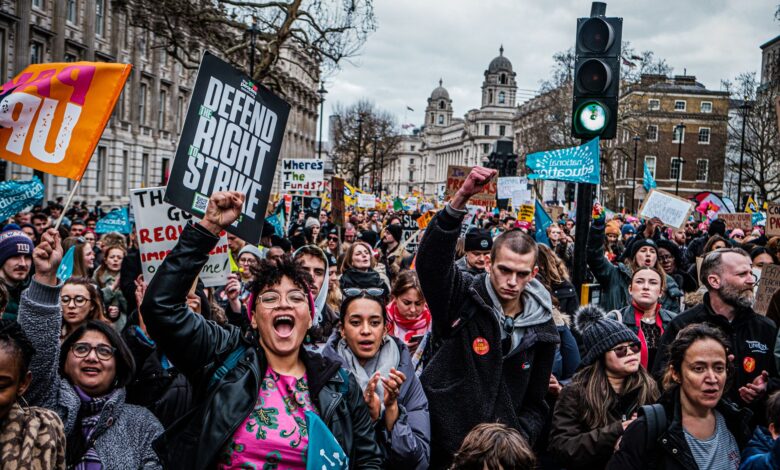
The strike, called by the two main Spanish unions, UGT and CC OO, took place on a Wednesday less than two weeks before the 29 November parliamentary elections. The disruption was most severe in Madrid and Catalonia, where traffic was halted on several main roads and industrial activity slowed significantly. According to data from the electricity operator Red Eléctrica, power usage in Spain’s industrial sector fell by 7.5% during the early hours of the day. While this figure indicates substantial participation, it is notably lower than the drop of more than 15% recorded during the last general strike in 2012, under the conservative government of Mariano Rajoy.
The central issue driving the unrest is the affordability of housing. In Madrid, the monthly cost of a 50-square-meter apartment averaged €1,170 as of October, according to property portal Idealista. With Spain’s average gross monthly salary standing at approximately €2,460, housing costs consume nearly half of a worker’s income. This ratio far exceeds the 30% affordability benchmark recommended by housing experts and public institutions. The crisis has extended beyond rent to include rising costs for food, electricity, water, and gas, creating a sense of urgency among the electorate.
The political dynamics surrounding the strike are unusually complex. Typically, general strikes are organized in opposition to the sitting government. However, Prime Minister Pedro Sánchez and his ministers have publicly encouraged workers to “down tools” to demand affordable housing. On social media, Sánchez praised the historical legacy of labor movements, stating, “Your eight-hour day. Your pension. Your public healthcare… These were collective conquests.” This endorsement comes after Sánchez called for snap elections last month following the failure of parliament to approve his government’s housing reform plan.
In contrast, the opposition People’s Party (PP), which is currently leading in opinion polls, has condemned the strike. PP leader Alberto Núñez Feijóo dismissed the general strike as “nonsense,” labeling the unions “mafia” and “trash.” Party spokesman Miguel Tellado accused the government of exploiting the strike to warn voters against the formation of a right-wing government, which appears to be the most likely outcome of the upcoming election. “What is nonsense is to question the rights of workers to strike,” Sánchez told Spanish television this week, responding to the opposition’s critique.
The business community has also weighed in, with the Spanish Confederation of Business Organisations (CEOE) characterizing participation as “low and uneven.” Miguel Garrido, vice-president of CEOE, argued that the strike was motivated by political rather than labor-related reasons. “This is not a strike for labour-related reasons, but rather for political ones, and it is closely linked to the early calling of elections,” Garrido stated. He maintained that businesses had little direct influence on housing prices.
Union leaders, however, dispute the characterization of low turnout. Pepe Álvarez, head of the UGT, declared the strike a success with “massive” participation, while Unai Sordo of CC OO described the turnout as “very significant.” The scale of the demonstrations planned for the later part of the day in Madrid and Barcelona is being watched closely as an indicator of public discontent ahead of the vote.
For individuals like Gonzalo Álvarez, a 27-year-old sales worker in Madrid, the political debate is an abstract layer over a concrete financial reality. Álvarez, who volunteers for a housing union, noted that he and his girlfriend, a dental hygienist, pay €1,000 combined for a one-bedroom flat in the Arganzuela district. “It’s absolutely crazy… with the food, with the electricity, with the water, with gas,” he said, noting that each spends about half their salary on housing before other bills. He sees no viable path to homeownership, describing the required savings as an “insane amount” that makes purchasing a home “completely impossible” on their current incomes.
The strike has not been without incident. The interior ministry reported that dozens of people were arrested for various incidents, and Spanish reports indicated that estate agencies had suffered attacks on their offices. In the northern city of Gijon, tires were set on fire. These episodes underscore the intensity of the frustration driving the movement.
As the demonstrations continue, the strike serves as a barometer for the 29 November election. The conflict highlights a split in the political landscape: one side views the state as responsible for intervening in the housing market to protect citizens from unaffordable rents, while the other argues that such interventions are politically motivated and ineffective. The outcome of the election will determine whether Sánchez’s government, which has already failed to pass housing reform, returns to power or if a right-wing coalition, which has historically taken a different approach to labor relations, takes the helm. The next few days of protests will likely provide further insight into the depth of public support for the government’s housing agenda as the campaign enters its final phase.