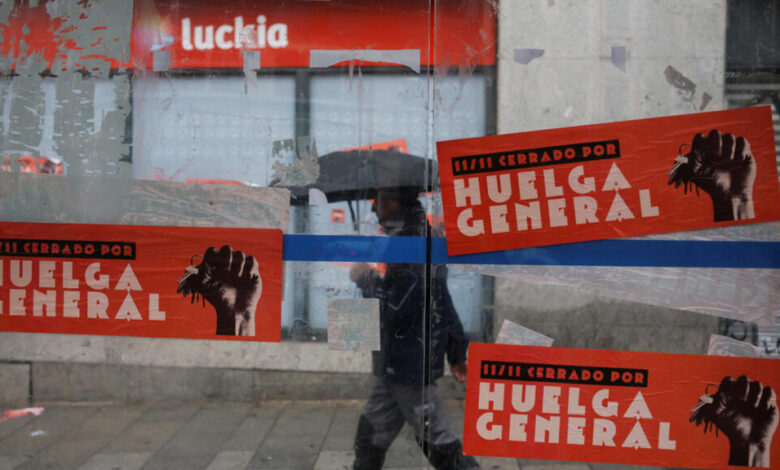
The industrial action highlights a deepening housing crisis in Spain, where rents have nearly doubled over the past decade. The Bank of Spain estimates the country faces a shortage of 750,000 homes, a figure that could rise to 1 million within two years. In a joint statement, CCOO and UGT linked the housing emergency directly to wage stagnation, warning that “wages are not enough to pay for housing and face inflation.” UGT Secretary-General Pepe Álvarez urged members to participate, stating, “there is no salary that can cope with the price of housing in this country.” The unions are demanding greater government intervention in the housing market, including an end to tourist rentals and automatic lease renewals, as well as a new minimum-wage agreement.
The strike follows weeks of social unrest that intensified after the eviction of an 87-year-old woman from her home in Madrid, an event that sparked national outrage. The political context is charged, as the strike occurs less than three weeks before the general election scheduled for November 29. Prime Minister Pedro Sánchez’s coalition called for early elections after the opposition blocked two housing decrees last Friday. While the government has not officially endorsed the strike, left-wing parties, including Sánchez’s Spanish Socialist Workers’ Party, are widely seen as having the opportunity to center housing in the election campaign. The government hopes to leverage the public’s anger to bolster its support, although recent controversies, including a high-speed train collision that killed 69 people, have shifted some debate toward public safety and accusations of mismanagement.
Protests are planned in more than 50 cities and towns across Spain. Manuel Gómez, a 19-year-old student in Madrid, described the event as a turning point, noting that Spaniards rarely take to the streets to protest. Carlos Ferrer, a 45-year-old customer service worker, argued that “radical measures, such as a general strike” are necessary to force authorities to act. The unions, led by Unai Sordo and Pepe Álvarez, agreed on the strike date in coordination with the Tenants’ Union and other social platforms, aiming to sustain pressure on central, regional, and local administrations throughout the upcoming election campaign.