
Olalekan Ogunleye, NNPC’s executive vice president for gas, power, and new energy, disclosed the progress at the Energy Business Development Forum in Minna, Niger State. He stated that construction along the Niger State corridor is on track for completion before the end of the year. “The pipeline has reached Abuja and will be commissioned in phases later in the year, with the Niger State section due for completion before year-end,” Ogunleye said. The pipeline is a 40-inch trunk line designed to route natural gas through central and northern Nigeria, equipped with intermediate facilities and terminal stations to connect suppliers with regional industrial off-takers.
NNPC Group Chief Executive Officer Bashir Ojulari provided further technical context, noting that the project is 95% complete. The remaining 5% of the work involves the completion of specific stations and the final connections linking the main pipeline to end-users. Ojulari clarified that the initial delivery target is gas to Abuja by the end of 2026, intended to support power generation, factories, data centers, and industrial hubs. Full gas delivery to Kaduna and Kano is projected for 2027. He emphasized that the mainline completion solves the primary logistical challenge of transporting gas from the south, stating, “We already solved the first line because we now have the Abuja power plant. As we move north and we build those connections, the CNG availability will increase phenomenally.”
The project’s financial structure highlights a shift in infrastructure financing. Ojulari revealed that NNPC raised $1.5 billion for the AKK pipeline based solely on projected pipeline throughput, a rare instance of project finance secured without collateral beyond the expected flow of gas. This financial backing underscores the strategic importance of the pipeline to Nigeria’s energy security and economic diversification.

However, the path to full operation has not been without friction. Private sector operators have expressed concern over the project’s history of delayed timelines. Charles Yakub, convener of the Private Sector Alliance for Accelerated CNG Growth, stated that the uncertainty surrounding the $2.8 billion pipeline could undermine investor confidence. The project, which commenced construction in 2020 under the previous administration, was initially expected to be delivered within 24 months but has missed several interim targets. Yakub called for transparent completion deadlines and independent verification of construction progress, noting that the government’s broader ambition to reduce transportation costs via Compressed Natural Gas (CNG) depends on reliable supply.
Despite these concerns, regional governments are actively positioning themselves to capitalize on the incoming energy supply. At the Minna forum, Niger State Governor Mohammed Umaru Bago announced the designation of a 1,000-square-kilometre Industrial Development Park along the AKK corridor within the state. Bago argued that the pipeline, combined with the state’s existing hydropower and solar potential, creates a unique energy mix that will attract agro-allied, petrochemical, and fertiliser investments. “It is a new opportunity not only for Nigeria but for the entire region,” Bago said, insisting that the corridor would transform Niger State into a major industrial hub.
Technical milestones have also been documented, including the complex engineering achievement of crossing the River Niger last year. NNPC CEO Ojulari attributed this success to contract restructuring and industry collaboration, which accelerated progress in difficult terrain. While the mainline to Abuja is complete, NNPC officials acknowledge that further work is required to extend gas availability to Maiduguri and Sokoto, indicating that the AKK pipeline is part of a broader, multi-phase network expansion.
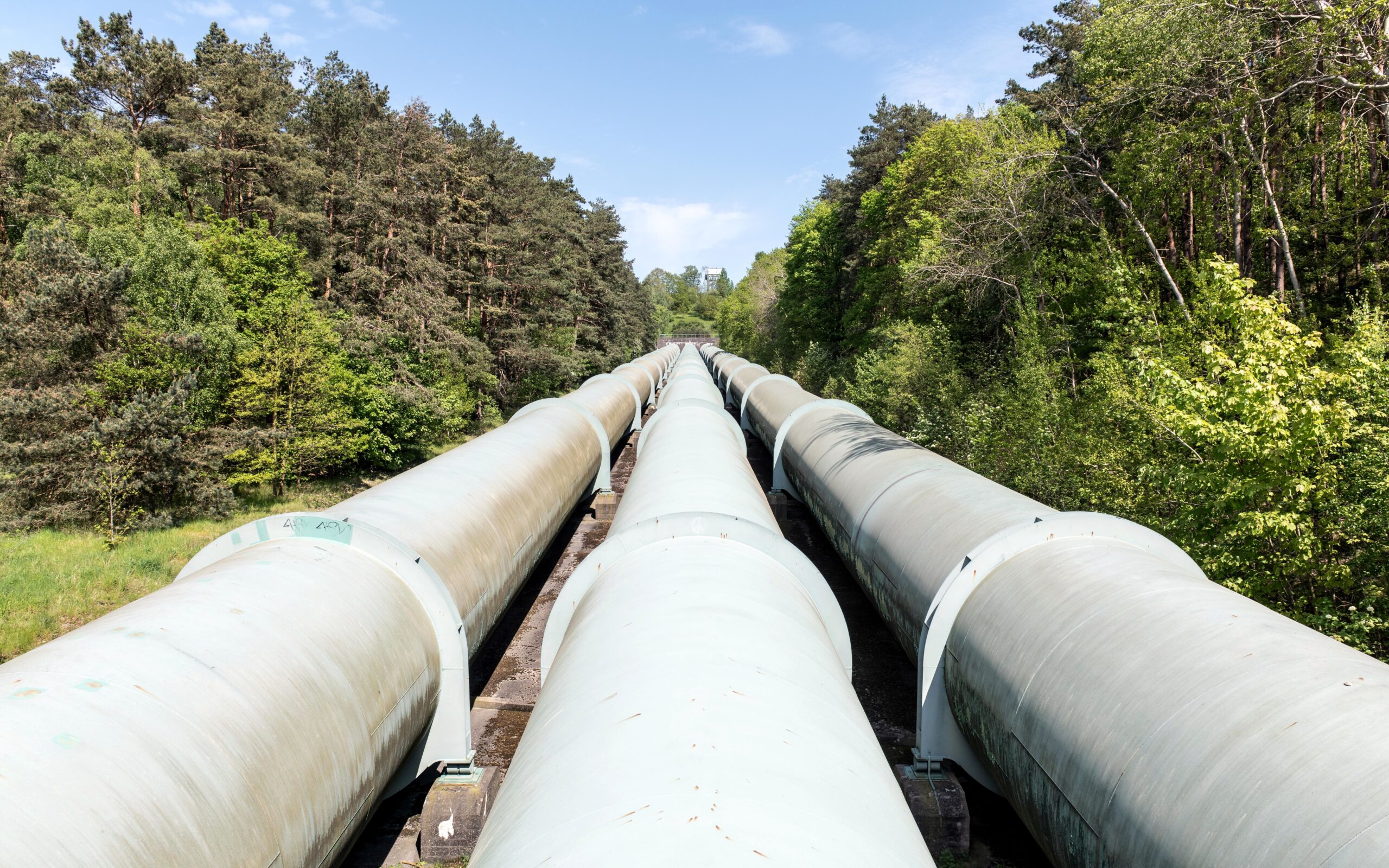
The distinction between the completion of the physical infrastructure and the actual generation of revenue and energy remains a key focus. The 95% completion figure refers to the physical pipeline and major station infrastructure, while the final 5% pertains to the “last mile” connections that determine when commercial gas flow can actually begin for end-users. For investors and consumers, the critical metric will be the transition from construction completion to operational throughput. The phased commissioning plan aims to mitigate risk by allowing the system to be tested and integrated into the grid in stages, starting with Abuja’s industrial and power needs.
As Nigeria seeks to leverage CNG as a cheaper alternative to traditional fuels, the reliability of the AKK pipeline will be a litmus test for the country’s energy transition. The next critical step is the successful commissioning of the Abuja segment in late 2026, which will serve as the primary indicator of whether the project can meet its projected throughput targets and deliver on the promised economic benefits for northern Nigeria.