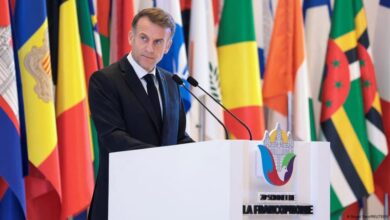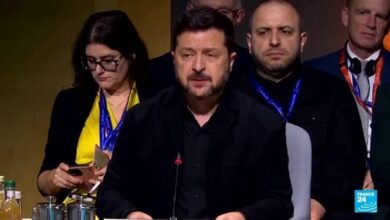
The proposal emerged from a rapid sequence of high-level meetings. Following the latest round of US-mediated talks in Abu Dhabi, Witkoff and Kushner traveled to Moscow, where they met with Russian President Vladimir Putin on Thursday. They then moved to Dublin to brief Zelenskyy just before a gathering of European leaders on Friday. Zelenskyy characterized the discussion as bringing NATO “back on the agenda,” noting that the future of European security hinges on these negotiations. However, he immediately clarified Kyiv’s position: Ukraine would not unilaterally cede any of its territories. He stated that if a peace deal were to be reached, including security guarantees, the right to maintain a strong army, and reconstruction funds, he would submit the question of ceding territory in exchange for NATO membership to a national referendum.
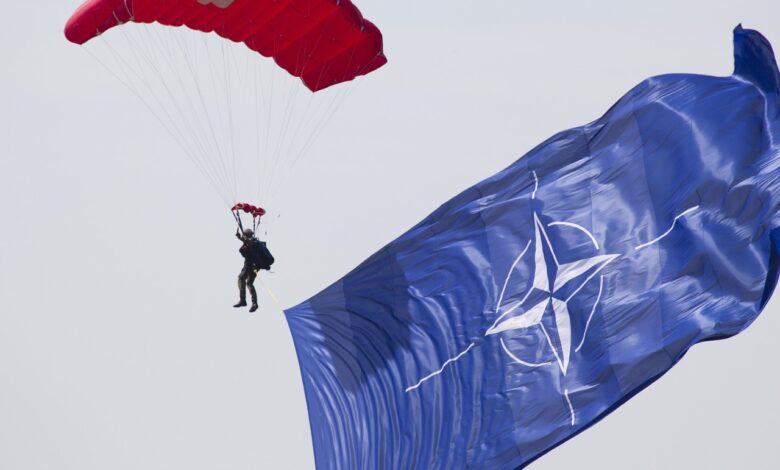
For Kyiv, NATO membership has been the ultimate security anchor. Ukraine applied for membership in September 2022, shortly after Russia’s full-scale invasion, seeking to fortify its borders. Yet, the path to the alliance has been fraught with internal division among NATO members. While nations bordering Russia, such as Poland and Lithuania, have been enthusiastic about expediting Kyiv’s accession, other members have remained cautious, citing concerns about corruption and the necessity of ending the war first. Under the previous Biden administration, the US provided military support but explicitly opposed Western troops being on the ground in Ukraine. The current administration, led by President Donald Trump, has historically been less receptive to Ukraine’s NATO ambitions, with Trump previously telling Kyiv to give up on the idea. This new proposal, therefore, marks a surprising departure, according to Chris Featherstone, a political scientist at the University of York. “The US has been very cautious about getting further involved in Ukraine… so this proposal is certainly a surprise,” Featherstone noted, adding that it could be seen as a recommitment to the alliance despite Trump’s past criticisms.
However, the proposal faces an immediate and formidable obstacle: the Kremlin’s red line. Russia has repeatedly stated that Ukrainian NATO membership would require a “harsh response” from Moscow. Putin has cited Ukraine’s NATO aspirations as a primary reason for launching the war in 2022, viewing the alliance’s expansion as an existential threat to Russian security. Despite the meetings in Moscow, the Kremlin has shown little appetite for shifting this position. Moscow continues to demand that Ukraine abandon its NATO ambitions, maintain a neutral and demilitarized status, and cede sovereignty over the Donbas, as well as parts of the Zaporizhia and Kherson provinces already under Russian occupation. Ian Lesser, a distinguished fellow at the German Marshall Fund of the United States, assessed the likelihood of Moscow agreeing to the US pitch as “very doubtful.” “Surely attractive to Ukraine, but hard to imagine Moscow agreeing to this,” Lesser told Al Jazeera, adding that some NATO members themselves would also be skeptical of the arrangement.
The geopolitical stakes of the Donbas region are substantial. Historically the industrial heartland of eastern Ukraine, the region serves as a critical economic engine. For Russia, securing the Donbas satisfies a primary war aim; for the US, offering it as a trade-off for NATO membership is an attempt to break the diplomatic impasse. Featherstone argued that the proposal is clearly an attempt to test Ukraine’s rigid stance on territorial integrity. “After years of Trump’s questioning of the NATO commitment, Ukraine would need a strong statement of commitment to its defence should they be considering any proposal like this,” he added. The human cost of this impasse remains immense, with the war continuing to devastate Ukrainian society and infrastructure while straining European security architectures.
As the diplomatic shuttle continues, the tension between the two sides remains acute. Zelenskyy emphasized that “real security in Europe means the EU and NATO,” warning that deviations from this standard lead to escalation. The Kremlin, meanwhile, has not yet responded publicly to the specific terms of the US proposal, maintaining its strict position that Ukraine must remain neutral. The next steps will likely involve further consultations among European leaders and potentially new rounds of direct dialogue, but the fundamental disconnect—between Ukraine’s desire for collective defense and Russia’s demand for territorial concession and neutrality—appears to have been formalized rather than resolved. The referendum Zelenskyy mentioned offers a potential mechanism for domestic legitimacy, but it does not bridge the gap between Moscow’s red lines and Washington’s latest offer.