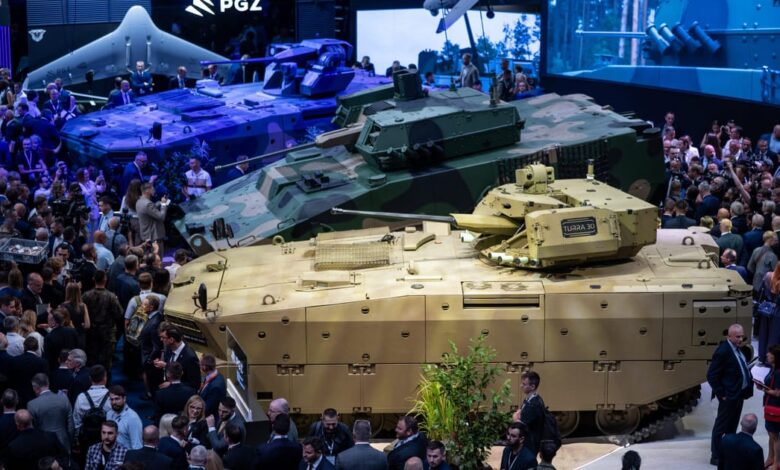
Domestically, this push for increased output is anchored by the Polish Armaments Group (PGZ), the state-owned conglomerate at the heart of Poland’s rearmament. PGZ, formed in 2013 from roughly 50 smaller firms, has won billions of złoty in new orders to supply the expanding Polish military. CEO Adam Leszkiewicz, who has held the post since May 2025, acknowledged the structural challenges of managing such a fragmented entity, noting that while PGZ produces more than 700 products ranging from rifles to the Jelcz wheeled vehicle, the lack of centralization requires significant diplomatic effort to manage internal stakeholders.
The scale of Poland’s defense spending is unprecedented in NATO, with the country aiming to spend 200 billion złoty (€45.7 billion), or 4.8% of GDP, this year. As the largest recipient of the EU’s €150 billion SAFE loans-for-arms program, Poland has secured nearly €44 billion in funding. In May, the Polish Armaments Agency signed contracts worth almost 120 billion złoty with domestic firms, a substantial portion of which went to PGZ and its subsidiaries. These agreements cover critical equipment, including 146 Borsuk infantry fighting vehicles, 96 Krab howitzers, 64 Rak mortars, and 1,000 vehicles for the Homar-K rocket-launcher system.
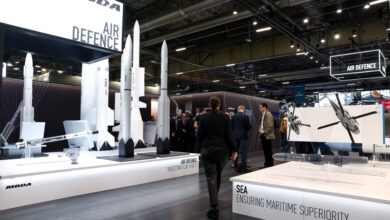
However, the rapid expansion of state-controlled production has drawn scrutiny. A report by the Warsaw Enterprise Institute noted that most of the recent deals with PGZ were no-bid contracts, raising concerns about preferential treatment for government-controlled entities. Analysts point out that while PGZ is building ties with European firms—such as a joint venture with the UK’s BAE Systems for artillery shells and a partnership with MBDA for the Narew air defense system—its fragmented structure remains a vulnerability. Private firms like WB Group, which specializes in drones and communications, are also part of the broader industrial landscape, but the state’s dominant role in heavy equipment procurement remains a point of contention.
To address supply chain bottlenecks, Minister Kosiniak-Kamysz proposed that urgent defense purchases be opened to NATO allies outside the EU when European manufacturers cannot deliver equipment quickly enough. He identified three priority areas for investment: long-range precision-strike capabilities, drones and counter-drone systems, and artificial intelligence. This proposal highlights a tension within European defense policy between strengthening domestic industry and the immediate operational need to acquire capabilities. The next step involves finalizing these procurement frameworks and determining how the SAFE funds will be allocated to bridge the gap between industrial capacity and military requirement.