
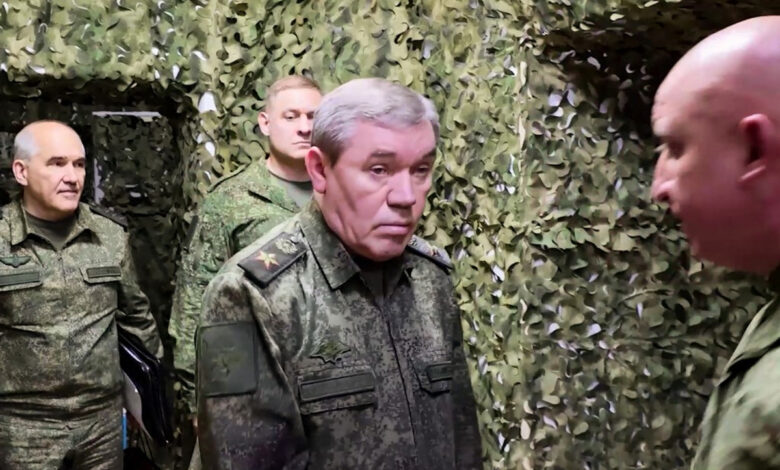
This directive arrives days after Washington announced a self-proclaimed energy ceasefire between Russia and Ukraine, a diplomatic development that appears to have had little immediate impact on the operational tempo on the ground. According to Gerasimov, the strikes on bridges and data centers are part of a General Staff plan to degrade the capabilities of the Armed Forces of Ukraine (AFU) and disrupt logistics. However, the operational reality on the ground suggests a broader campaign of attrition that extends well beyond military targets, affecting civilian infrastructure and daily life across the country.
The targeting of energy infrastructure has resulted in widespread power cuts. On October 16, attacks on facilities in Kyiv and five other regions left over one million consumers without electricity for a period of 24 hours. While Russian officials frame these strikes as aimed at curtailing Ukrainian production of long-range weaponry, such as cruise missiles, Ukrainian authorities note that the consequences extend to residential areas, public services, and civilian logistics. Gerasimov did not provide independently verified data on the extent of damage to specific manufacturing plants, nor did he publish a full list of targeted bridges, leaving the precise scale of the industrial impact open to debate.
Simultaneously, the campaign against transportation links has intensified. Since October 1, Russian drones have repeatedly struck Kyiv’s South (Pivdennyi) and North Bridges, forcing closures that paralyzed traffic across the capital. A new bridge in Zaporizhzhia was also targeted. AFU Major Artem Bilyk described the Russian tactic as a “small cuts” approach, involving repeated strikes that force bridges to close for inspections and repairs rather than destroying them outright. This method, often accompanied by “double-tap” strikes while rescuers are on scene, aims to disrupt transport links, hinder emergency services, and impede the movement of civilian goods without requiring a single, decisive destruction of the structure.
While the infrastructure campaign has been verified by both sides regarding the occurrence of strikes, the battlefield narrative presented by Gerasimov is sharply contested. During the same October 16 briefing, Gerasimov claimed that Russian forces had captured 92 settlements since September 1 and had seized 6,500 square kilometers of territory since the start of the year. He specifically alleged the capture of Dobropillia and Kostiantynivka in Donetsk Oblast and an advance to within five kilometers of Zaporizhzhia.
Ukrainian military officials have categorically rejected these claims. Andriy Kovalov, spokesperson for the Ukrainian General Staff, dismissed the reports as “lies and manipulation,” stating that Russian leadership is creating an “illusion of major victories” for its political leadership and domestic audience. Kovalov asserted that Ukrainian forces have actually liberated more territory since the beginning of the fall than Russian troops have seized. As of the morning of October 17, he confirmed that Dobropillia remained under Ukrainian control, fighting continued in Kostiantynivka, and the front line in the Zaporizhzhia direction remained approximately 22 kilometers from the regional capital, not the five kilometers claimed by Moscow.
The dispute was further exacerbated by the Ukrainian military’s release of video evidence. Soldiers from the 128th Separate Heavy Mechanized Brigade recorded footage directly from Malokaterynivka in Zaporizhzhia Oblast, a village Gerasimov claimed was under Russian control. Maksym Kravchuk, spokesperson for the “South” Military Group, confirmed the village remained under full Ukrainian control and noted the actual distance to the southern outskirts of Zaporizhzhia was about 25 kilometers. Kravchuk commented, “If Gerasimov lies even about things that are easy to verify, then how much credibility do all the other statements by the Russian Ministry of Defense… deserve?”
Independent assessments support the Ukrainian refutation. The Institute for the Study of War (ISW) disputed the Kremlin’s claims, reporting that Russian forces had suffered a net loss of 122 square kilometers of Ukrainian territory since September 1. The discrepancy between official Russian claims and independent verification has sparked outrage even among pro-war Russian military bloggers, with some describing the statements as “an outright disgrace.” This internal friction underscores the strain on the Russian command structure, which is attempting to maintain a narrative of momentum despite a static or receding front line.
The strategic significance of this divergence is profound. For Moscow, the shift toward infrastructure warfare may be an attempt to bypass the stagnation on the ground by imposing economic and logistical pressure on Ukraine’s ability to sustain its defense industry and civilian government. However, the reliance on unverified and contradicted battlefield claims undermines the credibility of the military’s operational reporting. As the “information war” continues, the gap between the strikes landed on energy grids—verified by widespread outages—and the territorial gains reported by Gerasimov—refuted by Ukrainian control and independent mapping—remains a critical factor in assessing the true state of the conflict. The next confirmed development will likely be the Ukrainian response to the continued infrastructure attacks, potentially involving further reinforcement of critical sites or diplomatic appeals to the international community regarding the violation of the recently announced energy ceasefire.