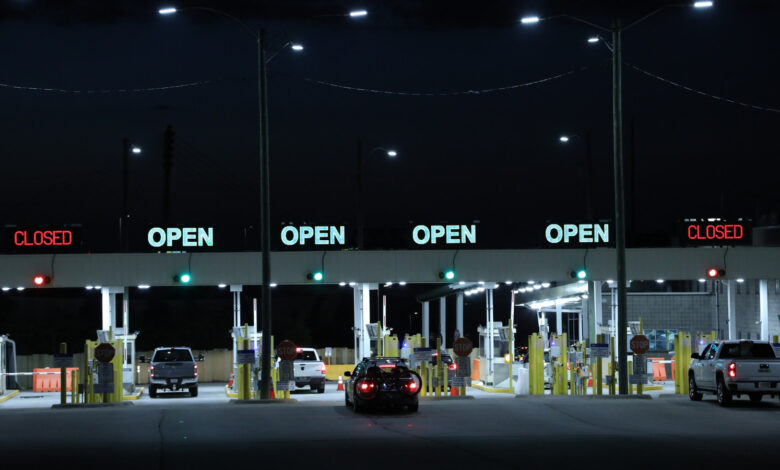
The halt in operations represents a temporary but significant alteration in the flow of movement across one of the most critical trade and travel corridors in North America. For individuals accustomed to using the tunnel, the suspension is a source of frustration, forcing them to reroute or wait for the reopening of the passage. The event’s timing, falling on a weekend when travel volumes are often elevated, amplifies the impact on logistics and personal schedules. As a result, authorities and border agencies have issued clear advisories to the public, recommending that travelers plan their journeys with additional time to account for potential bottlenecks at other points of entry.
In response to the anticipated congestion, the Canada Border Services Agency (CBSA) has taken steps to assist the public in navigating the disruption. The agency maintains an online presence where real-time wait times are posted for alternative crossings. Specifically, travelers seeking to bypass the closed tunnel are directed to consider the Gordie Howe International Bridge or the Ambassador Bridge. By monitoring these channels, individuals can make informed decisions about which crossing to utilize, potentially reducing overall wait times and ensuring a smoother passage into the country.
The reliance on digital updates from the CBSA highlights the increasing role of real-time data in managing border security and traffic flow. In a geopolitical context where trade agreements and personal mobility are tightly regulated, the ability to provide precise, up-to-date information is essential for maintaining the efficiency of cross-border interactions. The advisories serve not just as logistical tools but as a mechanism for managing the expectations of a diverse population of travelers, from commercial freight operators to private citizens.
The temporary nature of the closure underscores the complex balance between local events and national infrastructure. While the running event is a localized occurrence, its impact on the busiest border crossing demonstrates how regional activities can ripple outward, affecting broader patterns of movement and commerce. The coordination required to manage such an event, including the temporary halt of a major infrastructure asset, reflects the administrative complexity involved in maintaining open borders that are also subject to periodic, planned interruptions for other purposes.
As the weekend approaches, the focus shifts to the practical implications for those affected. The advice to “plan to allow extra time” is a standard yet critical directive in such scenarios. It acknowledges the inherent uncertainty that comes with any change in routine, particularly at a border crossing known for high volumes. Travelers are encouraged to check the CBSA website frequently, as wait times at the Gordie Howe International Bridge and the Ambassador Bridge may fluctuate in response to the redistribution of traffic from the closed tunnel.
The situation illustrates the intersection of civic life and state-controlled borders. The closure is not a result of diplomatic tension or security emergency, but rather a scheduled event that requires the temporary suspension of normal operations. This distinction is important for understanding the context: the disruption is planned, communicated, and managed through existing institutional channels. The primary challenge for travelers is not navigating geopolitical uncertainty, but adapting to a temporary logistical hiccup within a well-established system.
Despite the inconvenience, the availability of alternative routes ensures that the suspension of travel at the tunnel does not result in a complete standstill of cross-border movement. The Gordie Howe International Bridge and the Ambassador Bridge continue to function, serving as vital lifelines for commerce and travel. The CBSA’s provision of wait times for these locations empowers individuals to make dynamic decisions based on current conditions, mitigating the impact of the closure as much as possible.
In the broader landscape of U.S.-Canada relations, such temporary closures are a reminder of the practical realities that underpin high-level agreements. While political and economic frameworks facilitate the free flow of people and goods, the physical infrastructure must also accommodate local events and maintenance. The ability of border agencies to communicate effectively and provide real-time data is a testament to the operational readiness required to manage these intersections. For this weekend, the attention of travelers and officials alike is focused on ensuring that the temporary halt at the busiest crossing is handled with minimal long-term disruption, allowing the normal rhythm of cross-border activity to resume once the event concludes.