
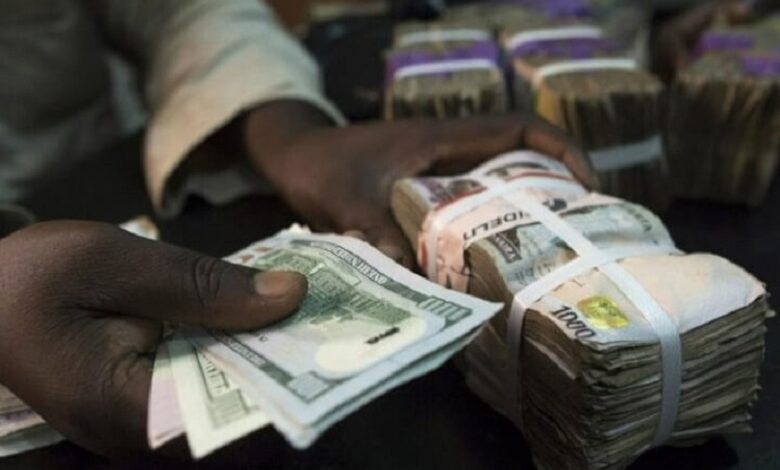
According to data from the Central Bank of Nigeria (CBN), the Naira appreciated by N2.02 on a day-to-day basis in the Nigerian Foreign Exchange Market (NFEM), moving from N1,329.80 to N1,327.78 per Dollar in a recent session. This daily gain extended a broader weekly trend, where the currency recorded a N9.10 appreciation, representing a 0.7 percent gain from the previous Friday’s rate of N1,355.42 to a closing rate of N1,346.32. These figures indicate a stabilization and modest strengthening of the domestic currency in the primary trading window.
Simultaneously, the parallel market, often referred to as the black market, has shown even sharper gains, signaling a convergence between official and unofficial rates. In one reported week, the Naira appreciated by N80 in the parallel market, closing at N1,340 per Dollar, a significant 5.97 percent improvement from the previous week’s N1,420. Over a five-day trading period in that same span, the currency strengthened by N40, or 2.98 percent. This convergence is a critical development, as the gap between the official and parallel markets has narrowed to as little as 0.29 percent, marking the strongest convergence level in two years. Such narrowing reduces arbitrage opportunities and suggests that the official rate is increasingly reflecting true market supply and demand conditions.
A primary driver of this appreciation is the steady climb in Nigeria’s external reserves. CBN data indicates that reserves have risen to approximately $55 billion, with earlier figures citing $48.5 billion as of February 2026. This accretion in reserves enhances the Central Bank’s capacity to intervene in the market to smooth volatility and defend the currency. The increase in reserves provides a buffer against external shocks and supports investor confidence in the sustainability of the Naira’s value.
Policy adjustments have also played a pivotal role in shaping this trend. The CBN recently restored access for licensed Bureaux De Change (BDC) operators to the official foreign exchange market, a move designed to improve Dollar liquidity in the retail segment. A circular issued on February 10 directed the resumption of BDC participation in the NFEM window. While operators have expressed hope that trading will commence soon, with modalities being finalized, the mere announcement has contributed to positive sentiment. By widening the channel for Dollar supply, the policy aims to ease the persistent pressure that has historically pushed parallel market rates higher than official rates.

Market participants have reacted to these shifts with varied strategies. Street traders and operators who had stocked up on Dollars at higher rates have reported losses as the greenback weakens, leading to a reduction in speculative demand. One trader noted, “Some of us bought when the rate was very high. Now that it is dropping, we are losing money.” This sentiment suggests that the speculative component of Dollar demand is being priced out of the market, which typically supports currency stability. However, short-term volatility persists due to seasonal factors, such as elevated demand for service-related requests and inventory imports ahead of the festive season, which can temporarily intensify Dollar purchases.
The CBN has also been active in managing liquidity, having sold $950 million to banks and authorized dealers in a recent week to address liquidity gaps. This intervention, combined with the 62.8 percent surge in interbank FX turnover to $118.957 million, demonstrates a more active and liquid market. The increase in the number of FX deals from 23 to 117 in a specific period highlights improved market participation and efficiency. Furthermore, the Monetary Policy Committee’s decision to cut interest rates to 23 percent reflects a broader macroeconomic strategy to balance inflation control with economic growth, although the direct impact on exchange rates is mediated through capital flows and investment returns.
While the Naira’s recent performance is positive, challenges remain. The transition of BDC operators into the official market is still in its early stages, and full participation has not yet begun. Until then, the parallel market will continue to serve as a barometer for underlying Dollar supply and demand. Investors and businesses should monitor the pace of reserve accumulation and the implementation of BDC trading as key indicators of the Naira’s future trajectory. The narrowing of the spread between official and parallel rates is a significant milestone, but sustained convergence will depend on consistent policy execution and adequate Dollar supply to meet both commercial and retail demand.
Looking ahead, the next major data points to watch include the CBN’s updates on external reserves and the official start date for BDC trading in the NFEM. These developments will provide clarity on the durability of the Naira’s appreciation and the effectiveness of the CBN’s liquidity management strategies. For now, the Naira appears to be in a stronger position, supported by fundamental improvements in reserves and market structure.