
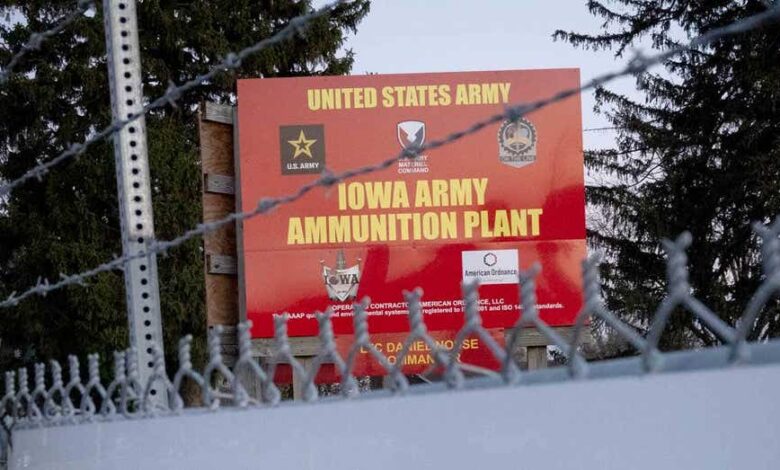
The legal clearance represents a definitive shift in the strategic posture regarding the disposal of legacy hazardous materials. For weeks, the operation had been stalled by an emergency request from the Iowa Environmental Council and the Sierra Club, who sought to block the blast due to concerns over toxic lead dust dispersal. By denying the emergency stay, the court effectively validated the Army’s assessment that the status quo posed a greater danger than the controlled detonation. The judges explicitly framed the risk calculus in their opinion, stating that the situation presented a choice “between a controlled detonation and an unplanned explosion, not between the risk of a controlled detonation and no explosion at all.” This distinction is critical for understanding the operational imperative behind the decision: the primary objective was no longer merely waste management, but the mitigation of an imminent catastrophic failure.
The central hazard involves lead azide, a primary explosive that has degraded over time into a crystallized state. According to court filings referenced in the reports, munitions specialists warned that dropping temperatures increase the sensitivity of this material. If left untreated in the barrels, the crystallized substance risks triggering an accidental, fatal explosion. This is not a theoretical risk; the instability of the compound necessitated the intervention of the Environmental Protection Agency (EPA), which issued an emergency permit to allow the destruction. The EPA’s role was to ensure that while the blast was necessary, adequate safeguards were built into the permit to limit the dispersal of lead dust, a known toxicant that can cause severe health issues. The court’s finding that these safeguards are “adequate” was the legal fulcrum that allowed the operation to proceed.

The path to this ruling was complicated by high-level political intervention. Earlier in the week, President Donald Trump posted on Truth Social declaring that he had ordered the military to hold off on the detonation unless both the appeals court and Democratic Governor-elect Rob Sand signed off. Trump warned that he would hold Sand “responsible for any and all death or destruction” if the operation were blocked. Sand, who is set to take office in January, declined to approve or reject the blast on Monday evening. Instead, he posted on X that the Trump administration should make the call based on the experts it had brought in months ago and urged federal officials to release their briefing details publicly. This political friction highlighted the tension between executive authority, state-level political concerns, and technical military expertise.
Despite the political noise, the military and legal processes moved forward on technical merits. Acting Army Secretary Adam Telle characterized the decision to proceed as a “consensus decision,” noting that every expert agency agreed on the necessity of the action. He added that both Iowa’s current and incoming governors agreed that the call belonged to the experts. A flight carrying Army officials departed Joint Base Andrews for Iowa just before Trump’s post went live, indicating that the operational team was already en route to coordinate the complex logistics of the blast.
The operation itself, scheduled for Wednesday morning, involves the controlled detonation of 68 barrels. The Army has issued public advisories outlining the immediate physical effects: two rapid detonations, ground vibrations, and a dust plume expected to linger for no more than an hour. Residents living near Middletown have been advised to stay indoors, seal their windows and doors, and wash outdoor surfaces with water afterward to mitigate exposure to any residual lead dust. This has already caused disruption in the local community, with residents taking precautionary measures to protect their homes and health. The Army’s coordination with state, local, and federal authorities aims to contain these effects, but the risk of contamination remains a primary concern for the surrounding population.
The broader defense significance of this event lies in the management of legacy hazardous materials. Military installations often hold stockpiles of aging munitions that require specialized disposal methods. The delay in this operation, marked by three previous postponements amid public concern, underscores the difficulty of balancing environmental safety, public perception, and military necessity. The court’s ruling reinforces the principle that when a material poses an imminent threat of accidental detonation, the risk of a controlled response is legally and operationally superior to the risk of inaction.
As the Army prepares for Wednesday’s detonation, the situation remains under close watch. The success of the operation will depend on the accuracy of the EPA’s dispersion models and the adherence to safety protocols by both military personnel and the public. The next confirmed development will be the execution of the blast itself and the subsequent environmental monitoring to verify that the lead dust levels remain within the limits established by the emergency permit. While the legal battle has concluded, the physical and environmental consequences of the detonation will determine whether the consensus reached by experts and courts translates into a safe outcome for the community of Middletown.