
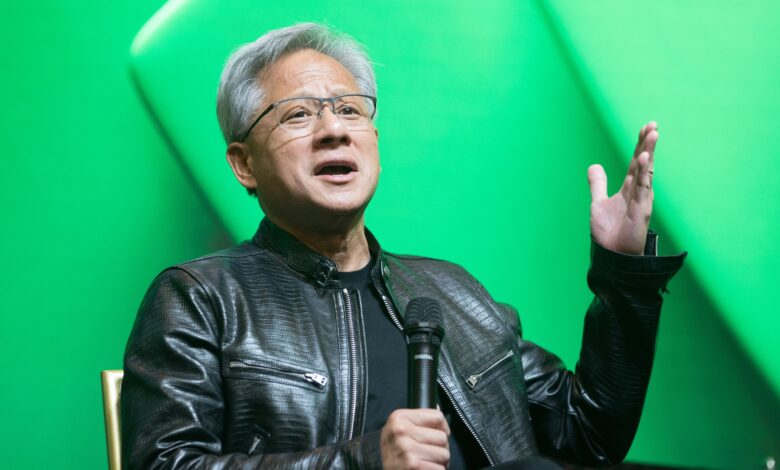
The current volatility follows a turbulent week for the chipmaker. On Sunday, three days prior to the new report, Huang admitted to employees in an email that he had been unfaithful to his wife. That admission came after reports linked him to Alice Huang, a former executive at Singapore’s Megaspeed, whom U.S. officials suspect of spying for China. While China has called the espionage claim groundless and Huang has not been accused of any crime, the incident has triggered a formal response from the company’s independent directors. They have hired Joon Kim, the former acting U.S. Attorney for the Southern District of New York, and the law firm Wachtell, Lipton, Rosen & Katz to examine whether Huang was the target of a foreign intelligence operation. To date, the board has stated it has no reason to believe national security or company secrets were compromised, but the investigation remains active.
The economic implications of this leadership uncertainty are already visible in the market’s reaction to shareholder positions. For a holder with 2,000 Nvidia shares, a position common among long-term investors who bought early, the financial impact is substantial. At the Friday, November 6 close of $186.64, those shares were worth $373,280. By the after-hours mark of $159.37, their value had dropped to $318,740. This represents a loss of $54,540 in just three trading sessions and one evening, with $28,720 of that decline occurring after Wednesday’s closing bell. When compared to the record close of $239.24 on October 6, the loss for a 2,000-share position stands at $159,740, or 33.4%.
Washington is also exerting pressure on the company. Senator Kevin Cramer of North Dakota has called for Huang to step down, while House committee chairmen John Moolenaar, Brian Mast, and Rick Crawford have requested a closed-door briefing, stating that subpoenas are ready if Huang does not agree to one. Additionally, a proposed class action filed Monday in San Jose accuses Nvidia and Huang of hiding the relationship from shareholders. These political and legal developments add a layer of regulatory risk to the immediate financial volatility, complicating the company’s near-term outlook.
Wall Street analysts are deeply divided on the valuation of Nvidia without its chief executive. Dan Ives of Yorkville Ives wrote on November 9 that if Huang were removed, Nvidia would be worth 25% to 30% less, estimating the chance of removal at about 15%. Applied to the after-hours price, a 25% to 30% cut would take the stock to between $111.56 and $119.53. This would reduce the value of 2,000 shares to between $223,118 and $239,055, representing an additional loss of $79,685 to $95,622 for those holders. Conversely, analysts at Baird, Tristan Gerra and Tyler Bomba, downgraded Nvidia to neutral on Wednesday and cut their price target to $200. They noted that the odds of a CEO change are rising heading into 2027, arguing that a new leader, likely from outside, is needed to re-establish trust. Even their reduced target is 25% above the after-hours price, suggesting a potential recovery to $400,000 for a 2,000-share position.
Internal sentiment appears to favor continuity. A survey of 232 Nvidia employees conducted via the platform Blind on November 9 and 10 showed that 88% said Huang should remain CEO. Dan Niles of Niles Investment Management told Yahoo Finance that the company would hold up regardless of the outcome, drawing a parallel to Apple following the departure of Steve Jobs. “Did it collapse?” Niles asked, implying that the company’s fundamental technology and market position remain intact despite the leadership turmoil.
For individual investors, the immediate concern is portfolio exposure. For someone with $1 million in savings, 2,000 shares at $159.37 constitute about 32% of the total portfolio. A drop of the magnitude predicted by Ives would cost 8.0% to 9.6% of the entire portfolio. The decision to hold or sell also carries tax implications; selling shares bought years ago in a taxable account triggers capital gains taxes, whereas trimming inside an IRA avoids immediate tax costs. Furthermore, the time horizon matters: a holder needing money in the next few years is betting on the resolution of the scandal, while a holder with a ten-year horizon is betting on Nvidia’s semiconductor performance. As the board continues its investigation, the next critical data point will be whether Huang remains in his role, a decision that will likely determine whether the stock stabilizes near $160 or slides toward the lower analyst estimates.