The “Blue Tsunami” Catalyst
The immediate trigger for the sell-off was the outcome of the U.S. midterm elections, dubbed the “blue tsunami,” in which the Democratic Party secured control of both the Senate and the House of Representatives. Investors reacted to campaign promises by Democratic candidates to restrict or temporarily halt the construction of AI data centers due to power consumption and local community impacts. Gina Hinojosa, the governor-elect of Texas—a major hub for AI data center investment—pledged to pause ongoing development until protections for rural residents are established. Her remarks, stating, “We must pause ongoing data center development until protections for residents are in place,” rattled investor confidence in the sector’s long-term growth trajectory.
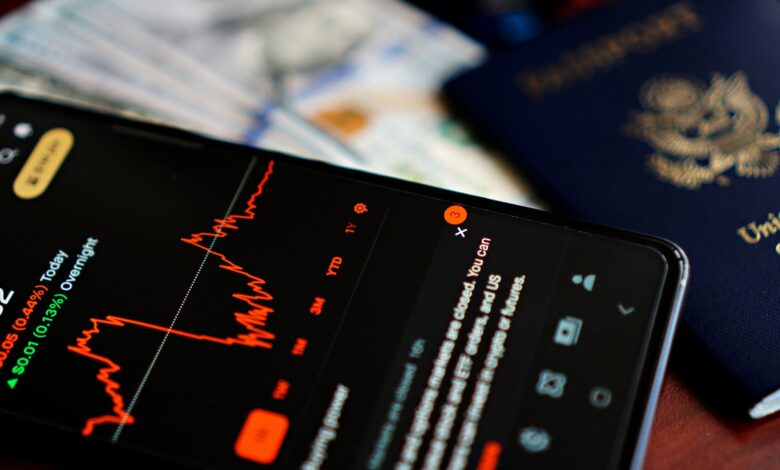
This political uncertainty exacerbated losses following a sharp decline in U.S. markets on November 5. The Nasdaq Composite fell 5.52%, the S&P 500 dropped 4.36%, and the Dow Jones Industrial Average declined 3.44%. The Philadelphia Semiconductor Index plunged more than 12%, with major players like NVIDIA and Broadcom suffering heavy losses. These declines marked the largest drops for the Nasdaq and S&P 500 since the tariff shocks of April last year. In South Korea, the ripple effects were immediate and severe: Samsung Electronics fell 6.35%, while SK Hynix plummeted 10.44%, both stocks seeing intraday losses exceeding 11%.
Global Contagion and Market Mechanics
The shock was not confined to Seoul. Japan’s Nikkei 225 fell 5.96%, and the Taiwan Weighted Index dropped 4.51%, with Chinese and Hong Kong markets also declining by more than 1%. Markets with high exposure to AI supply chains and semiconductor production proved most sensitive to the shifting outlook for U.S. data center investments. Analysts noted that the market is currently pricing in risks related to construction delays and financing difficulties more heavily than actual current demand for AI.
Seo Sang-young, an analyst at Mirae Asset Securities, explained that news of Microsoft re-evaluating its Neo Cloud contract further exacerbated losses. “The market is currently pricing in risks related to construction delays, investment recovery, and financing difficulties more heavily than the actual demand for AI,” he said. Han Ji-young of Kiwoom Securities added that the South Korean market may remain reactive to concerns over reduced AI investment and overseas futures trends rather than domestic earnings or valuations in the near term.
Regulatory Intervention and Retail Investor Pain
The November 6 crash occurred against a backdrop of extreme volatility throughout 2026. The KOSPI had experienced a “mad bull” rally early in the year, hitting an all-time high on June 22 with a cumulative increase of 116%. However, this was followed by a sharp correction; by July 16, the index had fallen 25% from its peak. This volatility triggered a wave of forced liquidations among retail investors who had heavily utilized margin trading and leveraged ETFs. According to National Business Daily, the total value of forced liquidations from May to July 14 reached 2.3 trillion won (approximately 10.4 billion yuan).
In response to the systemic risks posed by this volatility, South Korean regulators have taken decisive action. The Financial Services Commission announced measures to halt the listing of new single-stock leveraged ETFs. Furthermore, following the November 6 crash, Deputy Prime Minister for Economy Lee Hyung-il held an emergency meeting and announced that securities firms would be exempt from the obligation to maintain collateral ratios for credit loans for three months starting November 9. This move aims to reduce forced liquidations, where firms automatically sell stocks when collateral value drops, thereby mitigating a chain reaction of selling.
Despite these interventions, the market’s stability remains uncertain. On November 6, foreign investors net sold approximately $2.0 billion (2.69 trillion won), while institutional investors net bought approximately $1.3 billion (1.709 trillion won). The KOSPI did rebound from its intraday low to reclaim the 5,000-point level following the regulatory announcement, but analysts caution that this policy does not directly resolve foreign selling or the volatility of U.S. tech stocks.
Outlook and Structural Risks
The human cost of this volatility has been significant. A 39-year-old office worker who invested 80 million won in wedding home down payment funds faced a floating loss of nearly a quarter of his investment. Similarly, a 31-year-old investor lost one-third of his principal in SK Hynix leveraged products within days. These cases illustrate the disparity between institutional resilience and retail vulnerability in high-volatility environments.
U.S. President Donald Trump has compared the AI industry to “gold,” countering regulatory arguments, but analysts note that presidential opposition does not eliminate the possibility of permitting restrictions at state and local levels. Investors are now focused on whether Democratic data center regulation proposals will translate into actual legislative and administrative actions, and whether big tech firms will maintain their capital expenditure plans. The South Korean stock market is expected to remain exposed to high volatility as it monitors U.S. tech movements and the intensity of future regulatory interventions.