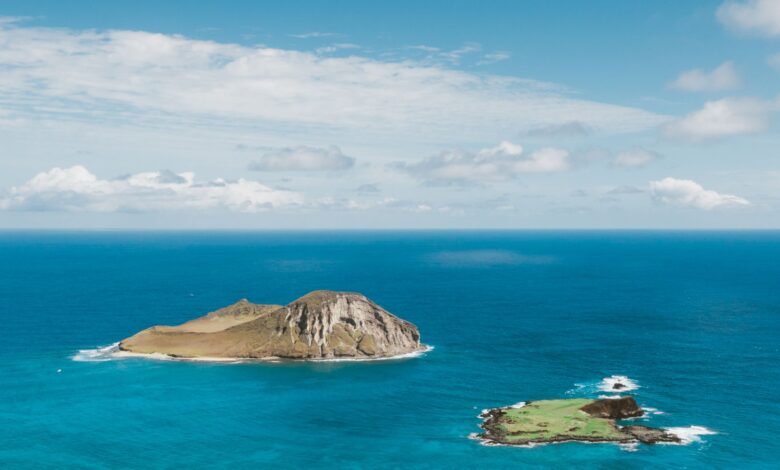
The move signifies a profound recalibration of U.S. engagement with the Pacific Islands. For decades, the relationship was often framed through the lens of U.S. security interests or aid distribution. The new framework, however, emphasizes a partnership between equals, guided by “respect, genuine engagement, and partnership.” According to the Department of State, this historic step reaffirms a joint commitment to deepen cooperation on shared priorities, including the climate crisis, ocean stewardship, marine resources, renewable energy, education, and sustainable development.
The economic and political significance of this shift was underscored by the presence of U.S. Ambassador to the United Nations Linda Thomas-Greenfield. Speaking at the Center for Strategic and International Studies (CSIS) in April 2024, Thomas-Greenfield reflected on her visit to the Cook Islands in November 2023, which was the first high-level interagency delegation to the region since the establishment of these new diplomatic ties. She noted that the visit allowed the United States to directly engage with the 2.3 million Pacific Islanders in the region, affirming that the U.S. is “a Pacific nation as well” with economic prosperity and national security inextricably linked to the area.
Central to this new engagement is the Compacts of Free Association Amendments Act (COFA). The Biden administration secured the passage of this legislation, which mandates $7.1 billion in new assistance over the next two decades. This funding is designed to help COFA nations provide essential government services, including health care, education, infrastructure, and capacity building. While the COFA nations are distinct from the Cook Islands and Niue, the financial commitment illustrates the scale of investment Washington is making to stabilize and support the broader Pacific community. Thomas-Greenfield highlighted that this financial backing is part of a broader strategy that includes the development of the first-ever U.S. strategy for the Pacific Islands, aligned with the Pacific Islands Forum’s 2050 Strategy for the Blue Pacific Continent.
The operational realities of this new diplomatic landscape have required significant administrative adjustments. Prior to the recognition, the U.S. Embassy and Consulate in New Zealand held delegated responsibilities for the Cook Islands, Niue, and Tokelau, viewing them as areas of special sovereignty. The establishment of direct diplomatic relations fundamentally changed this structure. However, a review of the Department of State’s operational planning reveals a lag in internal alignment. The Integrated Country Strategy for New Zealand, a document that sets whole-of-government priorities, was approved for release on April 26, 2022. At that time, the strategy linked U.S. planning to the Indo-Pacific Strategy and the Joint Regional Strategy for East Asia and the Pacific. Yet, the document made only three explicit references to the Cook Islands and Niue. Critics have noted that the Integrated Country Strategy has not been updated to account for the major changes in the operating environment that occurred in September 2023, when the Cook Islands and Niue were officially recognized as independent states.
This administrative oversight has drawn attention to the pace of reform within the Department of State and the U.S. Agency for International Development (USAID). The discrepancy highlights a tension between high-level policy announcements and the granular, on-the-ground implementation of foreign policy. While the White House reversed course in September 2022 to invite the Cook Islands and Niue to the U.S.-Pacific Island Country Summit after initial protests from regional leaders, the internal machinery of the State Department appears to be catching up to the new diplomatic reality. The mission strategic plan for the U.S. Embassy in New Zealand, the Cook Islands, and Niue must now reflect the shift from managing dependencies to engaging with sovereign partners.
Despite these internal bureaucratic hurdles, the external message remains one of deepened partnership. The U.S. has expanded its diplomatic and development presence in the region, including the establishment of new embassies, an expanded USAID footprint, and the return of Peace Corps volunteers to several islands. During the 2023 summit, the U.S. also bolstered its connections within Pacific regional institutions, such as the Pacific Islands Forum and the Pacific Community. The U.S. government has explicitly supported the leadership of Cook Islands Prime Minister Mark Brown, who served as the Chair of the Pacific Island Forum at the time of the recognition.
The implications of this shift extend beyond diplomacy into the realm of long-term economic and environmental cooperation. By recognizing the sovereignty of these nations, the U.S. is acknowledging their agency in determining their own development paths. This is particularly relevant given the existential threat of climate change, which Pacific Islanders have already felt in their livelihoods and futures. The new diplomatic framework aims to ensure that U.S. support is not just reactive aid, but a sustained partnership in sustainable development and good governance.
As the U.S. moves forward, the focus will be on translating these high-level commitments into tangible outcomes. The next critical steps involve the full implementation of the $7.1 billion COFA assistance package and the modernization of State Department planning documents to accurately reflect the new sovereign status of the Cook Islands and Niue. For the Pacific Islands, the era of being treated as dependencies is over; the challenge now lies in operationalizing a relationship based on mutual respect and shared strategic interests.