
The prosecution asserts that the operation was designed to prevent Russia from using natural gas revenue to finance its war against Ukraine. According to the indictment, Kuznietsov devised the plan with other military personnel following the start of Russia’s full-scale invasion in February 2022. The group, comprising professional divers, a skipper, and an explosives expert, allegedly traveled from Ukraine to Germany on forged Ukrainian passports. They chartered a sailing yacht, the “Andromeda,” from a company in Rostock using false identification documents.
Investigators say the team transported military-grade explosives, including HMX and RDX, to the Baltic Sea near the Danish island of Bornholm. Traces of these explosives were recovered from the vessel. The charges allege that the team attached the devices to the pipelines on the seabed by September 22, 2022. The explosives detonated on September 26, destroying three of the four pipeline threads. The pipelines were not in operation at the time but were filled with technical gas. The resulting leak released methane into the atmosphere, with the value of the lost gas estimated at nearly $2 billion.
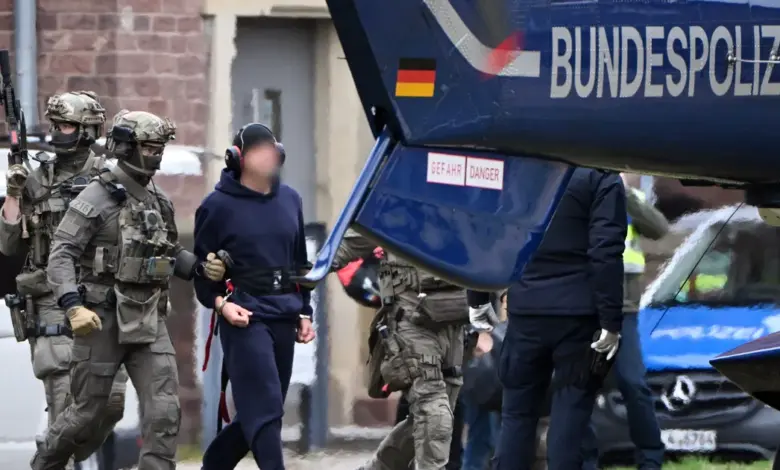
Kuznietsov was arrested in Italy in August 2025 on a European arrest warrant issued by a German court. He was extradited to Germany in November. He has denied any involvement in the sabotage, and his lawyer stated confidence in his client’s eventual acquittal. The Ukrainian government has yet to issue a detailed response, with President Volodymyr Zelenskyy noting that his authorities had not yet received full details of the indictment to formulate a reply.
The case has intensified a period of heightened tension between Berlin and Kyiv. Germany has recently overtaken the United States as Ukraine’s single largest national military backer, providing significant financial and logistical support for the defense of Ukraine. While the German government has not immediately commented on the public charges, the diplomatic implications are significant given the scale of the energy infrastructure damage.
Other individuals linked to the case have faced various legal proceedings. Volodymyr Zhuravlyov, a Ukrainian diver, was detained in Croatia in August 2025 while working on a film shoot. A Croatian court approved his extradition to Germany in September, though his defense has appealed the ruling, calling it political. Earlier in October 2025, a Polish court had refused Germany’s extradition request for Zhuravlyov, citing insufficient evidence, but the individual was subsequently rearrested in Croatia. Danish and Swedish authorities closed their own investigations into the blasts in 2024, citing a lack of grounds to open criminal cases.
German prosecutors maintain that the evidence points to a coordinated state-level operation rather than an isolated act. The indictment highlights the strategic objective of disrupting Russian energy exports to Europe. As legal proceedings advance in German courts, the case stands as one of the most significant international criminal investigations involving state-directed sabotage of critical energy infrastructure in recent history.