Sikorski’s intervention was not merely a procedural objection but a strategic warning to the United States and other global powers. He explicitly referenced the Yalta Conference of 1945, where major powers dictated the post-war order for Europe without adequate consultation with the nations directly affected. “There will be no second Yalta,” Sikorski stated, a message echoed by EU High Representative Kaja Kallas. This phrase serves as a shorthand for the fear that smaller or mid-sized European states could be bypassed in critical decision-making processes that determine their future sovereignty and security architecture.
The core of Poland’s argument is that the war in Ukraine is not an abstract geopolitical contest but a direct threat to the stability of the broader European region. Sikorski warned that the world is becoming increasingly chaotic and driven by conflict, a condition that demands inclusive diplomatic solutions rather than exclusive ones. By excluding Eastern Europe from the table, he argued, any resulting agreement would be unstable and likely to fail, as it would not account for the security concerns of the nations on the front lines of this geopolitical shift.
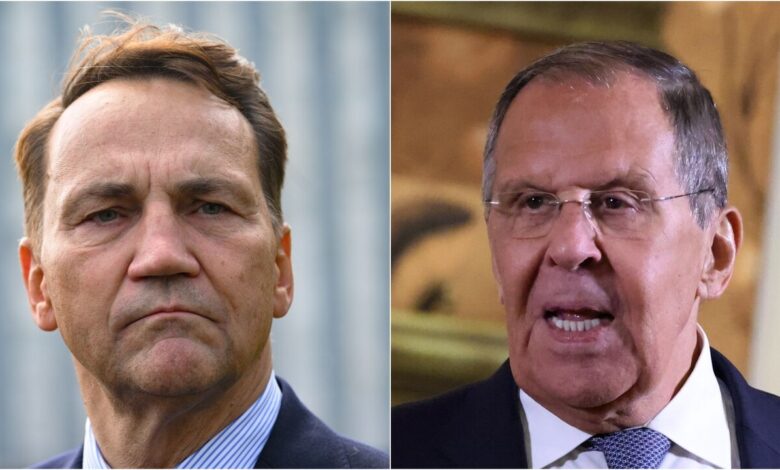
The confrontation at the UN Security Council provided a tangible example of this diplomatic tension. Sikorski told Lavrov, “Tell your boss: enough is enough,” a direct challenge to Moscow’s conduct in the war. While the immediate context was a verbal exchange, the underlying economic and political stakes are substantial. The war has already disrupted trade routes, energy supplies, and investment flows across the region. A peace deal that ignores the interests of countries like Poland, the Baltic states, and other Eastern European nations could lead to prolonged uncertainty, deterring the business confidence necessary for regional recovery and integration.
The warning from Sikorski and Kallas was directed specifically at the administration of U.S. President Donald Trump, who has signaled a desire to engage in direct negotiations with Russia. The Polish and EU officials argued that bypassing the affected European nations would undermine the credibility of any Western-led diplomatic effort. They emphasized that Russia, while capable of inflicting further harm, cannot win its war against Ukraine. This assessment is crucial for understanding the diplomatic leverage at play. If the war continues without a decisive outcome, the status quo remains a state of high volatility, which is detrimental to economic planning and long-term investment in the region.
The insistence on Eastern European participation reflects a broader concern about the balance of power in post-war Europe. Historically, the exclusion of regional actors from major diplomatic settlements has led to lasting resentments and security gaps. For Poland, whose history is marked by being subjected to decisions made by larger powers, this is not just a policy preference but a matter of national survival. The country has become a central hub for supporting Ukraine, both militarily and economically, and views its inclusion in peace talks as a fundamental right and a necessity for a durable peace.
The diplomatic maneuvering also highlights the differing approaches to the conflict among Western allies. While the U.S. may seek a quicker resolution through direct talks, European nations, particularly those on the continent’s eastern flank, argue that a durable peace requires a comprehensive security framework that includes their input. This divergence could complicate Western unity on sanctions, military aid, and diplomatic strategy. For businesses and investors, this lack of a unified diplomatic front adds to the uncertainty already present in the region. Trade policies, energy security plans, and infrastructure investments all depend on a stable political environment, which is currently under threat from both the ongoing war and the potential for a flawed peace deal.
Sikorski’s warnings serve as a reminder that the economic and political costs of the war are not limited to Ukraine. They ripple out to affect the entire European economy and global trade dynamics. The demand for Eastern European participation is a call for a more inclusive and realistic approach to diplomacy, one that acknowledges the agency and interests of all affected parties. As negotiations continue, the response of the U.S. and other global powers to this warning will be a key indicator of the direction of the diplomatic process. If Eastern Europe is indeed sidelined, the stability of the region may be compromised, with long-term consequences for trade, investment, and security.
For now, the focus remains on the ongoing conflict and the diplomatic efforts to end it. Poland’s stance is clear: any solution that does not involve the nations most directly affected is doomed to failure. The coming weeks will test the resolve of Western leaders to uphold this principle, as they navigate the complex landscape of international diplomacy and the urgent need for peace in Ukraine.