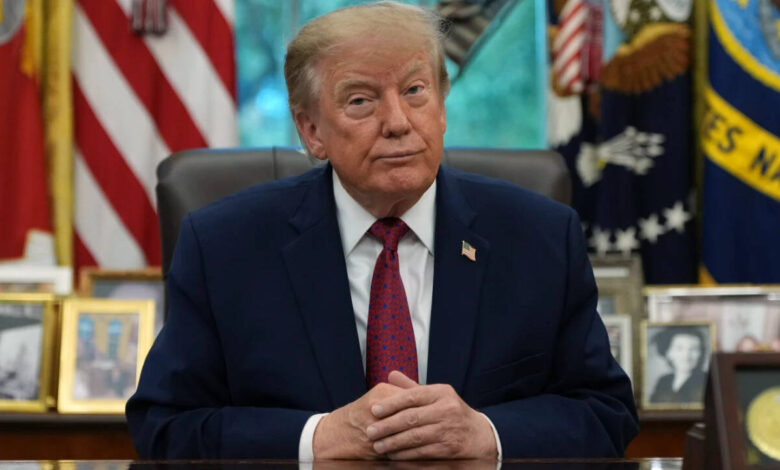
In his first public comments following the election, Trump largely aligned himself with Vice President JD Vance, who had previously described the war as a “catastrophe” for the Republican base. However, in an Oval Office exchange with reporters on Thursday, Trump suggested that the electoral setback would not alter his military calculus. “If we have to do the rest of the Iran thing, we’re very much locked in,” Trump stated, signaling a commitment to the conflict despite the political headwinds.
The conflict, which began eight months ago, has resulted in tens of billions of dollars in damage across the region. The economic repercussions have extended beyond the Middle East, with elevated gas prices and rising costs in nearly every sector affecting households globally. While oil flows from the Strait of Hormuz have resumed with the assistance of U.S. Navy escorts for international tankers, the situation remains volatile. The conflict has expanded into the Red Sea, where Iran-backed Houthi rebels are clashing with a Saudi Arabia-led coalition. These Houthi attacks on Yemeni civilians and Saudi infrastructure have exacerbated an already severe humanitarian crisis in Yemen.
Political analysts and former government officials are divided on the implications of the midterm results for U.S. policy. Brian Haggerty, a former senior analyst at the Central Intelligence Agency who focused on Middle East security, noted that the threat posed by Iran and its proxy groups “did not change overnight” with the U.S. elections. Haggerty, who now works with the Washington think tank Defense Priorities, expressed concern that Trump might feel less restrained by political consequences now that the damage to the GOP’s standing is evident. “There’s reason to suspect that Trump may feel less restrained given that the political damage is done,” Haggerty said. However, he cautioned that the strategic logic of achieving specific goals through escalated strikes remains unchanged from previous months.
Conversely, David Schenker, who served as assistant secretary of state for Near Eastern affairs during Trump’s first term, outlined potential military options. Schenker suggested that the administration could choose to maintain its current posture, characterized by “defensive strikes” and a naval blockade designed to restrict the flow of Iranian oil to global markets. Alternatively, he identified the “Pickaxe Mountain” facility, a nuclear-related site buried deep underground in central Iran, as a potential target for further strikes, a location Trump has previously referenced.

Iranian leaders have interpreted the U.S. election results as a rejection of the war, using the outcome to bolster their domestic stance. Meanwhile, a senior Yemeni government official, speaking on condition of anonymity, urged Washington to avoid hasty decisions, emphasizing that the regional security environment required careful management rather than reactive escalation.
As the White House weighs these options, the stakes remain high for the stability of the Middle East and the global economy. The immediate next step will involve a formal review of military objectives and diplomatic channels, with the potential for further strikes on Iranian nuclear infrastructure or a shift toward a negotiated settlement depending on Tehran’s response to U.S. demands.