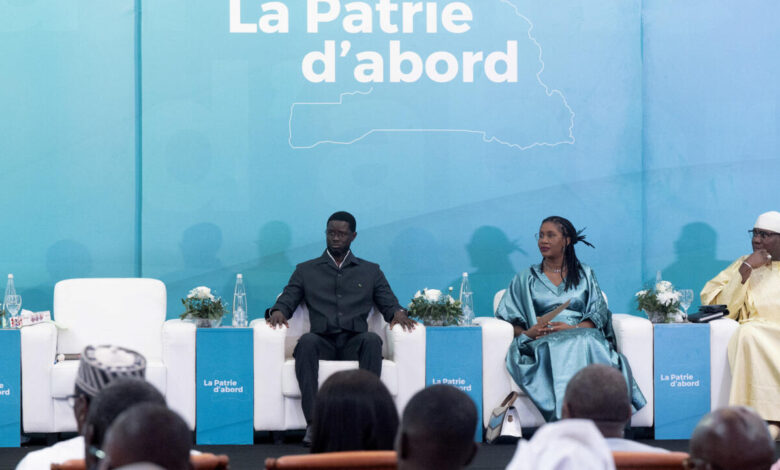
Faye unveiled the party at a gathering in Dakar, describing Kiiraay as “the majority party in this country” and emphasizing its foundation on “republic, ethics, transparency, fraternity and work.” The launch follows a months-long power struggle that culminated in Faye dismissing Sonko as Prime Minister on 22 May 2026. Despite the dismissal, Sonko retained significant political influence, being returned to the National Assembly as a deputy four days later and subsequently elected President of the National Assembly during a session boycotted by the opposition in protest of what they termed a “constitutional coup.”
The political split has occurred against the backdrop of a major constitutional reform package released by the Presidency on 27 April 2026. The package includes a draft constitutional revision, a draft organic law establishing a Constitutional Court, a new Electoral Code, and a law on political parties. These proposals aim to rebalance executive power by granting the Prime Minister greater authority over national policy coordination and the ability to seek advisory opinions from the Constitutional Court. However, the reforms are contentious, with critics noting that the President retains the unilateral power to appoint and dismiss the Prime Minister, creating a “preserved asymmetry” that may limit the practical effectiveness of the textual rebalancing.
The tension between the President and the Prime Minister is further complicated by Article 38 of the draft constitutional revision, which would make the presidential function incompatible with leading a political party. Faye has already stepped down as Secretary General of PASTEF to align with this proposed norm, a move that has left him perceived as detached from the party machinery that secured his victory. In response, Faye’s establishment of Kiiraay represents an effort to restore political traction, although Sonko remains the leader of PASTEF, which retains a large majority in parliament.
The institutional friction between the executive and legislative branches has recently escalated. In late June, the National Assembly passed a bill reducing presidential powers, including the ban on the head of state leading a political party. However, the Constitutional Council struck down this measure less than a fortnight later. The recent promulgation of amendments to the Electoral Code over publicly expressed presidential dissent illustrates how the fracture between Faye and Sonko is reshaping the adoption process of the very reforms intended to mitigate institutional conflict.
Political observers note that while several PASTEF officials have announced resignations to join the presidential camp, the new party has yet to prove its electoral strength. The future of the constitutional reforms now depends heavily on the dynamics of this executive-legislative cohabitation, as the struggle for political ownership may prove more decisive than the texts themselves.