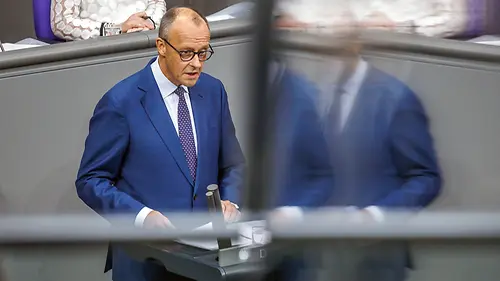
“We are a strong country: economically, politically and also socially,” Merz told parliament, asserting that the centre must demonstrate it is shaping and modernizing the nation. He highlighted that the government’s ability to act is central to achieving a “bright future,” noting that the recent agreement on reforms demonstrated this capability. The Chancellor stressed that the coalition’s goals include modernizing the country and ensuring prosperity, with the specific aim of giving businesses more leeway while maintaining social stability.
These domestic priorities align with broader foreign and EU policy positions outlined by the Chancellor in a policy statement to the European Council on March 18, 2026. During that address, Merz appealed to the European Commission to make widespread reductions in regulations, arguing that the Commission must clarify where laws could be simplified or abolished entirely to enhance competitiveness. He also called for greater speed in concluding EU free trade agreements to regain lost room for manoeuvre.
On foreign policy, Merz reiterated that pressure on Russia must remain high to secure a just peace for Ukraine, insisting on European participation in any potential peace negotiations. However, he rejected German military involvement in US and Israeli operations against Iran, though he noted Germany would not close itself off to a debate regarding free shipping. This stance was consistent with his emphasis on strategic autonomy and defined security interests.
Germany’s strategic partnerships have also been a focus, particularly with Ukraine. In recent German-Ukrainian intergovernmental consultations in Berlin, the first held in over 20 years, Merz and Ukrainian President Volodymyr Zelenskyy signed agreements on security cooperation and industrial reconstruction. The two leaders emphasized a deepening strategic partnership, with Merz noting that the bond between their societies is “deeper than ever.” These consultations set the course for intensified cooperation, including in the development of weapons systems.

The government’s approach to structural change and security is further underpinned by the National Security Strategy adopted by the Federal Cabinet. This strategy addresses a changed security environment, increasing multipolarity, and threats to democracy and the economy. Domestically, the government continues to support the structural transition in coal-mining regions, with the Structural Development Act guaranteeing up to 40 billion euros in financial assistance through 2038. This funding aims to facilitate the phase-out of lignite mining and create sustainable economic opportunities in affected areas, such as Lusatia.
While the July 2026 policy statement focused on the immediate legislative agenda and the coalition’s reform package, the broader framework for these actions was established through earlier strategic documents and international engagements. The government maintains that these combined domestic and foreign policy measures are necessary to protect German citizens and ensure long-term economic stability in a complex global landscape.