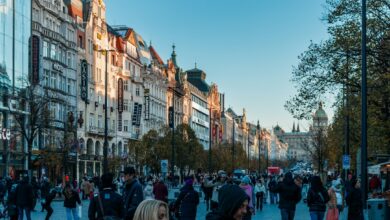
In Prague, thousands of protesters flooded the square at a rally organized by the movement “Million Moments for Democracy,” titled “Czechia is not for sale.” Banners criticizing Babis were visible throughout the crowd, with demonstrators chanting “Throw away Babis,” according to observations by journalists from the AFP. The protests coincide with critical negotiations in which Babis, leader of the ANO party, is attempting to form a new government following his party’s victory in the October general election. Babis, a 71-year-old former Communist and the seventh-wealthiest person in the Czech Republic according to Forbes, is in talks with the far-right SPD and another EU-sceptic party to consolidate power.
The political stakes are high, with President Petr Pavel, a former NATO general, tasked with appointing the next government. Pavel has publicly called on Babis to clarify how he will manage a significant conflict of interest: as a politician who decides on state subsidies and a businessman who receives them through his sprawling Agrofert food and chemicals holding. Babis, who served as prime minister between 2017 and 2021, is currently facing trial over allegations of EU subsidy fraud. He has denied any wrongdoing, characterizing the legal proceedings as a smear campaign. Mikulas Minar, head of the organizing movement, has accused the emerging coalition of being built on a “mafia principle,” suggesting that Babis and SPD leader Tomio Okamura—who is also facing trial over inciting hatred—may be aligning to protect each other from legal consequences.
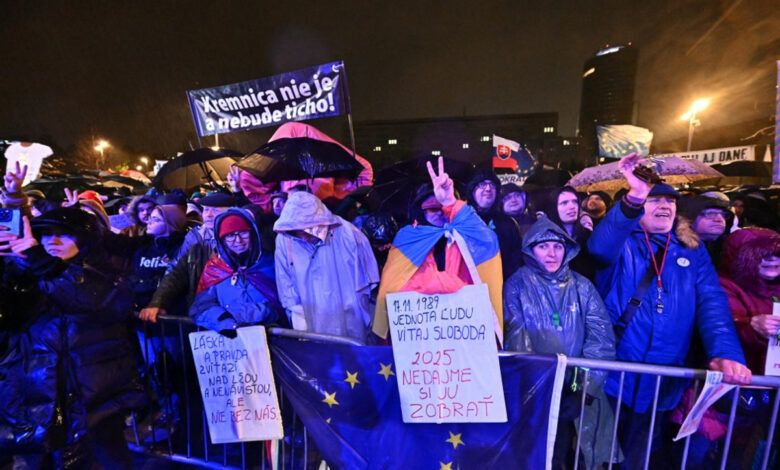
Similar sentiments of discontent echoed across the border in Slovakia, where tens of thousands of people filled Bratislava’s Freedom Square despite heavy rain. The Slovak protests targeted Prime Minister Robert Fico, a 61-year-old former Communist now serving his fourth term. Demonstrators shouted “Enough of Fico” and carried banners reading “Freedom is not a gift but a right.” The discontent in Slovakia is rooted in Fico’s government’s recent crackdown on non-profit organizations, cultural institutions, and media outlets deemed “hostile,” which has sparked significant unrest in the heavily polarized nation. Furthermore, Fico’s fostering of close ties with Russian President Vladimir Putin and his rejection of military aid to Ukraine have drawn sharp criticism from those who view such alignment as a threat to national sovereignty.
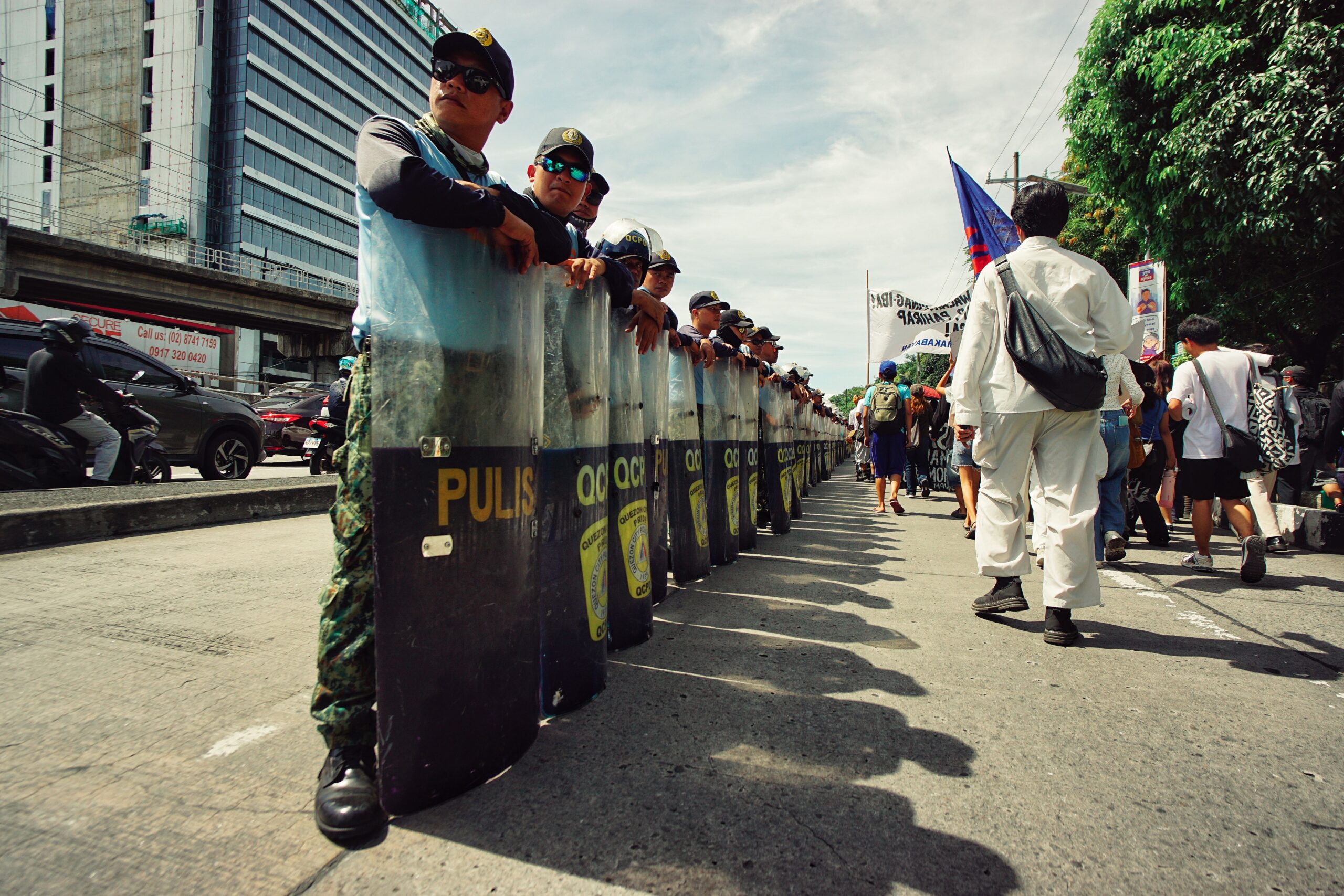
The parallel nature of the protests in both nations underscores a shared anxiety regarding the erosion of democratic norms in the region. In Prague, Jachym Prokop, a 19-year-old student draped in an EU flag, told the AFP, “We have freedom and I don’t want to lose it. They are dragging us towards the East rather than the West.” This sentiment mirrors the concerns of Slovak protesters who fear their nation is becoming a “Trojan horse for Russia.” L’ubos Dobsovic, a 60-year-old entrepreneur who participated in the 1989 revolution, stated, “I absolutely dislike where this government is dragging us. I want normal democracy to return, normal relations… and that we don’t become a Trojan horse for Russia.”
While the current leaders face mounting pressure, the political landscape remains complex. Babis describes himself as a “Trumpist” and continues his efforts to form a coalition, while Fico remains entrenched in power in the EU and NATO member of 5.4 million people. The protests represent a significant challenge to both administrations, forcing them to navigate public anger while pursuing their respective political agendas. As the anniversary of the Velvet Revolution concluded, the focus now shifts to whether these legislative and executive maneuvers will succeed in forming stable governments or if the public outcry will continue to reshape the political dynamics in both the Czech Republic and Slovakia.