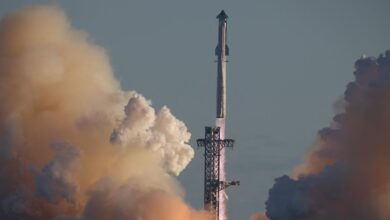
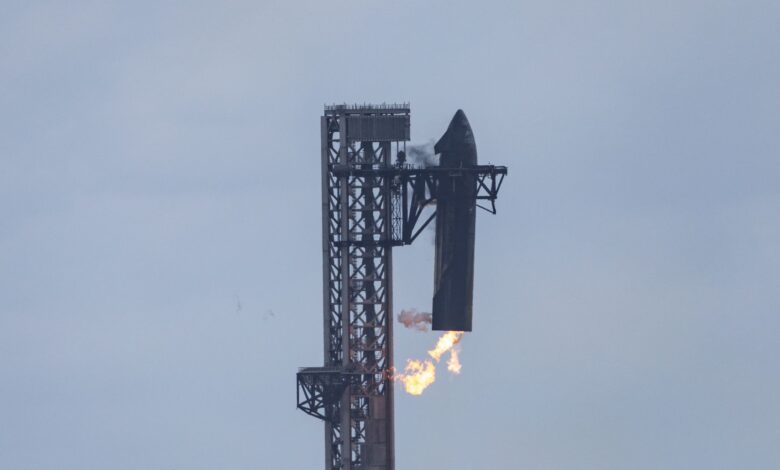
The 15th test flight launched on Friday, November 13, with the objective of recovering both the Super Heavy booster and the Ship upper stage at the launch pad. SpaceX had previously caught the Super Heavy booster on three prior test flights, but had never attempted to retrieve the upper stage. The mission plan aimed to demonstrate a “double catch,” a strategy intended to enable rapid inspection, refurbishment, and reflight of the vehicle. However, the Super Heavy booster diverted to a splashdown in the Gulf of Mexico on Friday evening following a low-fuel alarm. Despite this failure, the Ship upper stage continued its trajectory and successfully descended upright into the tower’s arms the following afternoon.
Recovering the upper stage presents greater technical challenges than retrieving the booster, as it flies at much higher altitudes and speeds, resulting in a more complex return profile. SpaceX spokesperson Dan Huot described the event during the company’s webcast, stating, “That was the holy grail of spaceflight, plummeting through fire to be snatched out of the air by steel.” The successful capture distinguishes the Starship system from previous smaller models that required heavy landing legs and were not fully reusable, highlighting a shift toward a more efficient recovery method.
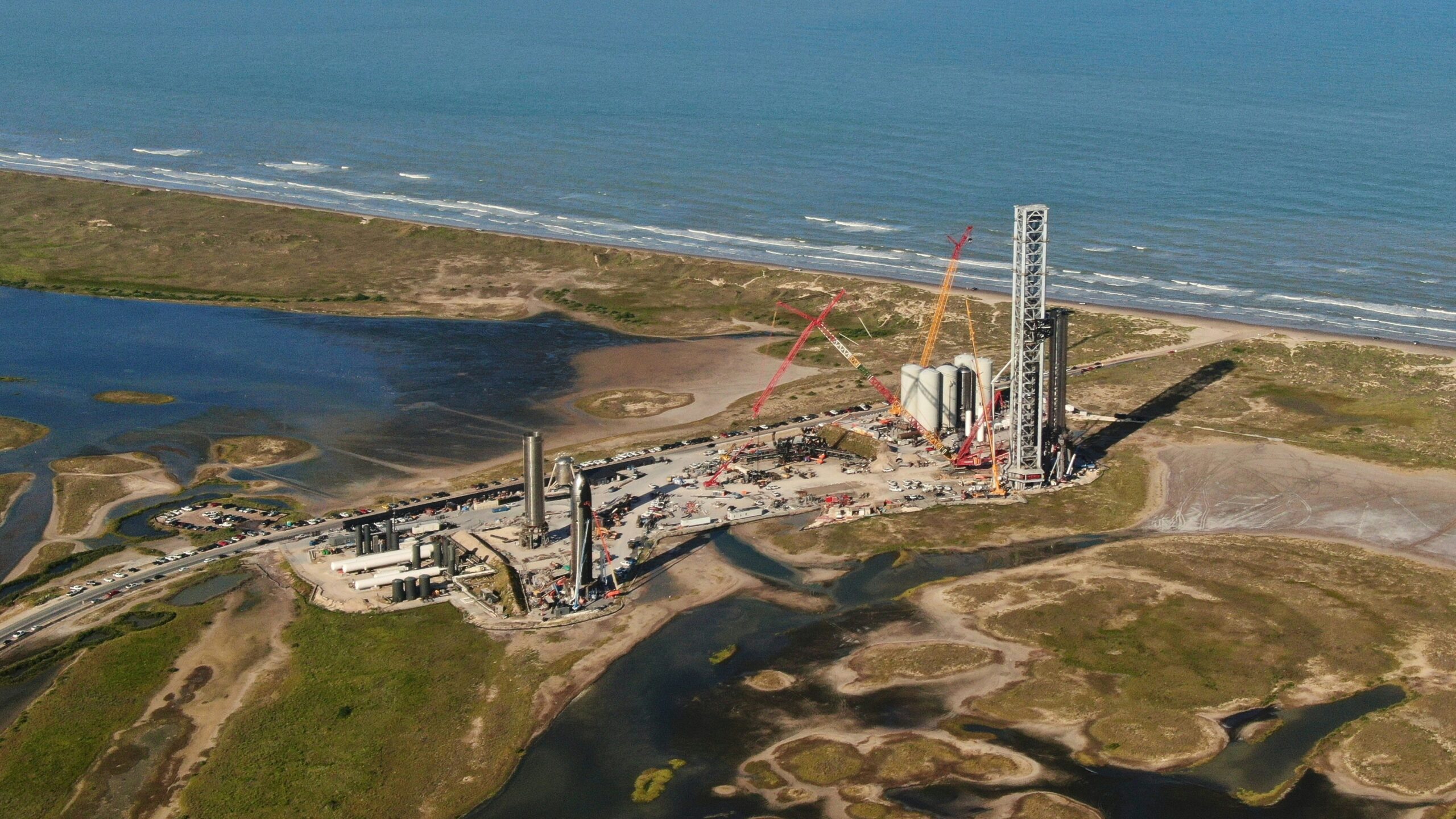
This development is central to SpaceX’s long-term operational goals, which include launching up to 10,000 Starships per year by 2030 to support massive satellite constellations. The company plans to deploy next-generation Starlink V3 and Starmind AI data-center networks, with the latter potentially comprising one million spacecraft. The recovery of the Ship is a prerequisite for these plans, as SpaceX has not yet demonstrated rapid reflight of the upper stage. While the Super Heavy booster has been reflown on two occasions—Booster 14 on Flights 7 and 9, and Booster 15 on Flights 8 and 11—several months separated those launches. SpaceX has not yet reused a Ship, making the November 14 recovery the first step toward that capability.
Starship is also integral to NASA’s Artemis program, having been selected as the first crewed lunar lander. For these human-rating missions, the vehicle must meet stringent safety and reliability standards, further necessitating the demonstration of full reuse and rapid turnaround times. SpaceX plans to begin launching Starships from Florida’s Kennedy Space Center in the coming months. The next critical step for the company will be to refurbish the recovered Ship and attempt its reflight, proving that the rapid reusability model required for high-cadence launch operations is viable.