
These operations mark the first US military strikes against Iran since Tuesday’s midterm elections, which resulted in significant Democratic victories driven by voter concerns over the war and rising prices. According to the United Kingdom Maritime Trade Operations, at least 11 ships were attacked in and around the Strait of Hormuz over the past week, with three of them sinking.
Despite the military escalation, both Washington and Tehran indicate that negotiations to end the conflict are ongoing. Bloomberg reported Saturday, citing a diplomat familiar with the talks, that Iran is displaying a willingness to discuss aspects of its nuclear program that had previously been off the table. Under the latest proposal from Qatar, the US would lift the blockade in the Strait of Hormuz and release some frozen Iranian assets, while Iran would permit the return of International Atomic Energy Agency inspectors to tour damaged nuclear sites, according to the Guardian.
Qatar’s Prime Minister Mohammed bin Abdulrahman Al Thani stated Saturday that mediation between the two sides remains active and that the US is still willing to find a solution. Al Thani, who recently spoke with President Trump, emphasized at Oxford University that while a “perfect peace deal” may not be achievable, waiting for such a moment risks sacrificing a good deal. Iranian Foreign Minister Abbas Araghchi said he had spoken with 12 foreign ministers in the last 48 hours to prevent further escalation.
The US continues to apply economic pressure on Iran while talks proceed. Admiral Brad Cooper, commander of US Central Command, announced Saturday the establishment of a 20-person “Task Force Iron Gate.” This task force will coordinate with unnamed US government agencies to monitor dual-use technologies, sanctioned materials, and illegal revenue streams across Iran’s land borders and the Caspian Sea. Centcom stated that the current blockade of the Strait of Hormuz has effectively bottled up $25 billion in Iranian crude oil.
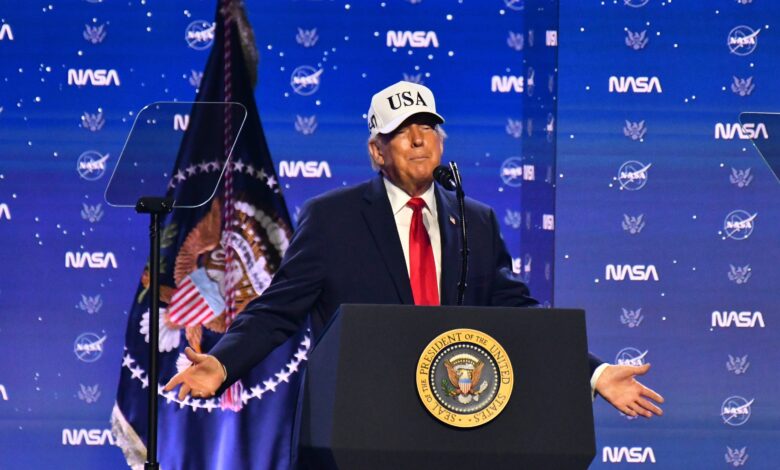
President Trump defended the ongoing military campaign to reporters Friday night, asserting that the US action was necessary to prevent Iran from using nuclear weapons. “If we didn’t hit Iran, you wouldn’t have Israel today,” Trump said at the renamed Donald J. Trump International Airport in West Palm Beach, Florida. He claimed that if Iran had possessed nuclear capabilities, it would have used them to obliterate the Middle East, Europe, and US cities. Trump added that Iran now “wants to make a deal very badly.”
The next expected development hinges on whether the framework for allowing IAEA inspectors to return to nuclear sites can be formalized into a binding agreement before further military actions are taken.


One Comment