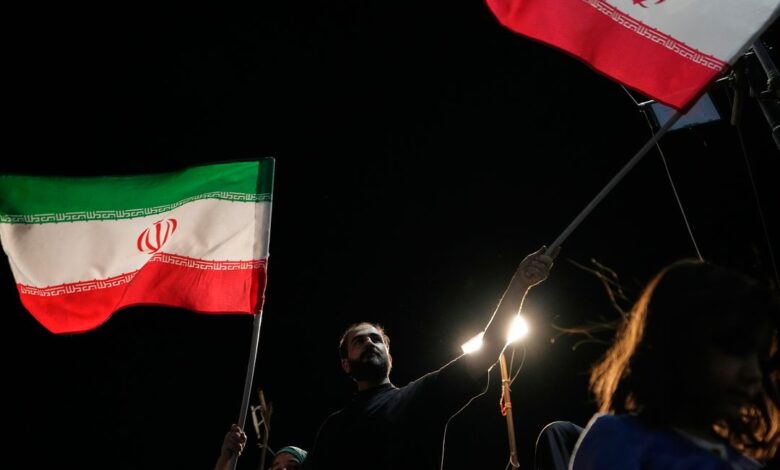
The escalation began on Wednesday, when Major General Ali Abdollahi, the Chief of Staff of Iran’s armed forces, issued a direct warning to countries on the southern shores of the Gulf. In a post on the social media platform X, Abdollahi stated that nations which had previously declared they would not allow the United States to use their territory against Iran “should know that nothing escapes our notice.” He cited the presence of a large number of US military aircraft, specifically noting aerial refuelling tankers, at bases across the region. Abdollahi argued that such a deployment was unlikely to occur without the knowledge of the host countries. “We warn that any assistance or facilitation provided to the aggressor US military will be considered participation alongside US forces,” he said, signalling that Tehran views logistical support as a form of direct belligerency.
This warning coincides with a parallel diplomatic track where Iranian lawmakers are hardening their stance against Washington. Fada Hossein Maleki, a member of the Iranian parliament’s National Security and Foreign Policy Commission, addressed the specter of nuclear escalation in an interview with Khabar Online. While Maleki stated he did not rule out an “ill-considered action” by US President Donald Trump, he expressed skepticism that the US leader would dare to initiate a nuclear attack, noting it could “plunge the world into a dangerous war.” However, Maleki was unequivocal about Iran’s response to any such strike: “If such an action is taken, the Islamic Republic of Iran will also respond, and its reaction will be proportionate to the type of weapon used against Iran.” When pressed on whether this implied a nuclear counter-strike, Maleki replied, “Whatever the US uses, Iran will respond to it,” though he did not explicitly confirm that Iran possesses nuclear weapons. He further claimed that Tehran has moved from a defensive posture to “active and offensive deterrence,” asserting that many of Iran’s military capabilities have “not yet been unveiled.”
These statements from Tehran arrive against the backdrop of a stalled peace process. In mid-June, Iran and the US signed a memorandum of understanding under Pakistani mediation, aimed at ending their war and paving the way for negotiations on a final agreement. However, talks have since halted amidst disputes over the implementation of this memorandum, particularly regarding the Strait of Hormuz. Maleki accused Trump of failing to honour commitments under the memorandum, stating that Iran would not return to negotiations unless Washington abides by its previous commitments. He emphasized that issues concerning the Strait of Hormuz would remain unresolved otherwise, while noting that Iran’s separate bilateral talks with Oman continue without US participation.
On the other side of the negotiating table, US President Donald Trump has framed the current impasse as a definitive choice between diplomacy and total military victory. Speaking to Fox News on Sunday, Trump stated, “Do I make a deal with them, or do I finish them off? That’s the only question.” He claimed that US forces now control the Strait of Hormuz, asserting, “Remember, we now control the Hormuz Strait. They get nothing. Yes, we get everything.” Trump maintained that commercial activity through this critical chokepoint had exceeded pre-war levels and described the US Navy’s enforcement of a blockade on Iranian ports and shipping as “unbelievable.” He suggested that either a comprehensive agreement or fresh military strikes would represent an American victory, though he questioned whether Tehran would honour any future commitments.
The control of the Strait of Hormuz remains the central point of contention in the conflict, which erupted in late February following joint US-Israeli strikes on Iran. These initial strikes prompted Tehran to retaliate against US and Israeli targets and US assets across the region, leading to months of hostilities that the current memorandum sought to curtail. The disagreement over the status of the strait highlights the fundamental disconnect between the two sides: Tehran views the strait as a sovereign issue requiring resolution through the stalled talks, while Washington claims operational dominance and economic leverage through naval enforcement.
Amidst these geopolitical maneuvers, President Trump also addressed broader trade and technology issues, accusing Taiwan of having “stolen” the US semiconductor industry through predatory pricing. “They stole our chip business, all of it, 100%, because they made chips at a ridiculous price, and they just pushed them in,” Trump said. He added that stronger leadership in Washington would have prevented broader regional friction with China, linking the Middle East crisis to a wider narrative of US economic and technological disadvantage.
The immediate economic implications of these developments hinge on the stability of energy flows and regional security. If the US blockade of Iranian ports and the claimed control of the Strait of Hormuz are enforced strictly, the disruption to global shipping lanes could impact energy prices and supply chains, although specific financial data on current trade volumes or price adjustments were not provided in the available reports. The warning to Gulf states introduces a new variable: the potential for regional allies to face economic or security pressure from Iran if they continue to host US military assets. This creates a complex risk environment for businesses operating in the Gulf, where the line between neutrality and participation in the conflict is becoming increasingly blurred.
As the standoff continues, the focus remains on whether the memorandum of understanding can be revived. The next critical step will likely involve either a resumption of negotiations in Oman or a further escalation of military posturing. For now, the region is locked in a tense equilibrium, with Iran threatening retaliation for any perceived US aggression and the US asserting dominance over key maritime routes, leaving the broader economic and security landscape in a state of heightened uncertainty.