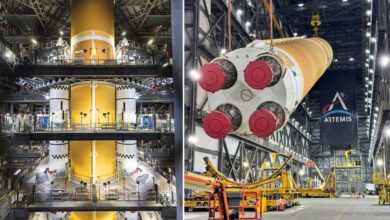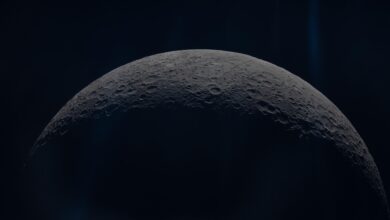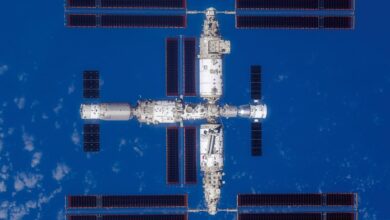
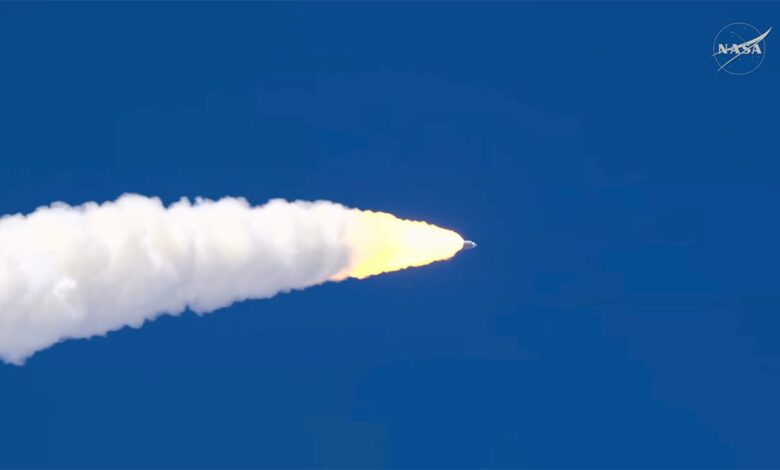
Artemis II launched on April 1, 2026, carrying four astronauts on a nine-day circumlunar journey. It was the first crewed lunar mission since the Apollo program and a critical step toward establishing a permanent human presence on the Moon. The study analyzed the atmospheric impact of the mission, specifically focusing on the ionosphere, a region of the atmosphere extending from approximately 80 to 640 kilometers above Earth’s surface. This layer marks the boundary between the lower atmosphere and space and is vital for radio signal propagation and GPS accuracy.
Researchers identified three separate disturbances corresponding to specific phases of the flight. The first occurred during the initial launch from Kennedy Space Center, generating shock-acoustic and gravity wave modulations. However, the study notes that the subsequent upper-stage burns produced much stronger effects. Approximately one hour after liftoff, an “apogee raise burn” triggered shock waves and large-scale disturbances that elongated 50 degrees of longitude across North America. A third disturbance occurred roughly 25 hours after launch, caused by the “trans-lunar injection burn,” which placed the spacecraft on its trajectory toward the Moon.

The authors emphasize that this is the first instance of a single space mission producing three separate ionospheric disturbances over the same region during successive orbital maneuvers. While the study found no widespread GPS disruption caused directly by the Artemis II liftoff, the recorded changes in the ionosphere indicate a potential for future interference. The researchers caution that such disturbances could disrupt radio signals and affect technologies reliant on precise positioning, including drones and self-driving vehicles.
As a pre-print, the study has not yet undergone independent peer review or replication. Nevertheless, the data highlights a growing concern regarding the cumulative atmospheric impact of increasingly powerful rocket launches. The team suggests that as the frequency of such missions rises, the potential for interference with terrestrial communication and navigation infrastructure may become more pronounced. Future monitoring of these atmospheric changes will be essential to assess the long-term operational risks associated with high-energy rocket launches.