
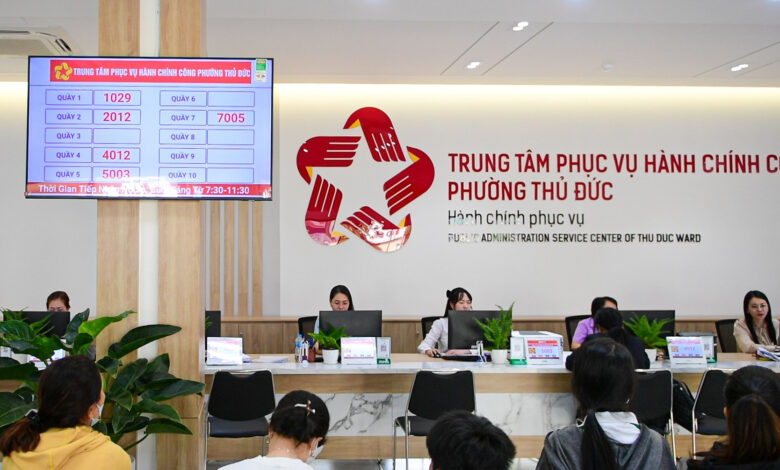
The restructuring plan, announced by Minister of Home Affairs Phạm Thị Thanh Trà, will reduce the number of government entities from 30 to 21. This includes cutting the number of units under ministries and ministerial-level organizations by 15 to 20 percent to address overlapping functions. Key mergers include the combination of the Ministry of Planning and Investment with the Ministry of Finance to form the Ministry of Finance and Development Investment, and the merging of the Ministry of Transport and the Ministry of Construction into the Ministry of Infrastructure and Urban Affairs.
Further consolidations involve creating a new Ministry of Agriculture, Natural Resources and Environment by merging the current Ministry of Natural Resources and Environment with the Ministry of Agriculture and Rural Development. The Ministry of Information and Communications will join the Ministry of Science and Technology to form the Ministry of Digital Transformation, Science and Technology. Additionally, remaining departments of the Ministry of Labour, Invalids and Social Affairs will merge with the Ministry of Home Affairs, while its vocational training and social welfare responsibilities will transfer to the Ministry of Education and Training and the Ministry of Health, respectively.

These structural changes are accompanied by administrative updates to job classifications. Under Decree No. 361/2025, ministries and provincial People’s Committees were required to approve updated job position frameworks by July 1, 2026. The government reported that these approvals have been largely completed. For public service units, Decree No. 232/2026 sets a deadline of July 1, 2027, for approving new job position frameworks, although previously approved frameworks remain valid for recruitment and management until new decisions are issued.
On the financial side, the government has issued three decrees and three circulars to implement allowance policies for officials, civil servants, and armed forces members. These measures follow the introduction of a two-tier local administration model. The Ministry of Home Affairs is currently working with other agencies to develop proposed salary policies in line with the 14th National Party Congress Resolution. The staffing plan for the 2027-2031 period is expected to be submitted to the Politburo in the fourth quarter of 2026.

While undergoing these structural changes, the Ministry of Home Affairs has also proposed a four-day New Year break for public employees, running from January 1 to January 4, 2026. This proposal aims to provide additional rest time for workers. Under the 2019 Labor Code, employees working during this holiday would be entitled to overtime pay of at least 300 percent of their standard wage, or 390 percent if the work is performed at night.



One Comment