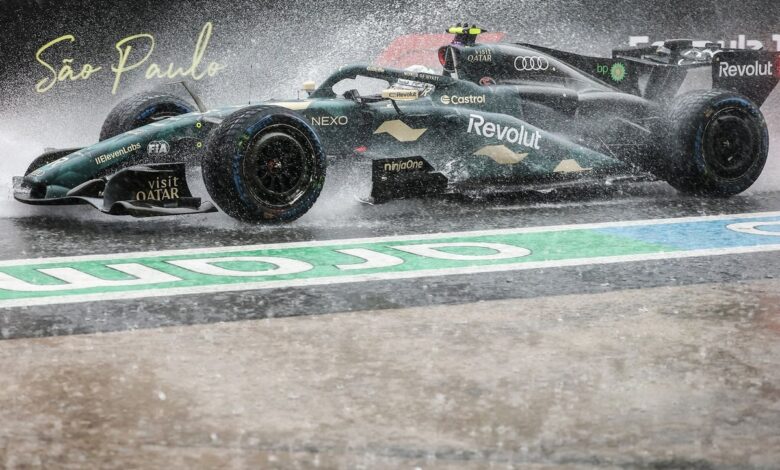
The session was defined by the use of the “x-wet” tyre, the blue-walled Pirelli compound often derided as suitable only for bumbling around behind the safety car. In reality, the tyre proved perfect for the level of standing water on track. While aquaplaning was prevalent, the tyre’s ability to disperse water—approximately 85 litres per second according to Pirelli—was a necessary evil. Without this dispersal, the circuit would have remained wetter for longer. However, the trade-off was drastic: the spray rooster-tailing out the back of the cars cut visibility significantly. Drivers had to rely on rain lights and find reference points in their immediate circle of vision to determine braking zones, a task complicated by considerably longer stopping distances compared to dry conditions.
For Max Verstappen, the session was less about competitive speed and more about the passage of time. The four-time world champion described the day as a waste, complaining that “12 hours of my life” had been spent at the circuit from 7:30 am to 7:30 pm with “nothing to show for it.” Verstappen’s frustration stemmed from a 30-place grid penalty imposed after Red Bull exceeded the permitted number of internal combustion engines, turbochargers, and exhausts. Knowing he would start from the back, Verstappen set the third-fastest time in Q1 but did not return to the track for Q2. Red Bull sought to avoid taking unnecessary risks with a car that had received a new power unit earlier in the day. “When there’s nothing at stake, I’m less interested,” Verstappen noted. He saved his remaining tyres for the race, expressing confidence that the team would be fine on wet tyres, though he acknowledged the difficulty of building speed advantages on Interlagos’s long straights with current car regulations.
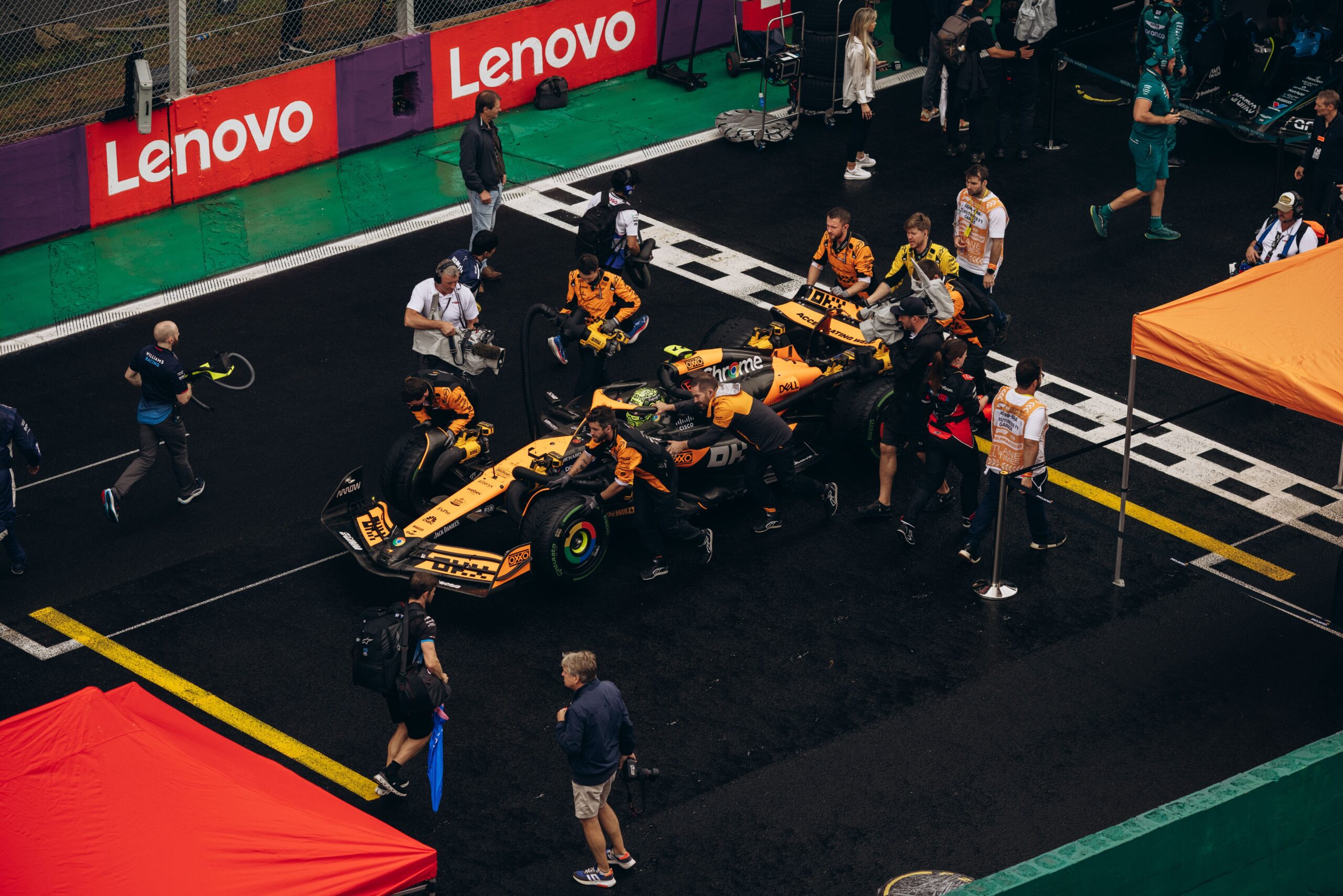
Verstappen was not alone in his rearward starting position. Lewis Hamilton, the outgoing champion, was also penalized, starting from 20th after taking a new power unit. Hamilton’s engine issues had already disrupted his weekend; his initial new engine sprung a problem in FP3, necessitating a second change. Like Verstappen, Hamilton fell in Q2 and made no attempt to reach Q3, his qualifying effort rendered moot by the grid penalties. The two world champions, typically at the forefront of the grid, were relegated to the back rows, setting the stage for a race defined by overtaking opportunities in wet conditions.
The competitive dynamic of the session was dominated by those who could navigate the wet conditions without incurring penalties. Lando Norris, the incoming world champion, topped the session, sailing to pole position. He was joined on the front row by Kimi Antonelli, securing a strong start for their respective teams. The grid was further reshuffled by additional penalties. George Russell, who recorded the second-fastest time on the road, dropped to seventh after his own penalty. Charles Leclerc, fourth on the road, fell to 14th. These adjustments cleared the path for Liam Lawson, who equalled his career-best grid spot with third place, having been fifth on the road before the penalties for Russell and Leclerc were applied.
The statistical reality of the session highlights the magnitude of the disruption. While Norris and Antonelli secured the top two positions, the gap between the top contenders and the penalized champions was vast. Verstappen and Hamilton, starting from 21st and 20th respectively, face a significant challenge to recover ground. Verstappen noted that passing is harder than it used to be due to battery usage on straights, limiting the speed differentials drivers can exploit. The use of DRS and the management of energy in wet conditions will be critical for those starting from the back. The grid, which remains provisional until officially confirmed by the FIA, reflects a day where weather and technical regulations had a more profound impact on the starting order than raw qualifying speed.
As the drivers returned to their garages after a long day of waiting and driving in treacherous conditions, the focus shifts to the race itself. The wet-weather challenges that defined qualifying—visibility, aquaplaning, and tyre management—are likely to persist if the rain returns. For Verstappen and Hamilton, the race is no longer a fight for pole position but a test of reliability and overtaking capability. For Norris and Antonelli, the challenge is maintaining the advantage they secured in the wet. The decisive moment for the weekend will no longer be set by the fastest lap in Q3, but by the first corner on Sunday, where the 12-hour wait and the 30-place penalties will finally be put to the test on the track.