
The strikes are part of a broader pattern of attacks on the logistics infrastructure of Wildberries, Russia’s largest online retailer. Since mid-July, Ukrainian drones have struck nearly two dozen Wildberries facilities. The company stated that one of its warehouses in the northwestern Leningrad region caught fire after a strike, though it reported no injuries at that specific site. However, Leningrad Region Governor Aleksandr Drozdenko claimed that 50 drones were shot down over the oblast, and his office confirmed that a Wildberries warehouse in Novosaratovka, near St. Petersburg, was attacked, resulting in several injuries. Pulkovo Airport reported that around 50 flights were delayed on the morning of July 24 due to the disruptions.
According to Ukrainian monitoring projects and independent Telegram channels, the campaign has inflicted substantial economic damage on Wildberries. Data cited by The Moscow Times indicates that strikes have damaged between 1.21 million and 1.47 million square meters of warehouse space, representing up to 22% of the company’s publicly declared logistics network. Other estimates place the damaged capacity higher, at over 1.5 million square meters, or roughly 27%. In response to the mounting losses, Wildberries announced plans to construct 260,000 square meters of new warehouse space in Kazakhstan, with completion expected in early 2027.

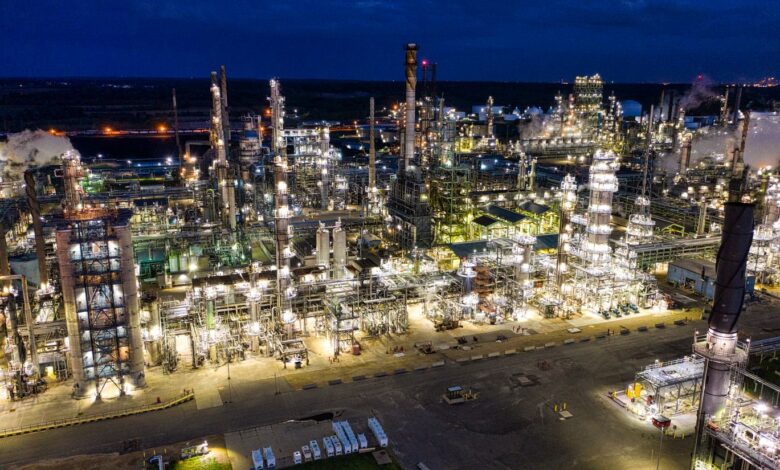
Ukraine has accused Wildberries of supplying the Russian military with drone parts and other equipment, justifying the targeting of its facilities. The attacks have also extended to the energy sector. The Syzran oil refinery in Samara region was reportedly struck for the second time in less than a month. The refinery, which has an annual processing capacity of about 8.5 million tons of crude oil, had only recently resumed operations following a July attack. Images published online showed a large column of smoke rising from the plant.
Russia’s Defense Ministry claimed its air defenses and electronic warfare systems intercepted or destroyed 320 Ukrainian fixed-wing drones between 8 p.m. Monday and 8 a.m. Tuesday. The ministry stated that drones were detected over 18 Russian regions, the Moscow area, and Russian-occupied Crimea. In the Tver region, located northwest of Moscow, a Wildberries logistics hub was damaged during what Russian authorities described as an interception attempt. Governor Vitaly Korolev said debris partially damaged the wall of the 77,000-square-meter warehouse, which suspended operations and evacuated employees. No casualties were reported in Tver.
Elsewhere, drone strikes hit the Kaluga region on October 9, injuring nine people in the regional capital, five of whom were hospitalized. Governor Vladislav Shapsha confirmed the strikes hit several municipal districts. In the Tver region, a drone strike caused a fire at the Redkino experimental plant, which produces chemical products. Governor Korolev stated that plant employees were not injured and the fire was extinguished.

These operations highlight the operational reach of Ukrainian long-range drones, which are capable of striking targets deep within Russian territory, including high-value economic assets. The targeting of logistics hubs and refineries aims to disrupt the supply chain required to sustain military operations and degrade the Russian economy. While Russian air defenses claim high interception rates, the continued damage to critical infrastructure suggests that Ukrainian forces are successfully penetrating these defenses to achieve strategic effects. The campaign has also had humanitarian consequences, with civilian casualties reported in both the Moscow and Kaluga regions.
The next phase of this campaign remains focused on further degrading Russia’s logistical and energy capabilities. With Wildberries shifting its infrastructure to Kazakhstan, Ukrainian forces may adjust their targeting to include new supply routes or focus on other vulnerable economic sectors. The resilience of Russian air defenses against massed drone swarms remains a key operational question, as the frequency and geographic spread of these strikes continue to challenge Moscow’s ability to protect its interior.