
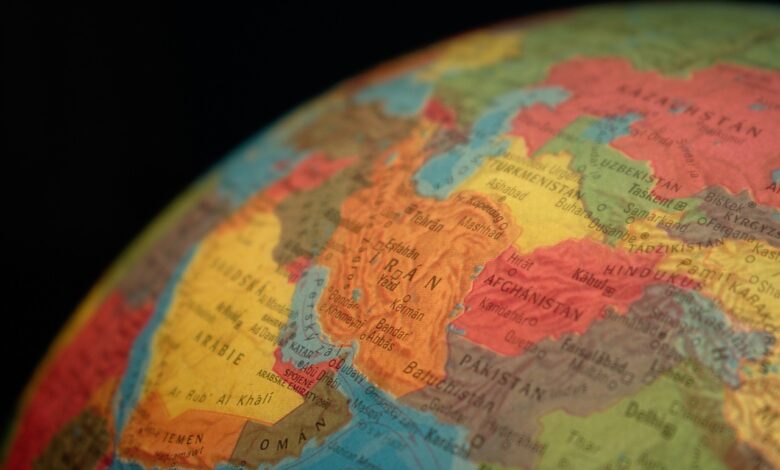
The diplomatic pivot appears driven by intense pressure from Gulf states, including Qatar, Saudi Arabia, the UAE, Bahrain, and Kuwait. Trump explicitly noted that these neighbors prefer the “status quo,” which he defined not as a return to pre-war conditions, but as the continuation of what he termed the “Greatest Naval Blockade in History.” This status quo includes the newly announced Task Force Iron Gate, a measure designed to cut off Iranian trade via land and the Caspian Sea. By framing the blockade as a regional preference, Trump positioned the US not as an aggressor resuming combat, but as an enforcer of economic strangulation at the behest of its allies. “We’re just keeping it the status quo, and we’re doing that really at the behest of countries that are their neighbours,” Trump said, emphasizing that the military campaign had successfully neutralized Iran’s capabilities.
Despite the language of de-escalation, the US administration maintained a posture of readiness. Trump warned that while taking further military action “doesn’t seem to be a very necessary thing” at this moment, the US remains “locked and loaded, ready to go for any reason.” This dual-track approach—maintaining severe economic sanctions while threatening renewed kinetic action—reflects the complex strategic calculus in Washington. The president asserted that Israel and the broader Middle East are now “protected from Iranian danger and threats,” suggesting that the primary military objectives have been achieved without the need for further escalation.
The timing of these remarks is inextricably linked to the recent US midterm elections, in which Republicans suffered a historic defeat, losing both houses of Congress. Speculation had circulated that the administration was delaying a resumption of full-scale military operations to avoid a political backlash at the polls. Vice President JD Vance declared soon after the election that the Iran war was a key reason for the Republican losses. In a separate interview with 60 Minutes, Trump defended the conflict as a “good decision” in the long term, acknowledging that “Wars begin through deliberate decisions, but their consequences rarely remain within the calculations of those who initiate them.” This admission of unintended consequences underscores the domestic political pressure now weighing on the administration’s foreign policy choices.
In Tehran, the reaction was one of dismissal. Iranian officials rejected Trump’s characterization of the war’s status, labeling the remarks “fake news.” Mohsen Rezaei, the Secretary of Iran’s Supreme National Security Council, wrote on social media that the war had “wrecked the US government” and accused Washington of flailing like a “desperate gambler.” Rezaei’s comments highlight the deep divergence in perception between the two capitals: while Washington views the blockade as a successful containment strategy, Tehran views it as an act of aggression that has destabilized the region. The Iranian government continues to reject the southern shipping routes in the Strait of Hormuz endorsed by the US, demanding that vessels transit via northern routes closer to its coast, a stance that has led to numerous attacks on commercial vessels by both sides.
The human and economic toll of this “status quo” is already visible in the Gulf region. In the UAE, authorities in the city of Khor Fakkan, located approximately 20 miles south of the Strait of Hormuz, closed a beach on Monday after an oil spill was discovered along the coastline. The incident is part of a broader pattern of environmental and economic damage resulting from the conflict, where numerous oil tankers and commercial vessels have been attacked or disabled. While the UAE’s former foreign minister, Anwar Gargash, noted that it is “perhaps too early to fully assess the impact of the U.S. midterm elections on Washington’s approach toward Iran,” his country has signaled a commitment to reinforcing diplomatic efforts to ensure lasting stability in the Gulf.

Regional dynamics remain fluid and tense. In a related development, Syria’s foreign minister, Asaad al-Shaibani, denied reports that Syrian troops were deployed to Yemen to support the Saudi-backed coalition against Iran’s Houthi allies. Al-Shaibani stated at a news conference that there was “no deployment of troops to Yemen nor is there a plan for such deployment in the near future,” contradicting earlier reports from Yemeni sources cited by AFP. This denial suggests that while the US-Iran front is cooling, the broader regional web of alliances and proxy conflicts remains active and opaque.
As the US maintains its naval blockade and diplomatic channels remain open, the central tension lies in whether the “status quo” can hold. Trump’s claim that the conflict is ending “fairly soon” rests on the assumption that economic pressure will force Tehran to the negotiating table without further bloodshed. However, with Iranian officials dismissing the peace signals and the US military remaining on high alert, the path to a durable resolution remains uncertain. The next phase of this geopolitical standoff will likely be defined by the effectiveness of the blockade and the ability of Gulf mediators to bridge the gap between Washington’s strategic victory and Tehran’s defiance.



One Comment