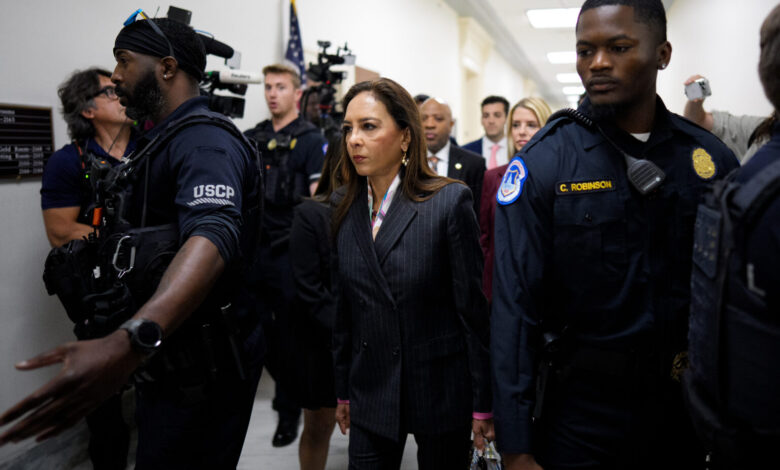
Under Dhillon’s leadership, the Civil Rights Division shifted sharply away from its historical mission of protecting voting rights. Instead, the division became the primary vehicle for the administration’s efforts to obtain sensitive voter data and investigate alleged voter fraud. This pivot resulted in an “uninterrupted string of courtroom defeats” for the Department of Justice (DOJ). The most prominent of these failures involves the administration’s crusade for states’ unredacted voter rolls, a legal theory that has been rejected in every district court to reach a final ruling.
The legal battle began in 2025 when Dhillon directed attorneys in the DOJ’s Voting Section to demand copies of unredacted voter-registration lists from states. These lists included confidential information such as driver’s license numbers and partial Social Security numbers. Election officials from both political parties objected, citing concerns over federal interference in state-run elections and challenging the department’s authority to collect such sensitive data. When states refused to comply, the DOJ sued 30 states and Washington, D.C.
The administration’s central legal argument has faced consistent judicial resistance. The DOJ has suffered 27 consecutive district-court defeats, with not a single win compelling a state to hand over the requested data. Notably, even judges appointed by President Donald Trump have rejected the department’s arguments. While the DOJ has appealed many of these decisions and some states have voluntarily provided information, the core objective of the lawsuit remains unmet. Dhillon also oversaw efforts to work with the Department of Homeland Security to create a national voter database using private information, a project aimed at identifying alleged noncitizen voters.
Beyond voter data, Dhillon’s influence extended significantly into congressional redistricting. In July 2025, she sent a letter to Texas officials claiming that four Democratic-held congressional districts were unconstitutional racial gerrymanders and urged the state to redraw them. Days later, Republican Governor Greg Abbott called a special legislative session to redraw the state’s congressional map, citing the constitutional concerns raised by the DOJ. The resulting plan was designed to help Republicans capture five additional Democratic-held seats in the 2026 midterms.

The 2026 election results dealt a severe setback to this strategy. Republicans won only one of the five targeted seats, while Democrats flipped two Republican-held Texas districts that had not been redrawn. Consequently, the Republican Party emerged with fewer House seats in Texas than it held before the redistricting process—an outcome opposite to what the administration sought. More broadly, the redistricting offensive failed to prevent Democrats from winning control of the House, marking a significant political reversal for the administration’s mid-decade efforts.
Dhillon’s tenure also involved direct confrontations with local election officials. She personally pressed Fulton County, Georgia, for records from the 2020 presidential election, which President Trump has repeatedly claimed was stolen. Following this pressure, the FBI seized election materials from the county as part of a federal criminal investigation. Fulton County officials subsequently argued in court that the administration was utilizing criminal investigative powers to obtain records that the DOJ had struggled to secure through civil litigation.
In the final months before the midterms, Dhillon orchestrated the largest election-monitoring operation in DOJ history. Approximately 1,000 monitors and observers were dispatched to all 50 states on Election Day. The deployment was concentrated heavily in Democratic-leaning jurisdictions and drew scrutiny from voting rights advocates and state officials concerned about federal interference. Isolated reports emerged of monitors exceeding their authority in Michigan and New Mexico, prompting state officials to contact the DOJ. However, the operation did not produce any publicly announced findings of voter fraud.
While the division focused on election enforcement, it abandoned or withdrew from lawsuits defending voting rights, causing significant internal turmoil. Hundreds of career attorneys departed the division as it redirected resources toward the administration’s agenda. Stacey Young, executive director of Justice Connection, an organization of former DOJ employees, stated that more than three-quarters of the division’s lawyers left. Young also criticized Dhillon for ending investigations into police departments and abandoning proposed consent decrees with cities including Minneapolis and Louisville, which would have required reforms to address alleged patterns of excessive force and discriminatory practices.

Kristen Clarke, former head of the Civil Rights Division under President Joe Biden and current general counsel of the NAACP, described Dhillon’s tenure as a “repudiation of the division’s mission.” “From day one, Harmeet Dhillon abdicated her responsibility to enforce our nation’s federal civil rights laws and destroyed the crown jewel of the Justice Department,” Clarke said. She warned that the division had been “weaponized to target institutions to achieve illegitimate, partisan goals.” Young concurred, calling Dhillon “the most destructive, lawless, and hateful head of the Civil Rights Division in DOJ history,” and noting that the civil servants dedicated to protecting vulnerable communities were instead told to target them.
Dhillon’s resignation leaves the DOJ with a profound institutional change and a backlog of unresolved issues. The department now faces ongoing federal election investigations and unresolved lawsuits over voter data. The future of the administration’s election agenda remains uncertain, particularly in light of the midterm results. Justice Connection has called on the incoming Senate to closely scrutinize Dhillon’s successor, urging that the next leader respect the agency’s mission to enforce federal civil-rights laws fairly.
As the division moves forward, the political and legal landscape it enters is shaped by the recent electoral defeat and the judicial rejections of its core theories. The next phase will likely involve appeals of the 27 district-court defeats and the determination of how the new leadership will handle the remaining election-related investigations and the depleted staff.