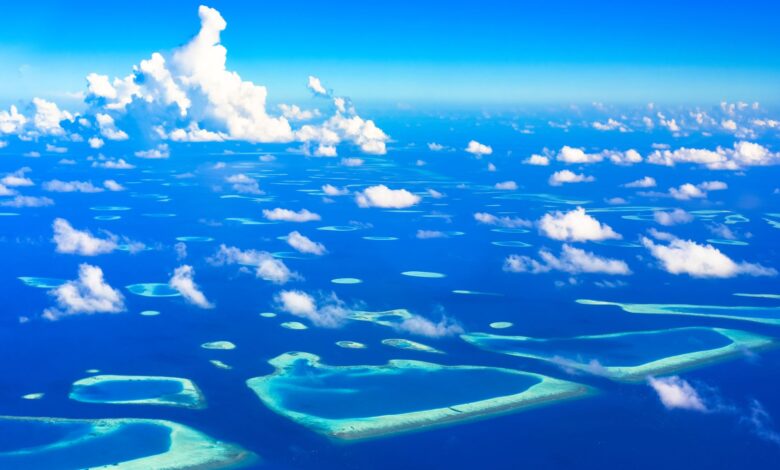
The agreement, signed by Britain and Mauritius on May 22, 2025, was intended to resolve a decades-long dispute by transferring sovereignty of the Chagos Archipelago to Mauritius while allowing the UK to retain rights over the Diego Garcia military base for an initial 99-year period. The treaty also provided for the resettlement of Chagossians on islands other than Diego Garcia. However, the deal has not entered into force. UK government officials acknowledged in late October that they had run out of time to pass the necessary legislation within the current parliamentary session, a collapse attributed to a lack of support from US President Donald Trump.
The stall represents a significant setback for a diplomatic campaign that Mauritius considered a culmination of its legal and political efforts. For years, Mauritius framed its claim around decolonisation and international law, securing widespread global support, including from India and the African Union. A key pillar of this campaign was the 2019 advisory opinion from the International Court of Justice (ICJ), which found that the UK’s separation of the Chagos Islands from Mauritius in 1965 was unlawful and that the UK was under an obligation to end its administration as rapidly as possible. Although an ICJ advisory opinion is not formally binding in the same manner as a contentious judgment, it serves as an authoritative statement of customary international law, supported by subsequent rulings from the International Tribunal for the Law of the Sea in 2021.
Despite this legal foundation, the implementation of the treaty has become entangled in shifting geopolitical priorities. The US had initially indicated support for Mauritian sovereignty, with the State Department backing the plan. However, this support waned amid tensions between London and Washington, particularly regarding Britain’s refusal to authorize the use of the Diego Garcia base for offensive operations against Iran. President Trump criticized the Chagos plan, telling Prime Minister Keir Starmer he was “making a big mistake” by handing over sovereignty. The UK was forced to drop the bill after the US failed to formally exchange letters to amend the 1966 British-American treaty governing the islands.
The impasse highlights a structural vulnerability for Mauritius. By offering Britain a 99-year lease to secure decolonisation, the island nation bound its sovereignty to the strategic preferences of great powers. As Timothy Walker of the International Institute for Strategic Studies noted, while Mauritius secured British recognition of its sovereignty, it remains dependent on decisions made in and between Britain and the US. The country cannot compel the US to accept revised operating arrangements or guarantee ratification by the British Parliament.
For the displaced Chagossians, the political maneuvering has tangible human consequences. Between 1968 and 1973, an estimated 1,400 to 1,700 Chagossians were removed from the islands to make way for the military base. Many were resettled in Mauritius and the Seychelles, with others later moving to the UK. British authorities also made it illegal to remain on or return to the islands without permission. Bancoult stated that the community remains “unshaken” by US interference, citing the 2019 ICJ opinion and the 2025 treaty as restoring their dignity and affirming their rights. “If Trump wants to meddle in this matter, well, let him,” Bancoult said, asserting that international law is squarely on their side.
In response to the parliamentary failure, Mauritian Foreign Minister Dhananjay Ramful vowed that his government would “spare no effort” to complete the decolonisation process through any diplomatic or legal avenue. He described the issue as “a matter of justice.” The UK government, meanwhile, maintains that Diego Garcia is a key strategic military asset. A government spokesperson emphasized the importance of the base to both the UK and the US, though new legislation is not expected to feature in the King’s speech for the coming parliament.
The strategic value of Diego Garcia remains undiminished, particularly in light of recent conflicts. During the Israeli-US war against Iran, the base supported long-range bombing missions. Media reports suggest the island came under direct fire from Iranian ballistic missiles, an event that, if verified, would mark the first time in modern history that Diego Garcia has been targeted by enemy forces. This vulnerability, alongside its unparalleled seclusion in the central Indian Ocean, underscores why the Pentagon values the location so highly.
The current deadlock leaves the legal status of the archipelago in a state of uncertainty. While the 2025 treaty exists on paper, its inability to enter into force means the colonial arrangement effectively persists. For Mauritius, the failure to pass the legislation in time raises questions about its remaining options, potentially leading to further legal action to reinforce its sovereignty claim and clarify Britain’s obligations. For the Chagossians, the delay extends a period of uncertainty for a community that has waited decades for the right to return home.