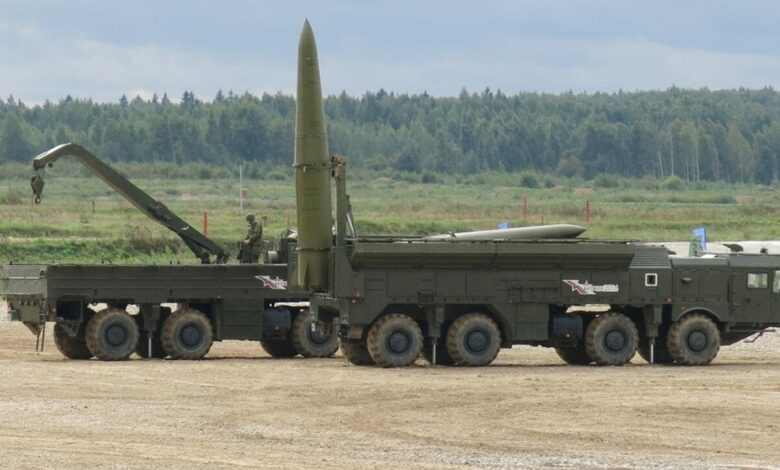
The Iskander-M is a medium-range, mobile ballistic missile system capable of firing both conventional and nuclear warheads. Developed in the late 1980s as a successor to the OTR-23 “Oka” system banned under the Intermediate-Range Nuclear Forces Treaty, the Iskander entered service in the mid-1990s. The system features two solid-propellant, single-stage guided missiles that utilize terminal guidance to achieve high precision. It is designed to strike high-value targets such as airbases, command centers, and naval vessels, with a reported range of up to 500 kilometers. The weapon system has seen combat use in the ongoing war in Ukraine, where Russian forces have employed it against military infrastructure and, controversially, civilian areas.
The placement of these systems in Karelia is part of the broader reorganization of Russia’s military structure in the region. In response to Finland’s NATO accession, which took effect in April 2023, Moscow created the Leningrad Military District (LMD). The new missile brigade is seen as a central component of the LMD’s defensive posture. Russian authorities have characterized Finland’s decision to join the alliance as provocative, arguing that it threatens Russia’s strategic security. By moving nuclear-capable systems closer to the border, the Kremlin appears to be signaling that Helsinki’s new alliance status leaves it vulnerable to a hostile response.

However, Finnish military analysts have downplayed the tactical significance of the move. Retired Major General Harri Ohra-aho, a former director of the Finnish military intelligence agency, stated that the deployment “won’t change anything” strategically. Ohra-aho noted that Russia already deploys Iskander systems south of St. Petersburg, meaning Finland was already within their range. He argued that bringing such long-range systems closer to the border is “operationally absurd” because it makes them easier targets for defending forces. “In any case, one should defend against Iskander missiles,” he wrote on X, adding that the proximity of the systems to Finnish territory does not alter the fundamental balance of deterrence.
Sari Arho Havrén, an associate fellow at the Royal United Services Institute (RUSI) and a visiting researcher at the University of Helsinki, echoed this assessment. She described the Finnish reaction as “composed,” noting that the announcement was not unexpected following the creation of the LMD. Havrén suggested that the move serves a dual purpose: it is an internal message to Russian audiences and a political reaction to NATO’s enlargement. She also raised questions about Russia’s logistics, pointing out that the ongoing conflict in Ukraine may have depleted missile stockpiles, making it questionable how many additional Iskanders are available for deployment to Karelia.
The distinction between stated capabilities and demonstrated operational performance is crucial in assessing this development. While the Iskander-M is a formidable weapon system with proven accuracy and range, its effectiveness in a high-intensity conflict depends on launch site survivability and the integrity of its command and control networks. Deploying missiles in a fixed region near an active NATO border increases their exposure to reconnaissance and potential pre-emptive strikes. Furthermore, the presence of these systems does not indicate an imminent intention to use nuclear weapons; rather, it is a form of coercive signaling aimed at deterring further NATO integration in the region.
For NATO, the deployment reinforces the need for integrated air and missile defense capabilities in the Nordic region. Finland’s entry into the alliance has already extended the collective defense perimeter, and the presence of Russian ballistic missiles in Karelia underscores the ongoing challenges of countering asymmetric threats. The international community is watching closely to see if this move is a precursor to further military escalations or a stabilized, if tense, new normal along the border. The next steps will likely involve continued monitoring by NATO intelligence assets and potential adjustments to Finnish force readiness levels.