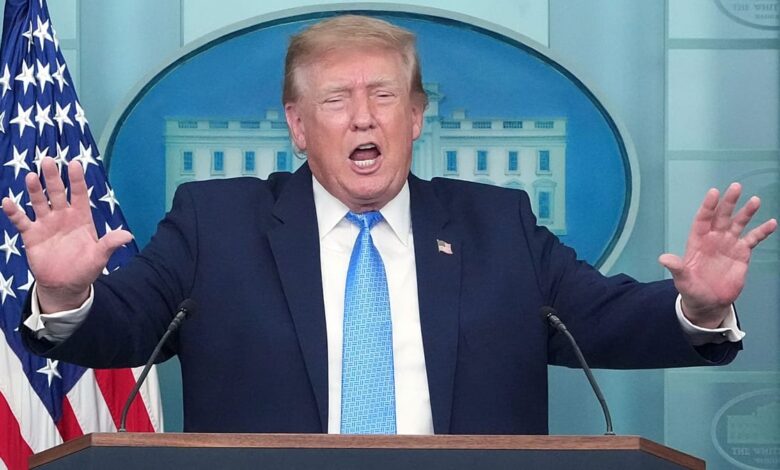
Trump’s remarks came during a press conference following a meeting with Qatari Prime Minister Sheikh Mohammed bin Abdulrahman Al Thani, a key mediator in the conflict. The President said he was acting at the behest of neighboring countries, specifically naming Qatar, Saudi Arabia, the United Arab Emirates, Bahrain, and Kuwait, which he stated preferred the current status quo to further American attacks. “We are seeing positive momentum toward an end to this conflict, and will ensure that America’s interests are at all times protected,” Trump told reporters, adding that further strikes were “quite unlikely.”
The diplomatic push from the Gulf states appears to be a direct response to the domestic political landscape in Washington. More than eight months into the conflict, which began alongside Israel on February 28, the midterm election results have intensified pressure on the administration. Senior U.S. Republicans, including Vice President JD Vance, have attributed the party’s losses to the war. Vance, who led negotiations for a short-lived truce in June, met with Al Thani to discuss advancing negotiations. Al Thani, who serves as both prime minister and foreign minister of Qatar, described the discussions as “excellent” and expressed gratitude for the positive steps toward establishing peace in the region.
However, the path to a formal end to hostilities remains fraught with contradiction. While Washington speaks of momentum, Tehran has rejected the premise of immediate talks. Mohsen Rezaei, the Secretary of Iran’s Supreme National Security Council, dismissed the U.S. position on social media, characterizing Washington as a “desperate gambler” and demanding it stop “manufacturing fake news about imaginary talks.” Rezaei reiterated that Iran’s position had not changed and that it would not hold talks until the U.S. met Iran’s seven conditions.
The core of the diplomatic impasse lies in these conditions. Iran’s proposal involves the end of the U.S. naval blockade of its ports, the lifting of certain sanctions, and a halt to bombing, in exchange for Tehran stopping its blockade of the Strait of Hormuz. Subsequent talks on the nuclear program would follow. The U.S. has firmly rejected this framework. Secretary of State Marco Rubio described Tehran’s conditions on Sunday as “outrageous and ridiculous and really not realistic,” while maintaining that a diplomatic breakthrough was not imminent.
Despite the diplomatic rhetoric, military operations continue on the ground. Iranian authorities reported that the island of Qeshm, located in the strategic Strait of Hormuz, was targeted by strikes overnight from Sunday to Monday. A provincial deputy governor stated the strikes did not impact vital infrastructure, though a senior Iranian source told Reuters that U.S. strikes were targeting radar systems, missile launcher bases, and mine-laying systems. The U.S. military has not publicly acknowledged these specific strikes. Meanwhile, Iran and its allies continue to exert pressure on regional security. Attacks on tankers in the Gulf and Strait of Hormuz have ramped up sharply, with a state television reporter claiming 11 tankers were “disabled” in the past 10 days. Additionally, Yemeni Houthi allies have launched attacks on Saudi Arabia.

The economic and regional fallout of this stalemate is palpable. Brent crude futures fell to $92 a barrel on Monday as markets reacted to Trump’s comments, yet anxiety remains high. Anwar Gargash, a senior U.A.E. official, warned that a comprehensive political settlement appeared difficult, advising the region to “prepare for a long period of uncertainty.” Turkish President Tayyip Erdogan also voiced concern, telling Trump that Ankara did not want to see a new escalation and emphasizing the need for dialog. Reports citing Turkey’s intelligence service chief suggest Qatar may host a meeting between Vance and Rezaei next week, a claim Iran’s Foreign Minister Abbas Araghchi has denied.
As the midterm election dust settles, the administration faces a complex calculus: balancing the demands of regional allies for stability against the hardline positions of Tehran and the unresolved military threats in the Strait of Hormuz. The meeting in Washington has opened a channel for dialogue, but with Tehran denying talks and the U.S. rejecting the Iranian peace plan, the “momentum” described by the President remains fragile and unverified.