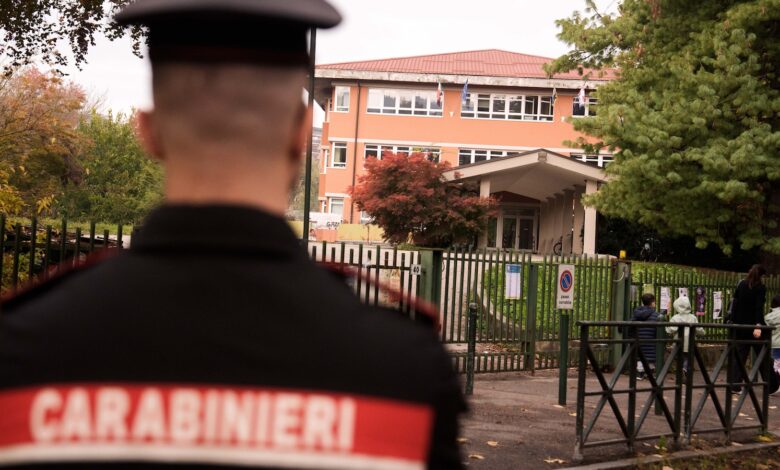
According to Education Minister Giuseppe Valditara, 312 schools were evacuated, with the highest concentration of affected institutions in Rome, though threats were also sent to schools in Naples, Vicenza, Florence, Pisa, and Trieste. Valditara described the incident as probably a “cyber-attack, not a genuine risk,” noting that the sheer volume of threats makes a real physical danger “almost non-existent.” He added, “These are very delicate considerations, because there is always the risk that there is someone else behind the madman.”
Prime Minister Giorgia Meloni convened an emergency meeting of top ministers and intelligence chiefs to address the situation. In a statement posted on social media, Meloni said the government was closely monitoring the reports but emphasized that investigations have found no evidence of “concrete danger.” “These reports appear rather linked to a strategy intended to cause alarm and concern,” Meloni said. She did not publicly address a specific threat contained in the emails that named her personally, according to copies obtained by Italian media outlets including LaPresse.
The threatening emails were signed with a Russian name, the same identifier used in last week’s false bomb threats against European airlines and newsrooms in Bulgaria and Ireland. A group with an anti-woman name initially claimed responsibility for some of the threats but subsequently denied any link to the false warnings. Defense Minister Guido Crosetto cautioned against immediately attributing the attacks to foreign state actors, stating, “It is not always the work of foreign countries or hostile entities. There are also attention-seekers and lunatics who [simply] want to unleash mayhem.”
Despite the official assessment that the threats are likely hoaxes, the incidents have generated significant anxiety among parents and staff. At Rome’s Mamiani high school, students initially mistook the evacuation alarm for the recess bell, only learning of the bomb threat after they had already left the building. “They are saying it was a bomb alert because an email arrived from Russian hackers in which they said they would have killed everyone. It was pretty violent,” said Anita Bartocci, an 18-year-old student. Similar messages were reported in over 300 schools in Northern Ireland, where police are treating the emails as hoaxes, and in several schools in Scotland, which Police Scotland also assessed as not representing a credible threat.
The timing of these threats has fueled speculation about broader geopolitical tactics. Recent weeks have seen a string of “hybrid” attacks across Europe, including cyberattacks that caused supermarket refrigeration systems to defrost in France and disruptions to air traffic control and blood banks. France recently summoned the Iranian ambassador over alleged cyberattacks on supermarkets, although Tehran has denied involvement. While the current school threats share the same digital signature as previous airline and media hoaxes, authorities have not yet established a direct link to any specific government or organized criminal group.
Law enforcement in Italy and the UK are continuing their investigations. In Umbria, regional head Stefania Proietti confirmed that checks in local schools had proved negative, with law enforcement working to verify each report. In Northern Ireland, police stated they are conducting “urgent inquiries” into the source of the threatening emails. For now, the primary impact remains psychological and logistical, with the rapid evacuation of thousands of pupils and subsequent return to class once the alarms were lifted.
The immediate next step is the conclusion of the emergency cabinet meeting in Rome, where ministers are expected to coordinate the government’s response and determine if further resources will be allocated to counter-cyber units. Investigators in both Italy and the UK are working to trace the origin of the email servers used to distribute the threats, aiming to distinguish between a coordinated state-sponsored operation and the actions of isolated extremists.