
The strike resulted in significant disruption to transport and public services. In the capital, Madrid, approximately 120,000 people joined a demonstration, while more than 50,000 turned out in Barcelona. Traffic was halted on several main roads in both cities. Despite the rainy weather, turnout was described as widespread. “We’ve completely brought the city to a standstill,” one protester in Madrid told Reuters, noting that support for the strike was widespread. “Everyone’s out there… everyone’s out on the streets.”
The political context of the strike is distinct from previous labor actions. Socialist Prime Minister Pedro Sánchez, who called for snap elections last month after parliament failed to approve his housing reform plan, has publicly encouraged workers to down tools. In a social media post, Sánchez praised the participants, framing the strike as a defense of “collective conquests” such as the eight-hour workday, pensions, and public healthcare. This stands in contrast to the conservative People’s Party (PP), which has accused the government of attempting to weaponize the labor movement, although the specific details of this accusation were cut off in available reporting.
While the majority of the demonstrations were reported as peaceful, the atmosphere in Barcelona turned volatile in the evening. Clashes erupted between police and groups of masked men in the city center. Footage showed individuals setting fire to rubbish bins and smashing shop windows. Police responded by firing tear gas in the area around Passeig de Gràcia, close to the iconic Plaça de Catalunya. Local media reported that fireworks were fired towards police, and there were incidents of looting, including at a Lego store and attempts to enter an Apple Store.
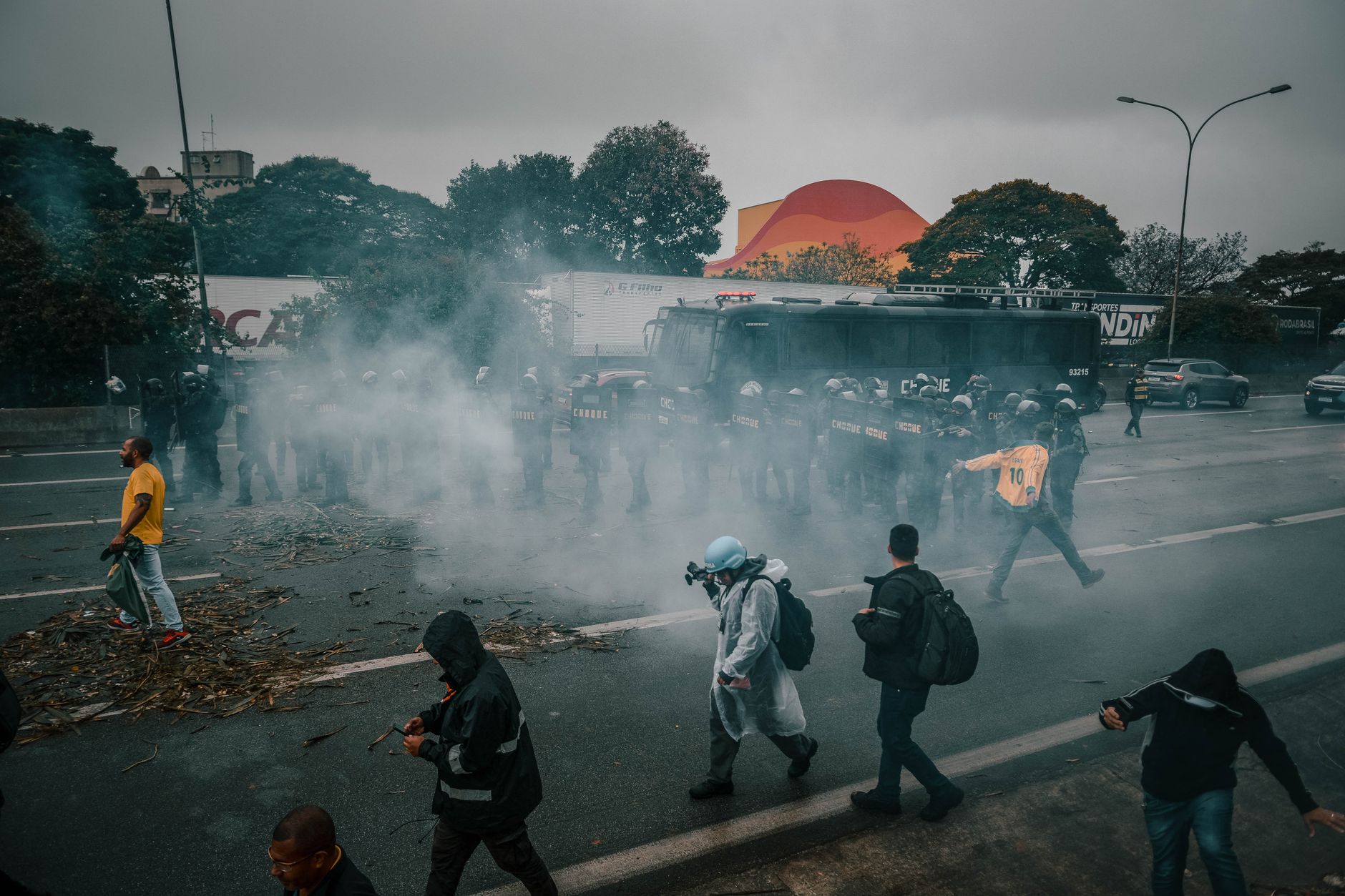
The Interior Ministry stated that dozens of people were arrested for various incidents. Spanish reports indicated that estate agencies had also seen attacks on their offices. A heavy police presence was maintained in the center of Barcelona, with officers wearing helmets and riot shields. Small fires were seen burning in the streets as bins were set alight.
Despite the disturbances, many attendees emphasized the peaceful nature of the broader movement. A woman attending the protests in Barcelona told the BBC that the atmosphere was “mostly very peaceful and joyful.” She noted the presence of many children and elderly people, stating she was there to protest housing costs. “The fires were everywhere, it was very intense,” she said, describing the scene near Las Ramblas in the evening.
The strike was triggered by a crisis in affordable housing, highlighted by the eviction of 87-year-old Maricarmen Abascal from a Madrid apartment where she had lived for seven decades. She died in hospital weeks later. The economic pressure on Spaniards is evident in the data: according to property portal Idealista, the monthly cost of a 50 sq m apartment in Madrid averaged €1,170 in October. This figure represents nearly half of Spain’s average gross monthly salary of approximately €2,460. Housing experts and public institutions often recommend that rent should not exceed 30% of income, a threshold significantly exceeded in the capital.

Olga Domingo, a 37-year-old teacher participating in the strike, described the situation as “outrageous.” “The current cost of living compared to wages is completely unsustainable,” she said. Union leaders also declared the action a success. Pepe Álvarez, head of the UGT union, cited “massive” participation, while Unai Sordo of the CC OO union described the turnout as “very significant.”
The strike sets the stage for the upcoming parliamentary elections on 29 November. With housing and cost-of-living concerns dominating the public discourse, the outcome of the vote will determine the next government’s approach to these urgent socioeconomic challenges.