Rudy Ruitenberg reports on developments in European defense industry from Paris.
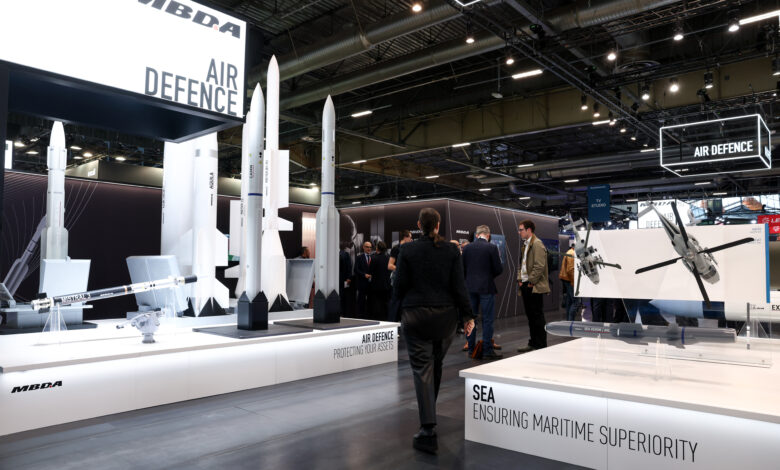
At the Euronaval maritime-defense exhibition in Paris, executives from MBDA outlined a comprehensive strategy to bolster European autonomous defense capabilities, ranging from next-generation hypersonic interceptors to high-speed strike missiles. The announcements reflect a broader shift in European defense policy, driven by the urgent need to replace capabilities that were previously reliant on U.S. support and to counter the evolving threat landscape posed by Russia and China.
The centerpiece of MBDA’s recent strategic disclosures is the Hydis program, a European hypersonic interceptor designed to neutralize hypersonic glide vehicles. MBDA Vice President for Program Incubators Lionel Mazenq described the envisioned interceptor as “truly hypersonic, not just Mach 5,” comparing its agility to a Formula 1 car despite its larger size. The program aims to fill a significant void in European defenses, as the continent currently lacks the capability to intercept such advanced threats. Hydis is currently in competition with Spain’s Hydef program for €100 million (US$112 million) in European funding for its second development phase, with a decision expected at the end of the month. While Mazenq expressed confidence that “we are thinking that we will win,” the consortium is preparing fallback options should the European Commission select the competing proposal.
If successful, Hydis will expand from its current 19 partners to 36 industrial and research partners, along with 14 subcontractors, for the second phase. This expansion includes major players such as Safran for terminal-guidance sensors, and Thales, Saab, and Leonardo for communication and data-link capabilities. The project will grow from 11 member states contributing to a combined €133 million in national funding, alongside additional European money. Notably, Germany is set to drop out as a partner country for this second phase, a development that underscores the shifting political and financial dynamics within European defense cooperation. The first phase, which runs until May 2027, has already secured €80 million in European funding and €57 million from France, Italy, Germany, and the Netherlands.
Simultaneously, MBDA is advancing its offensive strike capabilities with the Stratus RS (Rapid Strike) missile, a high-supersonic weapon designed for France and the United Kingdom. Olivier Gauffin, MBDA’s deputy director for sales and business development, stated that the Stratus RS will have a range “far, far, far” exceeding that of the Exocet anti-ship missile, which covers more than 200 kilometers. The missile is intended to perform four distinct missions: deep strike, anti-ship strike, suppression and destruction of enemy air defenses (SEAD), and strikes against large aircraft such as airborne warning systems and tankers. Gauffin characterized the system as a “Ferrari” in contrast to the company’s slower, stealthy Stratus LO (Low Observable) cruise missile, which he likened to a “stealth truck.”
Technical specifications for the Stratus RS include a liquid ramjet engine that allows for throttling, high maneuverability, and the ability to fly very low or very high trajectories to defeat hard-to-destroy targets like frigates and ground-based air defense systems. The missile will utilize a radio-frequency seeker combined with synthetic aperture radar, providing both land-attack and top-attack capabilities, with Thales supplying the seeker technology. MBDA is currently awaiting a development contract from France’s Directorate General for Armament (DGA) on behalf of the two national partners. This development is part of a broader French government initiative to foster a national ecosystem of drone and missile makers tailored to naval requirements.
On the ground, MBDA is promoting the Land Cruise Missile (MdCT), a truck-transportable version of its Naval Cruise Missile (MdCN), which entered service with the French Navy in 2017. Derived from the Storm Shadow/Scalp-EG air-launched cruise missile, the upgraded land version is expected to be available in 2030. Sophie Bourdais, MBDA’s commercial director for strike, indicated that the new missile will have a range “well over 1,000 kilometers, comparable to the Tomahawk,” along with improved jamming resistance, a larger payload, and better stealth. The development of this system is particularly significant in the context of the United States reportedly shelving plans to deploy its Typhon launchers to Germany, a move that has left a gap in European long-range strike deterrence. MBDA is in talks with the DGA to sign a contract for the development and production of a first batch of these missiles this year, with the system being promoted within the European Long-Range Strike Approach (ELSA) initiative.
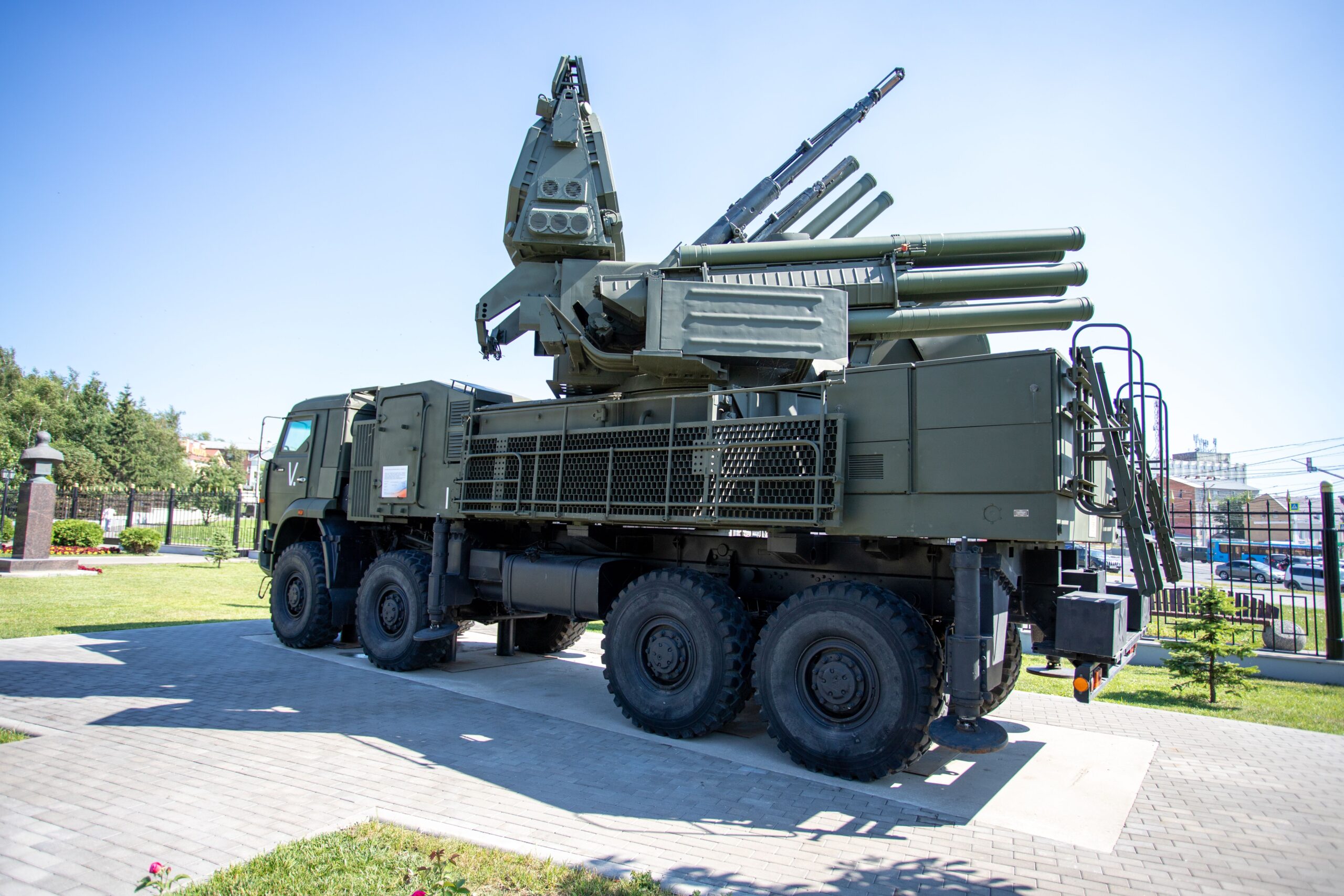
These new programs are being developed against a backdrop of surging demand for existing air-defense systems. MBDA Chief Executive Officer Éric Béranger announced that the company plans to double production of its top-of-the-range Aster air-defense missile in 2026, an “absolutely massive” increase in response to high demand. The Aster family is the core of the SAMP/T air-defense system, the only European alternative to the U.S. Patriot system, and is also used for high-end naval air defense by France, Italy, and the United Kingdom. MBDA has already doubled its overall missile production between 2023 and the end of 2025, with a further 40% increase targeted for the current year. Béranger attributed this surge to the destruction wrought by missiles and drones in the conflicts in Ukraine and the Middle East, which has created a sense of urgency in Europe to rebuild air defenses after decades of underinvestment.
Financially, MBDA is positioning itself to capitalize on this rearmament. The company’s order intake for 2025 stood at €13.2 billion (US$15.2 billion), with Europe accounting for 70% of that total. The order backlog climbed to a record €44.4 billion at the end of December, up from €37 billion the previous year, while sales jumped to €5.8 billion from €4.9 billion. To support this growth, MBDA is doubling the size of its five-year investment plan and expanding its European presence with new production sites. The company’s integrated model, with operations in France, the United Kingdom, Italy, and Germany, allows it to play a major role in both national defense programs and European cooperative initiatives.
As Europe faces an aggressive Russia on its eastern flank and seeks to rebuild offensive and defensive capabilities, MBDA’s portfolio of the Hydis interceptor, Stratus RS, and Land Cruise Missile represents a pivotal step toward strategic autonomy. The next confirmed development will be the European Commission’s decision on the Hydis funding, which will determine the trajectory of Europe’s hypersonic defense ambitions in the coming years.