The Incident and Legal Status
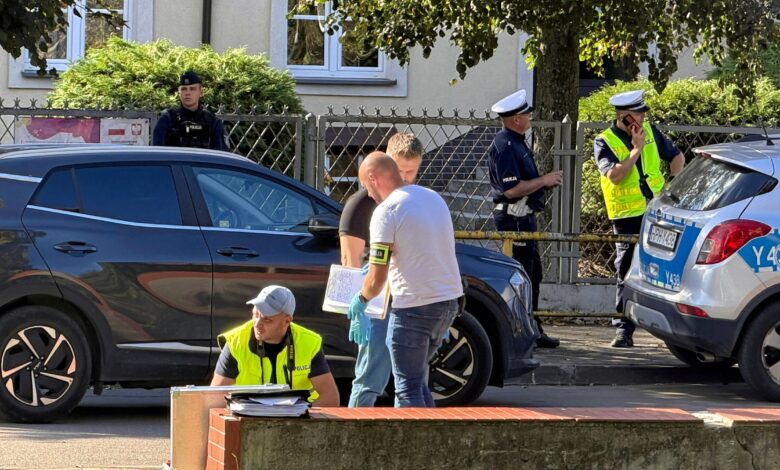
According to police reports from the Mazovia region, the suspect entered the John-Paul II primary school at approximately 09:00 local time on Thursday. The attacker, identified as a former pupil of the institution, was armed with three knives. Prime Minister Donald Tusk stated that the suspect was wearing a helmet equipped with a camera, suggesting an intent to record the violence, though authorities have not yet established a motive.
During the assault, the suspect stabbed three staff members. The principal, who intervened to subdue the attacker, and a teacher were both injured and hospitalized; the interior ministry’s spokesperson, Karolina Galecka, confirmed that their lives are not in danger. However, the 37-year-old caretaker died from her injuries. Under Polish criminal law, the killing of an adult by a minor under 17 typically results in placement in a specialized juvenile reformatory rather than adult prison, but the specific charges and sentencing exposure will be determined by the family court following the initial hearing.
Context: The Ostrołęka Attack
The Leszczydół-Nowiny tragedy followed a similar incident the previous day in Ostrołęka, located approximately 50 km away. On Wednesday, a 19-year-old student, identified in public records only as Jakub Z. to protect privacy, attacked a vocational high school. He stabbed seven people—four students, two teachers, and two bystanders—before being captured near the town’s beach area. National Prosecutor Dariusz Korneluk revealed that the suspect was also carrying a homemade explosive device in his backpack that failed to detonate, a fact that elevates the severity of the case beyond simple assault.
Justice Minister Waldemar Żurek stated that prosecutors will ensure the 19-year-old faces legal consequences for “every blow inflicted.” In Polish law, a 19-year-old is considered an adult for criminal liability purposes. Therefore, Jakub Z. faces potential charges including attempted murder, grievous bodily harm, and possession of an explosive device, which carry significant prison sentences. The distinction between the juvenile court process for the 15-year-old and the adult criminal court process for the 19-year-old highlights the bifurcated nature of the Polish justice system regarding minors.
Prevented Incident and Government Response
Compounding the crisis, police announced the detention of a 17-year-old in Sierpc, within the same Masovia province, on Thursday morning. The teenager was arrested after threatening to “do something bad at school” and was found in possession of two knives. Interior Minister Marcin Kierwiński noted that the suspect’s digital history showed searches for information on how to carry out “bloody acts.” This detention was a pre-emptive measure based on credible threats, distinct from the post-incident arrests in the other two locations.
Prime Minister Tusk, addressing an emergency meeting on the “grim copycat phenomenon,” ordered police to conduct daily visits to schools to monitor safety. The Education Minister warned of “radicalisation of young people” and called for stricter controls on online content. Local media, citing police sources, suggested that the incidents over the past two days may be linked to an internet challenge, although authorities have not formally confirmed a direct causal link between the online activity and the physical attacks. The legal focus now shifts to whether these acts constitute individual crimes or part of a coordinated conspiracy, a distinction that would significantly alter the prosecutorial strategy and potential penalties.
Legal Proceedings and Next Steps
The 15-year-old from Leszczydół-Nowiny will appear before the juvenile (family) court, where the judge will decide on immediate detention measures and schedule a hearing to determine guilt and appropriate corrective measures. The 19-year-old from Ostrołęka is in police custody pending formal indictment; the public prosecutor’s office is investigating the failed explosive device, which may lead to additional charges under laws governing dangerous objects. The 17-year-old in Sierpc will also face the juvenile court, with the primary legal issue being the prevention of a crime and the handling of threatening behavior.
As of Friday, no formal charges have been publicly filed in the press for the 15-year-old, but the presumption of innocence remains in effect until a court renders a judgment. The Polish legal system requires that the specific intent (motive) and the precise sequence of events be established through evidence, including digital forensics from the suspect’s devices and the recovered knives. The government’s immediate deployment of police to schools is an administrative security measure, not a legislative change, and does not alter the criminal statutes under which the suspects will be tried.