
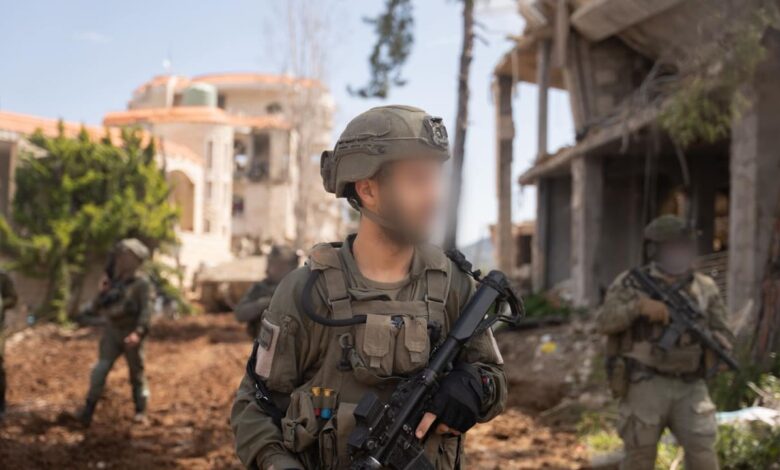
The decision is being spearheaded by the IDF’s Ground Forces Command and the Manpower Directorate. While the specific operational details, including final unit compositions and deployment schedules, have not yet been finalized, the military has defined the core mission of these new units as “detection and strike” operations. Unlike traditional infantry battalions, which rely primarily on small arms, mortars, and armored vehicles, these specialized units will focus on a hybrid combat model that merges traditional infantry tactics with advanced technology.
According to official statements, the new battalions will specialize in several key technological domains. Their operational capabilities are expected to include the use of unmanned aerial vehicles (drones) for both intelligence gathering and direct engagement, the deployment of ground-based robotics, and the operation of advanced surveillance and imagery systems. Furthermore, these units will be equipped with advanced weaponry and precision-guided munitions, allowing ground troops to engage targets at extended ranges with high accuracy. This shift suggests a doctrinal move away from static defensive lines toward more mobile, sensor-driven offensive and reconnaissance operations.

This development is part of a broader strategic initiative within the IDF to counter the growing threat and utility of low-altitude unmanned aerial systems. Last month, reports indicated that Maj.-Gen. Nadav Lotan, the IDF Ground Forces Commander, was working to establish a new corps dedicated specifically to countering low-altitude drone threats. This proposed corps would initially be structured around five battalions currently responsible for protecting Israel’s borders with Jordan and Egypt, as well as the security barrier area in the West Bank. Under this plan, these existing border-defense units would assume an additional mission: protecting against mobile threats operating in the airspace close to the ground, a task that complements their existing land-defense responsibilities.
The establishment of this new drone-counter corps is expected to be supported by the tactical air defense battalion established during recent conflicts in response to threats from Gaza and Lebanon. Assessments suggest that this air defense unit, which gained significant operational experience during the war, will form the sixth battalion of the new corps. To facilitate this expansion, the IDF plans to transfer significant resources from the broader Ground Forces to supplement the capabilities of the Border Defense Corps. These resources include additional training personnel tasked with developing a dedicated drone school focused on defensive missions.
The integration of these capabilities is not occurring in a vacuum. The IDF’s Ground Forces already operate significant defensive drone capabilities, most notably through intelligence-gathering operations conducted by Unit 9900 of the Military Intelligence Directorate. Given this existing infrastructure, Military Intelligence is expected to play a central role in developing the emerging combat doctrine for the new battalions and the prospective corps. Their involvement is anticipated to cover operational methods, the scale and type of drone procurement, and the development of training curricula. This collaboration ensures that the tactical use of drones is grounded in intelligence analysis and strategic requirements, rather than being an isolated technological add-on.
From an operational perspective, the creation of the “Alon” and “Nofech” battalions signals a clear intent to embed unmanned systems directly into the brigade-level command structure. By placing these specialized units within elite brigades like the Golani and Nahal, the IDF ensures that advanced drone and robotics capabilities are available at the tactical level, where engagement decisions are made. This approach contrasts with centralized drone operations, allowing for greater flexibility and faster reaction times on the battlefield.
However, the military has not yet finalized the details of these two battalions, and the logistical implications of equipping and training such specialized units remain to be seen. The transfer of resources from the Ground Forces to the Border Defense Corps also raises questions about the readiness and training cycles of existing units, though the military has not provided specific timelines for these transitions. The next major milestone will be the formalization of the organizational structure for the new corps and the commencement of the drone school’s training programs, which will serve as the foundation for the broader integration of unmanned systems into the IDF’s ground operations.