
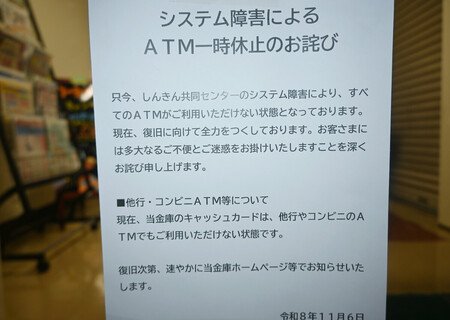
The outage was localized to the western part of the country, with shinkin banks in eastern Japan continuing to operate normally. The incident was traced to a hardware malfunction and communications breakdown at the West Japan Centre, a facility in Kobe City, Hyogo Prefecture, that manages the shared banking infrastructure for these institutions. This infrastructure, known as the Shinkin Joint System, is operated by the Shinkin Central Bank and the Shinkin Kyodo Center. Both organizations issued statements apologizing for the “great inconvenience” and confirmed that the root cause was an equipment failure, explicitly ruling out a cyberattack, hacking attempt, or unauthorized external access as the trigger.
The restoration of services was a gradual process. By 6:00 p.m. on Friday, most services, including ATMs and branch transactions, had resumed. However, money transfers to other financial institutions remained offline until shortly after 7:00 p.m., when all operations were fully restored. In total, the system failure lasted approximately five and a half hours. While the incident did not result in a loss of funds, it highlighted the critical dependence of regional banking on centralized technical hubs. A single point of failure in the Kobe-based system was sufficient to pause financial activity across a vast swath of western Japan’s economy.
This technical disruption occurs against a backdrop of shifting dynamics in Japanese banking, where the traditional physical infrastructure of cash and cards is being re-evaluated in light of security concerns and changing consumer behavior. While the November 6 outage was a mechanical rather than a digital breach, it coincides with a broader industry movement toward reducing reliance on physical hardware. Mitsubishi UFJ Financial Group (MUFG), for instance, is set to launch a new digital bank next year that will not issue ATM cards at all. Instead, customers of this MUFG affiliate will verify their identities using a smartphone app to access cash through a network of approximately 28,000 Seven Bank ATMs. This shift to smartphone QR codes is a first for a major Japanese bank affiliate and is explicitly driven by the need to safeguard against the rising tide of cybercrimes, such as card skimming and data theft.
The contrast between the two developments is stark yet instructive. The shinkin bank outage demonstrated the vulnerability of centralized, hardware-dependent legacy systems. A single equipment malfunction in Kobe could freeze transactions across dozens of prefectures. Meanwhile, the upcoming MUFG digital bank represents a strategic pivot away from the physical card, aiming to eliminate a primary vector for theft while leveraging mobile technology for identity verification. Although the shinkin incident was not caused by a cyberattack, the frequency of such events in the digital age has heightened scrutiny on the resilience of shared financial networks.

Shinkin banks, which serve as vital financial arteries for small and medium-sized enterprises and local communities in Japan, found their operations disrupted at a time when reliability is paramount. The affected institutions included notable names such as Okazaki Shinkin Bank, Osaka City Shinkin Bank, and Hiroshima Shinkin Bank. For businesses in these regions, the five-and-a-half-hour window of inactivity meant delays in payments and cash handling, a tangible, if temporary, friction in the local economy. The fact that the outage was confined to the west, sparing the east, highlighted the segmented nature of Japan’s banking infrastructure, where different regions often rely on distinct central processing centers.
As the industry moves forward, the lesson from the November 6 incident is clear: robustness in physical infrastructure remains a challenge, even as digital security becomes a priority. The shinkin banks’ reliance on the Shinkin Joint System connects them to a wider network, but it also exposes them to centralized risks. The transition toward cardless banking, as seen in the MUFG initiative, offers a different path—one that trades the logistical complexity of managing physical card networks for the cybersecurity challenges of mobile applications. However, for the 128 shinkin banks involved in the outage, the immediate aftermath will involve a review of hardware redundancy and communication protocols to prevent a repeat of the Kobe malfunction. The next critical test for these institutions will be ensuring that such hardware failures do not recur, while the broader industry continues to navigate the transition to a more secure, digitally verified financial landscape.