
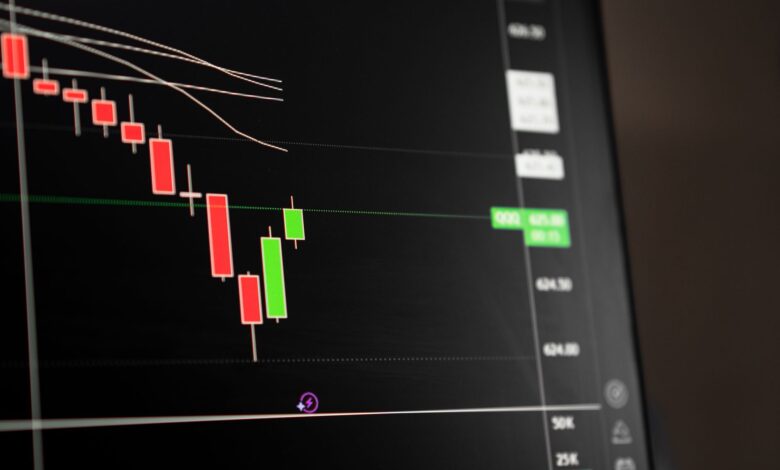
The development highlights a sharp contraction in risk appetite among institutional investors. While the note does not specify the magnitude of the reduction beyond characterizing it as the steepest in over ten years, the timeframe—limited to the first week of November—suggests a rapid, concentrated movement rather than a gradual, long-term de-risking trend. Such a pace of adjustment is distinct from slower structural shifts in portfolio composition, implying a reactive component to recent market conditions or internal rebalancing mandates.
The term “widespread unwind” suggests that the reduction in risk was not isolated to a single strategy, asset class, or geographic region, but rather involved a broad segment of the equity hedge fund complex. In financial markets, “unwinding” refers to the process of closing out or reducing existing positions. When described as “gathering steam,” it implies a self-reinforcing dynamic where initial reductions may have triggered further selling or defensive moves, although the provided source material does not detail the specific mechanical or behavioral drivers behind this momentum.
It is critical to distinguish between the reported action and its broader economic implications. The data provided confirms a change in positioning—specifically, a reduction in risk exposure—but does not offer evidence of underlying changes in corporate fundamentals, inflation trajectories, or global growth expectations that might have precipitated this move. Nor does it clarify whether this risk reduction was driven by profit-taking, hedging against specific macroeconomic risks, or liquidity needs. Consequently, while the scale of the positioning change is identified as historically significant, the causal relationship between this hedge fund activity and wider market volatility or economic outcomes remains unverified in this context.
The note serves as a snapshot of institutional behavior at a specific juncture. It does not indicate a permanent withdrawal of capital from equity markets, nor does it suggest that hedge funds are exiting long-term investment strategies. Rather, it points to a tactical adjustment in risk management. Investors and market analysts often monitor such prime broker data to gauge the sentiment of sophisticated institutional players, as hedge funds are frequently viewed as barometers for near-term market direction. However, without accompanying data on volume, specific asset classes affected, or the net direction of flows, the note stands as a qualitative indicator of heightened caution rather than a definitive forecast of market performance.
The absence of further detail in the source material prevents a deeper analysis of which specific sectors or regions were most affected by this risk cut. It also does not provide context on how this move compares to recent central bank policy decisions or geopolitical developments that might typically influence such positioning changes. Therefore, the primary takeaway is the velocity and historical rarity of the risk reduction itself, rather than a comprehensive assessment of the current economic landscape.
As markets continue to navigate the coming weeks, the sustainability of this de-risking trend will be a key point of observation. Whether this represents a temporary tactical pause or the beginning of a prolonged period of reduced equity exposure will depend on subsequent data releases and market developments not covered in the initial report.