For an intelligence agency or a geopolitical observer, a bounty of this magnitude signals a perceived gap in knowledge that conventional espionage or diplomatic channels have failed to fill. The timing of this announcement is particularly significant, arriving amidst a broader conflict that began in late February following US and Israeli strikes on Iran. The introduction of a financial incentive for civilian or insider information suggests that the US military believes the current trajectory of the nuclear program remains opaque, despite recent military engagements.
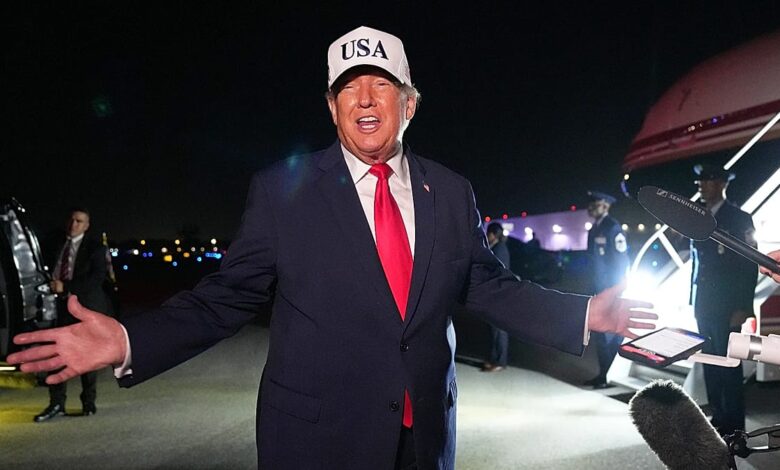
At the center of the dispute is the status of Iran’s nuclear infrastructure. In a speech delivered on Friday at the Kennedy Space Center in Florida, President Donald Trump asserted that US forces have “obliterated” Iran’s nuclear facilities. “We’re also ensuring that Iran will never have a nuclear weapon,” Trump stated, emphasizing the decisiveness of the military action. “They will never have it. Not even close. They’re not close.” The President further contextualized the strikes by referencing the use of B2 bombers, stating that if the US had not intervened, “if I allowed them to have it today, there would be no Israel.”
However, the official rationale provided by the State Department for the reward presents a more nuanced, if not contradictory, picture of the current security environment. In its statement accompanying the bounty, the department highlighted the “regime’s lack of compliance with the IAEA on safeguards obligations.” This non-compliance, the State Department explained, has led the International Atomic Energy Agency (IAEA) to lose “continuity of knowledge” regarding Iran’s production and inventory of key components, specifically citing centrifuges. While the President speaks of obliterated facilities, the State Department’s focus on the loss of inventory tracking and the movement of equipment suggests that the physical destruction of sites does not equate to the total neutralization of the nuclear program’s logistical and scientific capabilities.
This divergence in narrative—between total military destruction and the ongoing need to track residual capabilities—underscores the complexity of the current geopolitical standoff. The Rewards for Justice program, by targeting “associated personnel” and the “movement” of equipment, implies a concern that the scientific knowledge and remaining hardware may have been dispersed or hidden, evading the immediate effects of the airstrikes.

Amidst these threats and bounty offers, the diplomatic channel remains open, albeit tense. Iranian President Masoud Pezeshkian confirmed that his government is continuing efforts to resolve the conflict through dialogue. This statement serves as a counterweight to the aggressive military rhetoric and financial incentives deployed by Washington. For Pezeshkian, the priority is the resolution of the war that sparked the escalation in late February. For the US, the priority appears to be the verification of the nuclear program’s collapse, a goal that the $20 million reward is designed to accelerate.
The economic implications of such a program are not limited to the direct payout. The threat of a nuclear-armed Iran has historically driven up energy prices and increased risk premiums for shipping lanes in the Middle East. While the current source material does not provide specific data on oil prices or insurance rates, the linkage between nuclear security and regional stability is well-established. The US government’s willingness to spend up to $20 million on a single piece of intelligence reflects the high strategic value placed on confirming the status of Iran’s nuclear ambitions. If the information provided leads to the discovery of hidden facilities or the interception of key personnel, the cost would be negligible compared to the potential geopolitical and economic instability of a successful Iranian nuclear breakthrough.
Conversely, if the President’s claim of obliteration is accurate, the reward may serve more as a deterrent and a tool for psychological warfare, signaling that the US is still watching and willing to pay for any attempt to rebuild. The “possible relocation” offer adds a humanitarian dimension to the intelligence gathering, suggesting that the US is targeting individuals who may be at risk from their own government if they come forward with information. This aspect of the program mirrors other intelligence operations where the safety of the source is a primary concern, particularly in a conflict zone where the state apparatus is under siege.
The disagreement between the military’s claim of total destruction and the State Department’s citation of lost IAEA continuity creates a space of uncertainty that the reward program aims to exploit. It is a calculated risk: by offering a large sum, the US is inviting scrutiny of its own intelligence gaps. If the information received confirms the President’s narrative, the reward validates the military strategy. If it reveals surviving capabilities, it provides the data necessary to adjust policy, whether that means further strikes or a renewed push for diplomatic resolution.
As the conflict enters its next phase, the focus shifts from the immediate impact of the strikes to the long-term verification of Iran’s nuclear status. The $20 million offer is a tangible marker of this transition. It moves the debate from the battlefield to the realm of intelligence and verification. For the Iranian government, the challenge is to maintain its nuclear ambitions while navigating the diplomatic pressure from President Pezeshkian’s dialogue efforts. For the US, the challenge is to convert the bounty into actionable intelligence that can be verified, ensuring that the “obliteration” claimed by the President is not just a political statement, but a verifiable reality.
The next critical data point will not be a military strike, but the flow of information generated by this bounty. Whether the reward leads to the discovery of hidden centrifuges, the identification of key scientists, or simply confirms the destruction of the program, the outcome will shape the next round of negotiations. The State Department’s emphasis on the IAEA’s loss of “continuity of knowledge” suggests that the verification process is as important as the military one. Until that continuity is restored, the $20 million promise remains a beacon for those with the knowledge to bridge the gap between the reported destruction and the verified reality of Iran’s nuclear program.
In the end, the reward is a tool of statecraft, leveraging financial incentives to achieve a strategic objective in a situation where military force has reached its limits. It is a recognition that in the modern geopolitical landscape, information is as valuable as any weapon. As the US and Iran continue their dance of conflict and dialogue, the $20 million bounty stands as a stark reminder of the high stakes involved in the pursuit of nuclear non-proliferation. The next move will depend on whether the information gathered can reconcile the differing accounts of the current situation, determining whether the path forward is one of continued confrontation or genuine resolution.