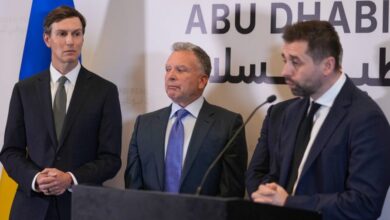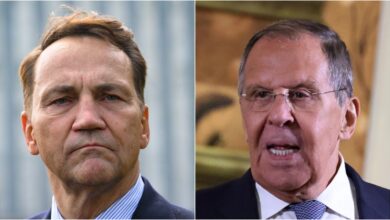
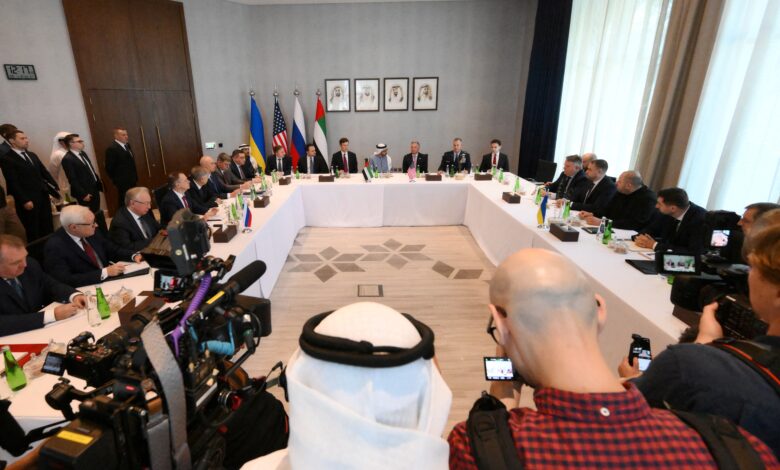
The two-day session, running from Tuesday, November 10, to Wednesday, November 11, marks a distinct shift in the trajectory of the war, which has now entered its fifth year. The presence of White House special envoys Steve Witkoff and Jared Kushner signals a renewed push by Washington to broker a settlement. However, the structure of these talks differs from previous rounds, which often stalled over messy territorial disputes. This time, the focus has expanded to include the broader security architecture of Europe. “Next, we will move to a trilateral format involving Ukraine, the United States and Russia,” said Rustem Umerov, head of Ukraine’s Foreign Intelligence Service and chief negotiator, after the Ukrainian delegation met with representatives from the United Kingdom, France, Germany, Italy, NATO, and the European Commission. Umerov stated that the primary goals are a cessation of hostilities, reliable post-war security guarantees, Ukraine’s economic recovery, and humanitarian steps.
The inclusion of European and NATO representatives in the pre-talks coordination reflects a strategic divergence from earlier U.S.-Russia bilateral contacts. U.S. officials have told the Financial Times that they seek to resolve the Ukraine war and broader continental security arrangements in tandem, emphasizing that European officials must have a seat at the table. Moscow has so far rejected this inclusion, viewing NATO as an existential threat. Vladimir Medinsky, the Kremlin adviser and chief of the Russian delegation, noted that his team had become “bigger and more professional,” including senior military and intelligence officials. He expressed hope that the talks would advance peace “in the interests of the people of Russia and the people of Ukraine,” but the underlying positions remain starkly opposed.
The economic and military stakes of these negotiations are high. Russia’s demands, as outlined by President Vladimir Putin, remain comprehensive: Ukraine must pull troops back from the four regions annexed in 2022—Donetsk, Luhansk, Zaporizhzhia, and Kherson—despite Moscow not having fully captured them. Additionally, Russia demands that Ukraine abandon its bid for NATO membership, accept strict limits on its military size, and drop restrictions on the Russian language and the Moscow-affiliated Orthodox Church. Putin has rejected a general halt in hostilities, arguing it would merely allow Ukrainian forces to rest and replenish stockpiles. In contrast, Ukraine’s position, reinforced by President Volodymyr Zelenskyy’s recent trip to Denmark to meet with Nordic leaders, emphasizes the need for air defense and energy infrastructure security. Zelenskyy’s meetings with Danish Prime Minister Mette Frederiksen and other Nordic counterparts highlight Kyiv’s reliance on Western military support while negotiations proceed.
The backdrop of these talks is one of intensified combat. Overnight, Ukraine’s air force reported that Russia launched 162 drones of various types and a ballistic missile. In response, Russia’s Ministry of Defense claimed to have shot down 155 Ukrainian drones above eight Russian regions and the Crimean Peninsula. The war, Europe’s largest conflict since World War II, has already resulted in the deaths of hundreds of thousands of soldiers and thousands of civilians, according to analysts and humanitarian organizations. The physical destruction of infrastructure, such as the power cuts reported in the Russian-controlled Luhansk region following a Ukrainian drone attack, illustrates the ongoing economic pain inflicted on both sides. These strikes disrupt energy supplies and industrial output, complicating any potential economic recovery agenda discussed in Abu Dhabi.
The absence of significant breakthroughs in the three previous rounds of talks earlier this year tempers expectations for immediate results. The last direct meeting between Russian and Ukrainian delegates was in Geneva in February, before negotiations were put on hold following the outbreak of the U.S.-Israel war against Iran. Since then, both sides have dramatically ramped up attacks. The current diplomatic effort, led by Witkoff and Kushner, who described their work as seeking a “negotiated solution that can deliver lasting peace and create the conditions for a sovereign, secure, and prosperous Ukraine,” faces the challenge of bridging a gap that appears wider than ever. The shift toward discussing post-war security frameworks suggests an attempt to decouple the immediate cessation of fire from the final territorial settlement, a complex maneuver that requires aligning the interests of Moscow, Kyiv, and Washington, while managing the expectations of European partners who are deeply invested in the outcome.
As the two-day session concludes, the attention will turn to whether these talks can lay the groundwork for a security framework that both sides can accept. The next steps will depend on whether Moscow will engage with the European security component or continue to insist on a purely bilateral resolution that excludes key regional stakeholders. For now, the contrast between the diplomatic handshake in Abu Dhabi and the drone strikes on energy grids in Ukraine serves as a reminder that the path to peace is being negotiated in parallel with a war that shows no signs of abating.