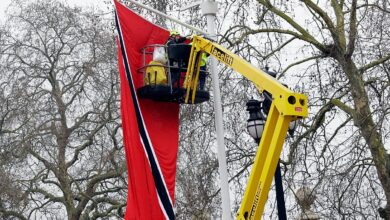
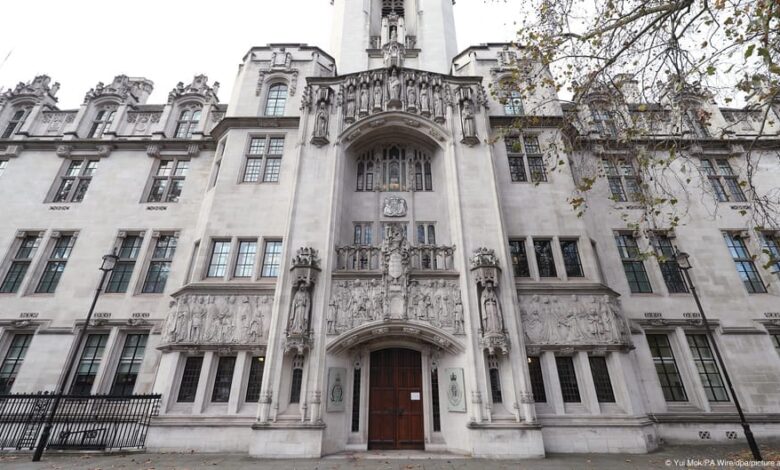
The ruling concludes a legal battle spanning nearly a decade, initiated by Jason Jones, a 61-year-old Trinidadian-born LGBTQ+ rights activist living in the UK. Jones challenged the law after initially winning a case at the Trinidad and Tobago High Court in 2018. That victory was partially reversed by the local Court of Appeal in 2025, prompting Jones to seek a final appeal from the Privy Council, which serves as the highest appellate court for several Commonwealth nations due to colonial legal ties.
Presiding Judge Philip Sales stated that the right to respect for private and family life protects core aspects of human identity, including sexual orientation. “Laws which seek to criminalize such activities cannot be justified,” Sales said, adding that the current understanding of these rights prevents discrimination based on who individuals choose to love. The court dismissed a counter-appeal from the Trinidad and Tobago Attorney General, who had argued that the 1986 laws were “existing law” passed with a super-majority and thus protected under a constitutional proviso. The Privy Council found this proviso was not met, as the laws were not “reasonably justifiable in a society that has proper respect for the rights and freedoms of the individual.”

Trinidad and Tobago’s government, the Council of Evangelical Churches, and the Sanatan Dharm Maha Sabha contested the case. The 1986 Act, which carried penalties of up to five years in prison for “buggery” and two years for “gross indecency,” replaced a 1925 colonial-era law. While the 1925 law was shielded by a “savings clause” preserving pre-independence statutes, Jones’ legal team argued the 1986 measures were distinct and therefore subject to constitutional challenge. The Privy Council agreed, noting that the 1986 legislation did not benefit from the same protections as the older colonial statutes.
The decision has immediate legal consequences for the decriminalization of same-sex conduct in Trinidad and Tobago. Although the laws had not been enforced in recent history, critics argued they maintained a chilling effect on the LGBTQ+ community. The ruling is expected to influence similar legal challenges in other Caribbean nations, including Jamaica, Grenada, and Saint Vincent and the Grenadines, which still maintain criminal penalties for same-sex acts. The UK itself decriminalized gay sex in 1967, and similar laws have been struck down in recent years in Barbados, Dominica, St. Lucia, and Antigua and Barbuda.
Legal experts and human rights organizations have hailed the judgment as a landmark victory. Téa Braun, chief executive of the Human Dignity Trust, stated that the ruling affirms that laws criminalizing private, consensual same-sex intimacy have no place in a society respecting fundamental rights. CAISO, a feminist organization in Trinidad and Tobago, described the decision as a clear indication that discriminatory laws are contrary to constitutional principles. The next step for Jones and his legal team is to monitor the implementation of the ruling within Trinidad and Tobago’s judicial system.