
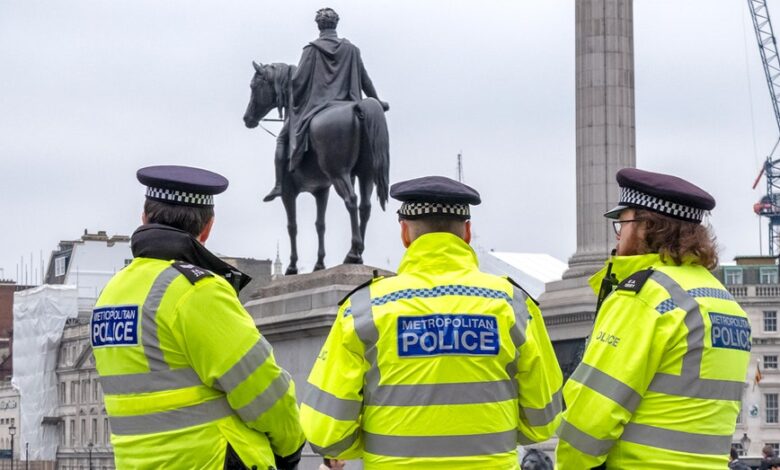
The arrest is not an isolated incident but part of a broader, joint investigation involving U.S. military and law enforcement agencies. Officials confirmed that the operation was carried out in close coordination with the U.S. military and the Federal Bureau of Investigation (FBI). This collaborative effort reflects the intricate web of security partnerships that bind London and Washington, particularly in the context of ongoing global conflicts. Police have stated that two locations in the wider Gloucestershire area are currently being searched as part of the continuing probe. Authorities emphasized that this case is distinct and not linked to any other ongoing Counter Terrorism Policing investigations, isolating it as a specific national security matter.
The significance of this detention lies in the status of the accused. Brig. Gen. Sean Stinchon, the commanding general of the U.S. Army Counterintelligence Command, described the alleged conduct of a “senior soldier, entrusted with sensitive information” as a “sobering reminder that insider threats are real and persistent.” This characterization shifts the focus from external sabotage to internal security vulnerabilities, a concern that has grown in prominence for Western intelligence agencies. The Pentagon referred inquiries to the U.S. Army, which did not immediately respond to requests for further details, while the identity of the soldier has not been released by U.K. police.
FBI Director Kash Patel issued a statement underscoring the gravity of the allegations, noting that espionage is “of the utmost concern to the United States and our allies.” Patel used the arrest to send a clear message regarding the FBI’s stance on service members who break their oath to the United States or its partners. “While this investigation is continuing, I want to send a clear message – this FBI has no tolerance for anyone who breaks their oath to the United States and whose actions endanger our national security and that of our partners,” Patel said. His remarks highlight a broader trend in U.S. counterintelligence operations; officials noted that at least 167 counterintelligence and espionage arrests have been made under current FBI leadership over the past 21 months, representing a 53% increase in such actions.
The context of this arrest is deeply rooted in the strained relations between London and Moscow, which have deteriorated significantly since Russia’s full-scale invasion of Ukraine in 2022. Britain has emerged as one of Kyiv’s strongest backers, a stance that has increased the risk of retaliatory intelligence activities by Russian services. This case is the latest in a series of espionage-related incidents in the UK linked to Moscow. In September, a British man appeared in court in London accused of preparing to sabotage drone manufacturing sites for Russian military intelligence. These recent events follow a long history of high-profile security breaches, including the 2006 poisoning of former Russian spy Alexander Litvinenko in London and the 2018 attempt to poison double agent Sergei Skripal in Salisbury. Deputy Assistant Commissioner Vicki Evans, the senior national coordinator for Counter Terrorism Policing, described the current allegations as “serious” and affirmed that British authorities would work with partners to take robust action against any criminal activity that could undermine national security.
The cooperation between the two nations extends beyond this single arrest. Patel expressed gratitude for the “outstanding work” of UK Counter Terrorism Policing, MI5, UK Defence Counter Intelligence, and the U.S. Army Counterintelligence Command. He emphasized that such partnerships are essential to protect both countries. This joint approach illustrates how intelligence sharing and coordinated law enforcement responses have become central to managing security risks in an era of heightened geopolitical tension. The data from the FBI’s recent arrests suggests a systemic effort to tighten security protocols and identify compromised personnel within military and government ranks, a strategy that is now being applied in direct collaboration with U.K. counterparts.
For the affected military structures and the broader security apparatus, this incident serves as a reminder of the persistent challenge posed by insider threats. The fact that the suspect is described as a senior soldier with access to sensitive information elevates the potential impact of the alleged espionage. While the specific nature of the information accessed or the methods of communication with Russian intelligence have not been detailed in the initial police statements, the severity of the charges under the National Security Act indicates that prosecutors view the case as a critical threat to national interests. The ongoing searches in Gloucestershire and the continued custody of the suspect in London signal that the investigative phase is still active, with further legal proceedings likely to follow as evidence is gathered.
As the investigation proceeds, the focus remains on the integrity of the alliance between the U.S. and the U.K. The arrest of a U.S. servicemember on British soil is a rare and delicate event, requiring precise diplomatic and legal handling. It underscores the reality that security threats are not confined by borders and that trusted allies must maintain rigorous internal vetting and counterintelligence measures. The next steps will depend on the findings of the joint investigation, but the immediate outcome is a reinforced message of zero tolerance for espionage and a demonstration of the operational capacity of transatlantic security cooperation.




One Comment